



Ormolu Brass Photo Frame
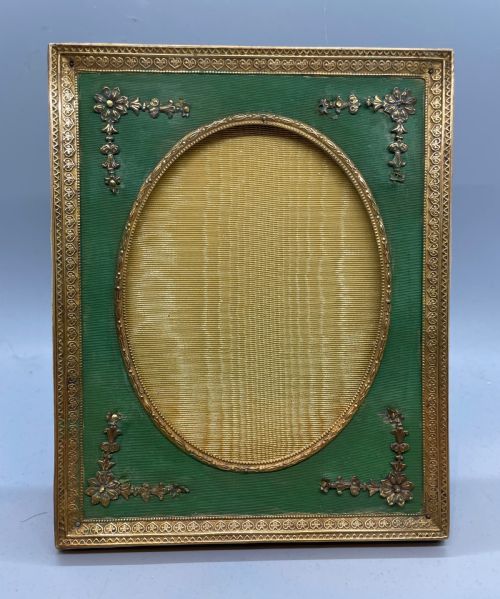
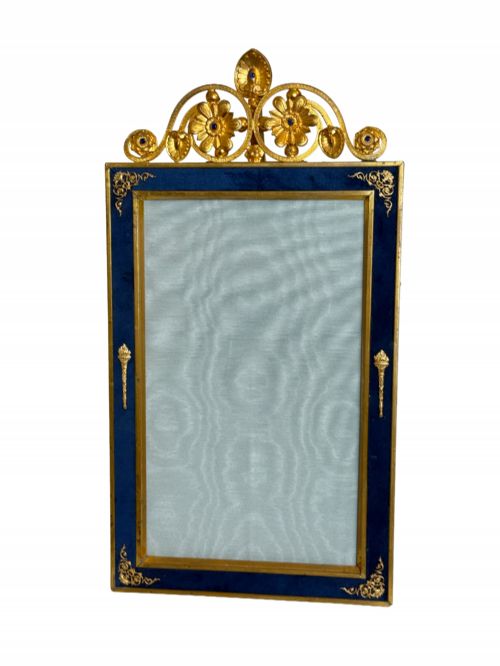
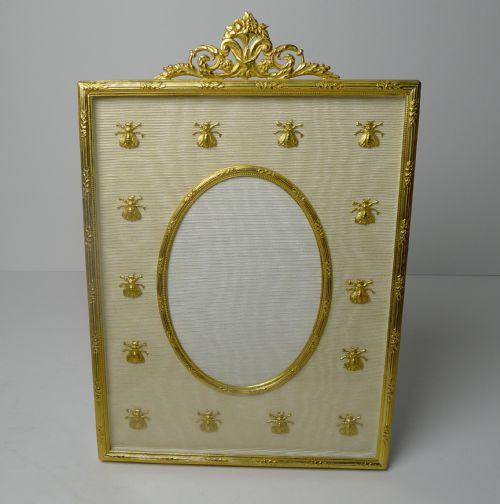
These ormolu brass photo frames bring heavy cast metalwork and fine gilding to the desk, offering a durable way to display family portraits.
Ormolu Brass Photo Frame
An ormolu brass photo frame combines cast metalwork with glazed viewing windows, designed to stand on tables or hang on walls. When you search for ormolu brass photo frame, you encounter Victorian and Edwardian examples shaped by French revival styles.
The pieces on this page span the late nineteenth century into the early twentieth century, with Louis XVI and Rococo influences appearing frequently. Makers utilised heavy bronze and brass castings finished with mercury gilding or modern electroplating.
Forms include single oval openings, double hinged leaves, and easel-backed frames set with silk, velvet, or paste stones. Table mirrors share the same cast metal construction and decorative vocabulary as the picture frames.
How they were made
Foundries cast molten brass or bronze into detailed moulds featuring acanthus leaves, ribbons, and Napoleonic motifs. Workers then chased the metal surfaces by hand to sharpen the cast details before applying a gold finish.
Gilt bronze and ormolu treatments provide a bright, enduring metallic lustre that resists tarnishing over decades of handling. Backings typically consist of polished wood fitted with sturdy metal struts and silk or velvet linings.
Listings feature materials such as silk, velvet, glass, and agate alongside heavy brass, ormolu, and gilt bronze.
What varies in quality
Quality depends upon the crispness of the original metal casting and the depth of the hand-chasing work performed after the mould cooled. Finer frames exhibit sharp relief in decorative swags and ribbon crests rather than softened contours.
The weight of the bronze or brass structure and the integrity of the original mercury gilding or heavy fire-gilt surface distinguish superior examples. Secondary materials such as genuine Limoges enamel plaques, agate mounts, or hand-set paste stones elevate the piece further.
Boin Taburet·F.Bienvue
The Ormolu Brass Photo Frame Glossary
- Ormolu
- A gilded bronze or brass finish applied to decorative metalwork through mercury amalgamation or modern electroplating. This technique imparts a rich golden sheen that mimics solid gold.
- Gilt Bronze
- An alloy of copper and tin treated with a gold surface layer. It forms the heavy structural body of many nineteenth-century frames.
- Paste Stone
- Faceted glass or lead crystal cut and set into metal mounts to imitate gemstones. These additions catch the light around the picture aperture.
- Easel Back
- A hinged metal strut attached to the reverse of the frame. It allows the object to stand upright on a flat surface.
- Limoges Enamel
- Vitreous enamel painted on copper plaques, originating from workshops in the French city of Limoges. These colourful inserts frequently adorn the crests of finer frames.
Ormolu Brass Photo Frame: Frequently Asked Questions
What is ormolu?
Ormolu refers to gilded bronze or brass decorative metalwork. The term derives from the French for ground gold, describing the bright metallic finish.
Foundries used this technique extensively on nineteenth-century luxury goods to create a durable, golden appearance without solid gold construction.
How do I date these frames?
Dating relies on stylistic clues, mounting techniques, and materials such as silk velvet backing or paste stone settings. Late nineteenth-century pieces often display heavy Louis XVI Revival casting.
Edwardian examples from around nineteen ten typically feature lighter constructions and simpler floral motifs.
Are these frames French?
Many examples originate from France, following French Empire, Rococo, and Chateau design traditions. French makers dominated the production of gilt bronze luxury accessories during this era.
British and other European workshops also produced similar revival pieces influenced by Parisian tastes.
How should I clean them?
Cleaning requires only a soft, dry cloth to remove dust from the cast crevices and glass surfaces. Liquid polishes and abrasive cleaners will strip the historic gilt finish from the metal.
Gentle care preserves the original patina built up over more than a century of handling.