





Ormolu Bonheur Du Jour
An ormolu bonheur du jour combines delicate ladies' writing furniture with gilded bronze mounts, offering a refined workspace with tiered compartments.
Ormolu Bonheur Du Jour
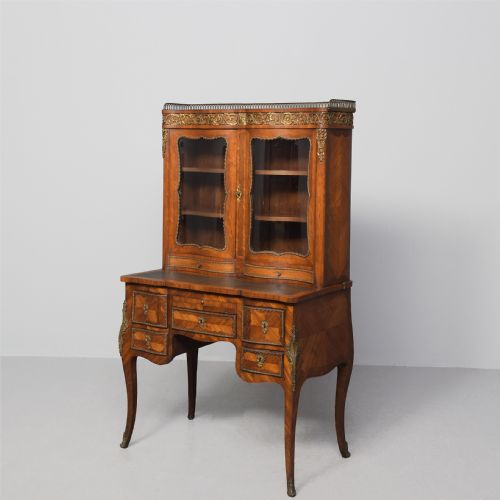
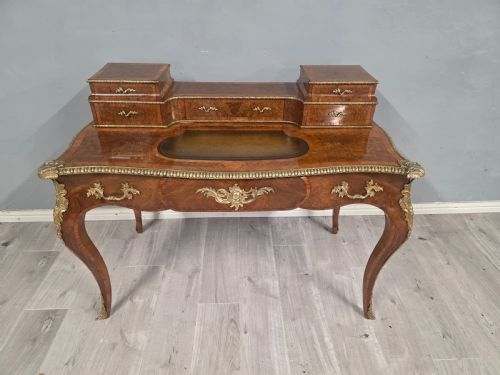
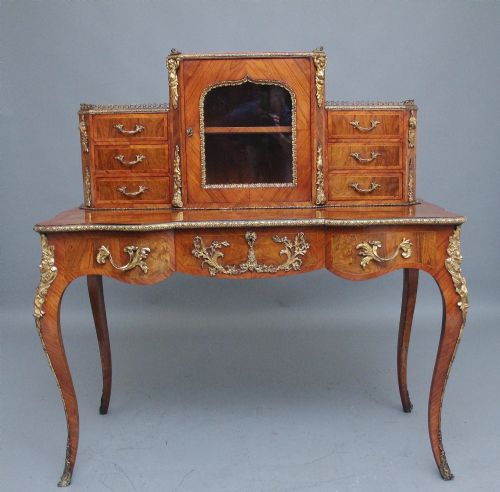
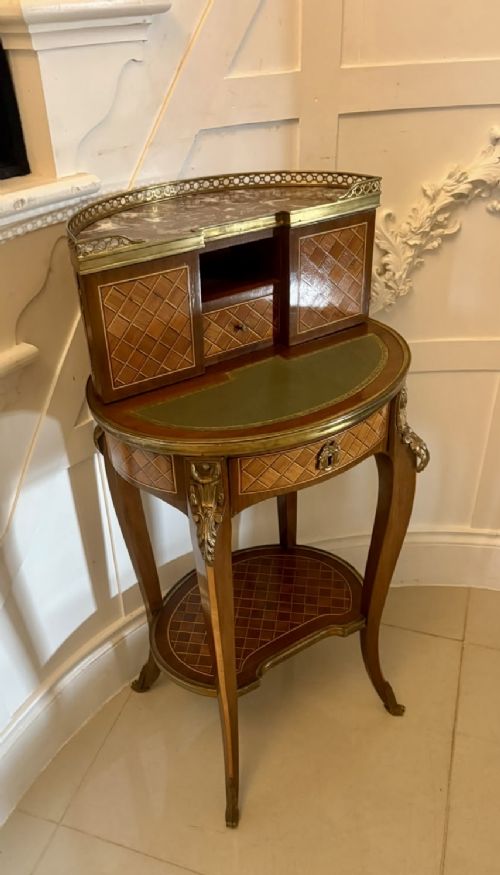
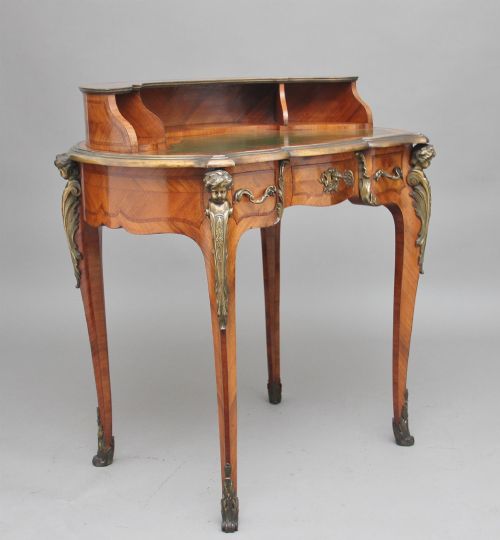
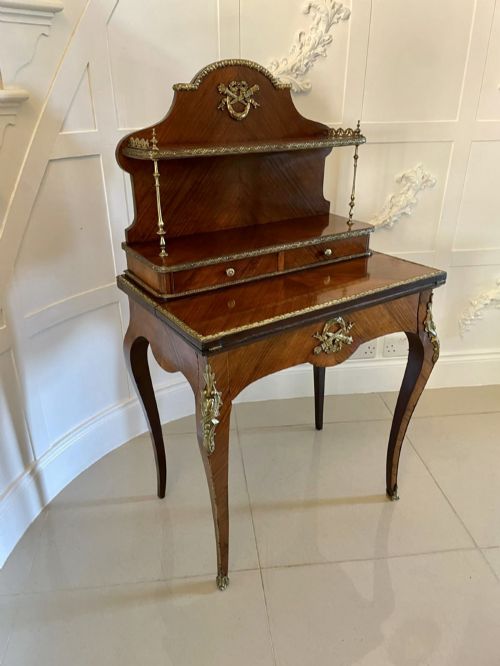
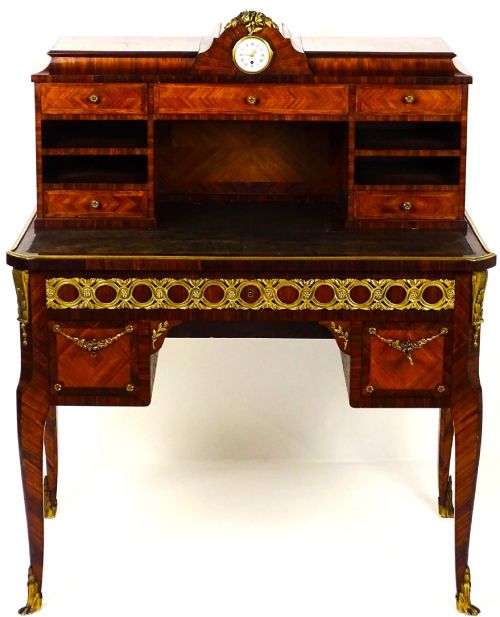
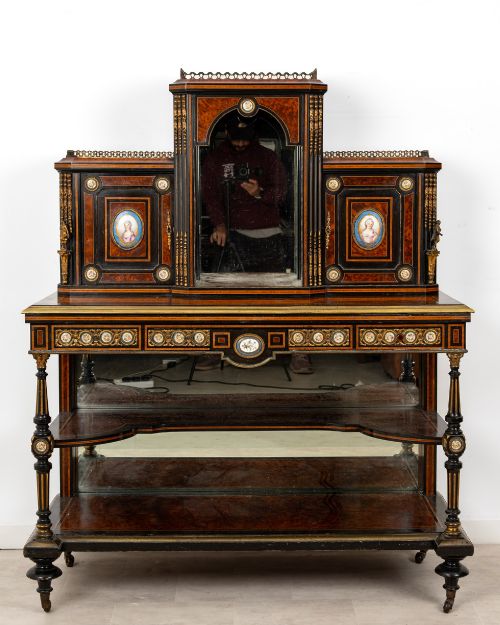
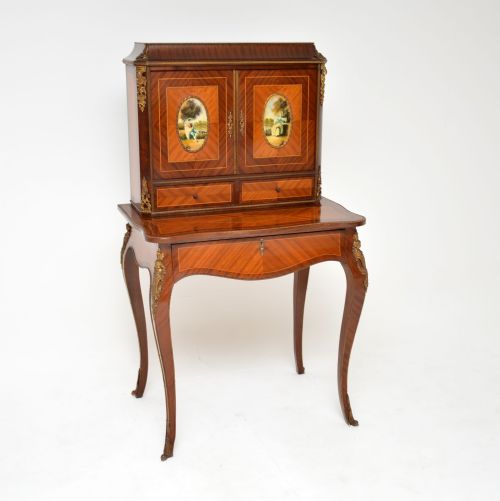
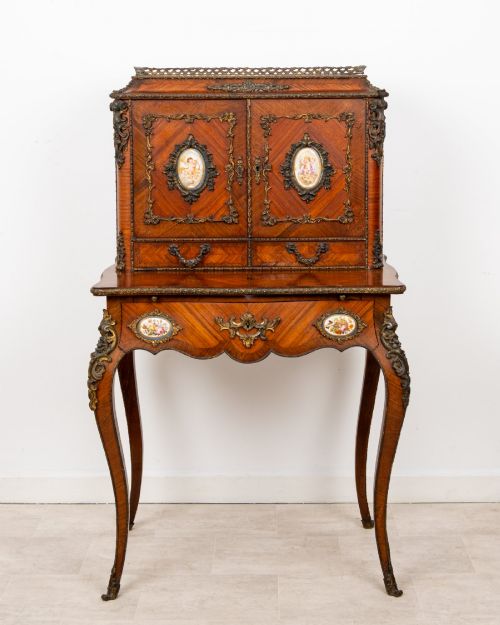
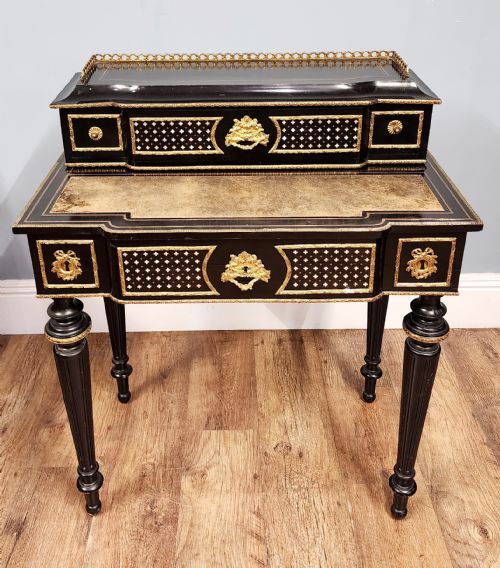
An ormolu bonheur du jour is a small lady's writing desk featuring an upper cabinet, tiered shelving, or pigeonholes above a fitted writing surface with a drawer. Most examples encountered here originate from the nineteenth century, spanning Victorian Britain and continental France.
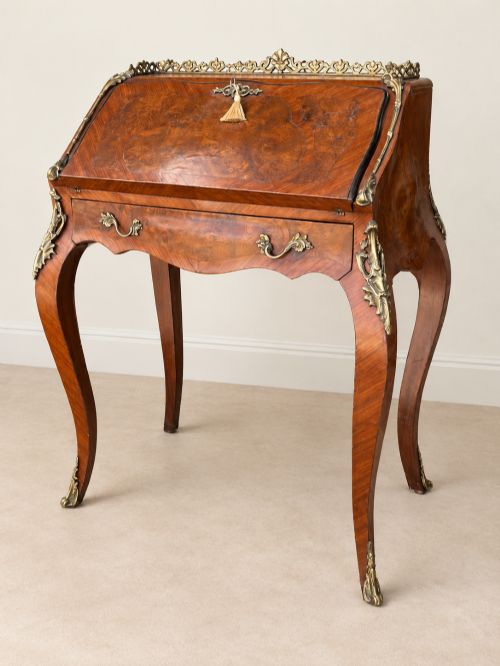
Makers and cabinetmakers drew heavily upon Louis XV and Louis XVI revivals, producing pieces that prioritise decorative elegance alongside practical letter-writing compartments. These desks frequently incorporate small cupboards and drop-front writing flaps suited for private correspondence.
The form appears in various configurations, including freestanding writing cabinets and tables fitted with superstructure backs. Buyers will find both English interpretations and French workshop pieces bearing distinct regional characteristics.
Materials and construction
Craftsmen built these desks using foundational carcases of oak or mahogany, veneered with decorative timbers such as kingwood, burr walnut, satinwood, and amboyna. Marquetry detailing and geometric inlays frequently enrich the exterior surfaces.
Gilded bronze ormolu mounts accentuate corners, legs, and borders, cast and chased to provide relief ornamentation. Selected pieces integrate porcelain plaques or painted panels alongside leather writing inserts.
Ormolu Bonheur Du Jour Retail Price Guide 2026
Typical asking prices for ormolu bonheur du jour among the pieces listed under this phrase on Sellingantiques today, from the lower quarter to the upper quarter. They describe what is for sale here now, not the wider market.
Listings feature nineteenth-century kingwood and burr walnut alongside porcelain plaques and ormolu mounts.
Assessing quality and execution
Quality rests in the crispness of the cast ormolu mounts and the precision of the timber veneers. Superior examples display substantial weight in their gilt bronze mounts and seamless matching of grain across curved drawer fronts.
Interior detailing distinguishes finer workshop output, evident in hand-cut dovetailing, polished mahogany secondary woods, and intact leather writing surfaces. Signed pieces from established makers demonstrate superior joinery and refined proportions.
Paul Sormani·Edwards and Roberts·Gillows·Linke
The Ormolu Bonheur Du Jour Glossary
- Ormolu
- Gilded bronze mounts applied to furniture edges and mounts. This technique involves coating cast bronze with gold amalgam.
- Bonheur du jour
- A small ladies' writing desk with an enclosed cabinet or shelving superstructure. The term translates from French as day's happiness.
- Marquetry
- Inlaid wood veneers forming pictorial or geometric patterns across flat surfaces. Artisans contrast different timber tones to create depth.
- Sevres
- Porcelain plaques painted with florals or portraits and inserted into furniture mounts. These components originated from the French royal porcelain works.
Ormolu Bonheur Du Jour: Frequently Asked Questions
What is an ormolu bonheur du jour?
An ormolu bonheur du jour is a nineteenth-century ladies' writing desk featuring a tiered upper cabinet and cast gilded bronze ornamentation.
These compact writing desks served private correspondence and housed stationery within small drawers and pigeonholes.
Where were these desks made?
Production centred largely in French and English workshops during the Victorian era and the broader nineteenth century.
French makers favoured kingwood veneers with Sevres plaques, while English cabinetmakers often utilised burr walnut and satinwood.
How do I care for ormolu mounts?
Ormolu mounts require gentle dusting with a soft, dry cloth to prevent accumulation of dirt in recessed cast details.
Avoid abrasive metal polishes, which strip the original mercury or fire gilding from the bronze surface.
How are different periods identified?
Stylistic revivals guide dating, with Napoleon III and Louis XVI revival pieces showing symmetrical neoclassical mounts and rectilinear framework.
Earlier nineteenth-century examples often display exuberant asymmetrical curves associated with French Rococo influences.