


Ormolu Base Table Lamps
Ormolu base table lamps combine gilded metal mounts with classical columns, figures, and urns to bring 19th-century French design into domestic lighting.
Ormolu Base Table Lamps
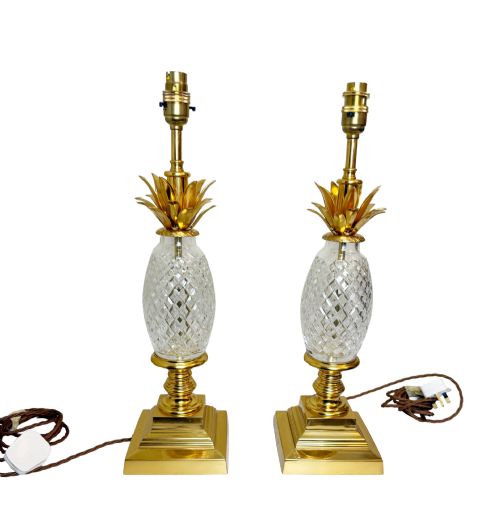
These pieces are decorative lighting fixtures built upon gilded metal mounts, frequently incorporating materials such as marble, onyx, crystal, and glazed ceramic bodies. When you search for ormolu base table lamps, you encounter items spanning the nineteenth century up to the mid-twentieth century, with French Empire and Louis XVI styles predominating.
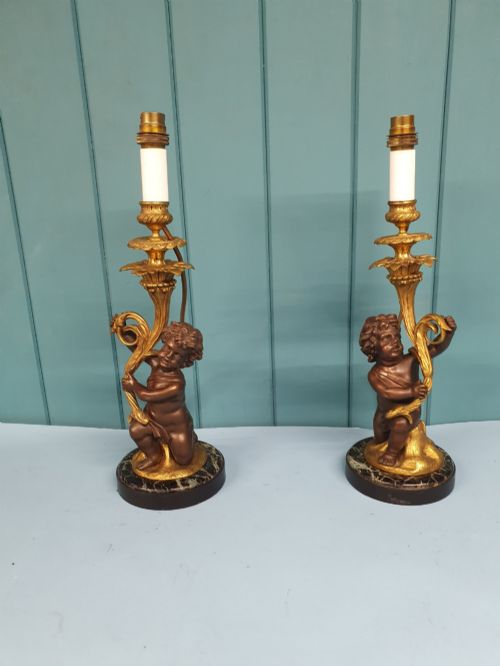
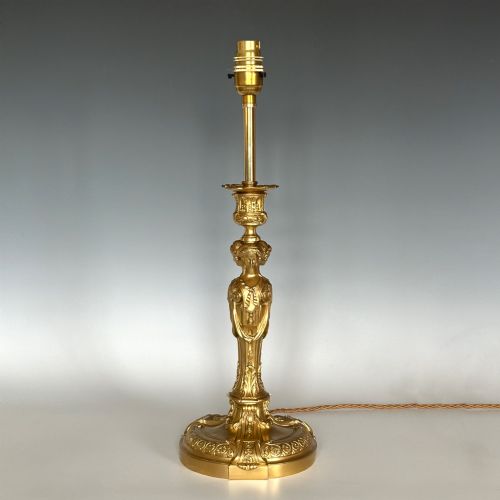
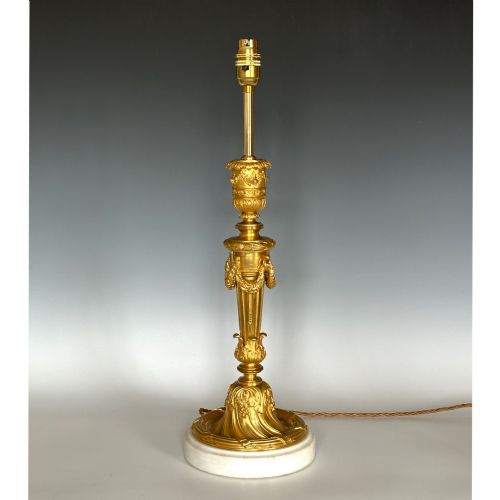
The selection here includes figural designs depicting cherubs, mermaids, and classical figures alongside columnar forms like Corinthian and faux lapis lazuli shafts. Many originate from French workshops or follow 18th-century classical designs, adapting antique candlesticks, vases, and oil lamps for electrical use.
Materials and Craftsmanship
Gilt bronze and ormolu form the metallic foundation of these pieces, often combined with patinated bronze elements to create contrasting textures and tones. Craftspeople utilised mercury gilding or modern electrogilding methods to apply gold finishes to bronze and brass bases.
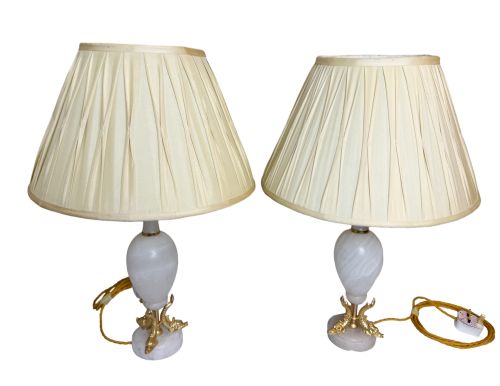
Stones such as marble and onyx provide heavy, stable plinths for slender columns, while crystal and glass bodies introduce translucent elements into the designs. Fabric shades frequently complete the structure, mounted above bronze urns or porcelain bodies.
Mermaids, cherubs, and young girls blowing kisses quietly hold up the nineteenth century.
Assessing Quality and Execution
The integration of secondary materials like veined marble, carved onyx, or faceted rock crystal influences the overall balance and material richness of the object. Precision in assembly, where bronze mounts fit tightly against stone or ceramic components, marks the distinction in manufacturing standards.
Dugourc
The Ormolu Base Table Lamps Glossary
- Ormolu
- A method of applying finely ground high-carat gold to a bronze object using a mercury amalgam. This technique produces a warm, deep lustre that resists tarnish over centuries.
- Patinated Bronze
- Bronze that has been chemically treated to alter its surface colour, usually resulting in dark brown or greenish tones. It provides a subdued backdrop for bright ormolu mounts.
- Gueridon
- A small circular table on a central pillar, occasionally adapted or styled alongside these lighting forms. The term originates from 17th-century French furniture design.
- Tole Peinte
- Painted sheet metal, often tin, utilised for decorative lamp bodies or shades. It brings vibrant colour and hand-painted motifs to classical lighting designs.
- Sevres Style
- Ceramic work emulating the French Sevres porcelain factory, characterised by rich coloured glazes and gilt highlights. These bodies frequently serve as the central column for mounted lamps.
Ormolu Base Table Lamps: Frequently Asked Questions
What periods do these lamps come from?
The pieces span the nineteenth century into the mid-twentieth century, with strong representations from Victorian and Edwardian eras. French Empire and Louis XVI revival styles dominate the design vocabulary.
Dates cluster around the late 19th century, reflecting European manufacturing revivals of classical decorative arts.
How were these lighting pieces originally used?
Many items started as oil lamps, candlesticks, or decorative urns before conversion into electric table lamps. Wealthy households placed them on side tables, gueridons, and mantelpieces to provide ambient illumination.
Figural bases depicting cherubs or mythological figures served both decorative display and practical lighting functions in formal reception rooms.
How do you distinguish French Empire from Louis XVI style?
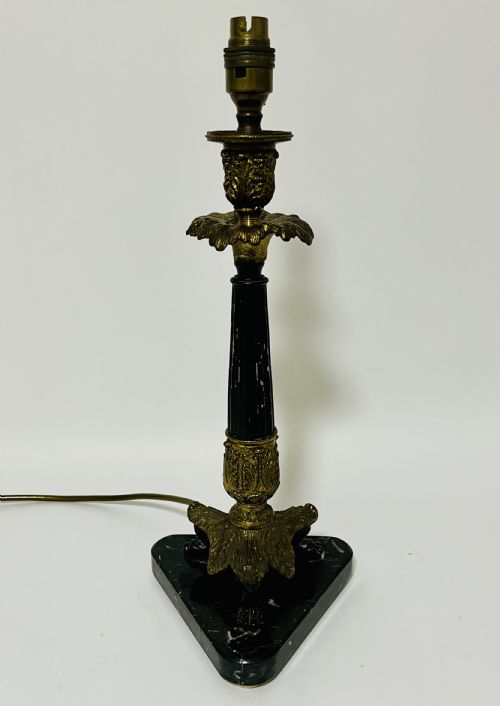
French Empire designs favour heavier, militaristic, and classical motifs inspired by antiquity, including bronze figures, military trophies, and bold columns. They often incorporate dark patinated bronze against bright ormolu.
Louis XVI style leans towards lighter, restrained neoclassical elements, featuring delicate floral garlands, ribbons, and symmetrical fluted columns.
What materials accompany the ormolu mounts?
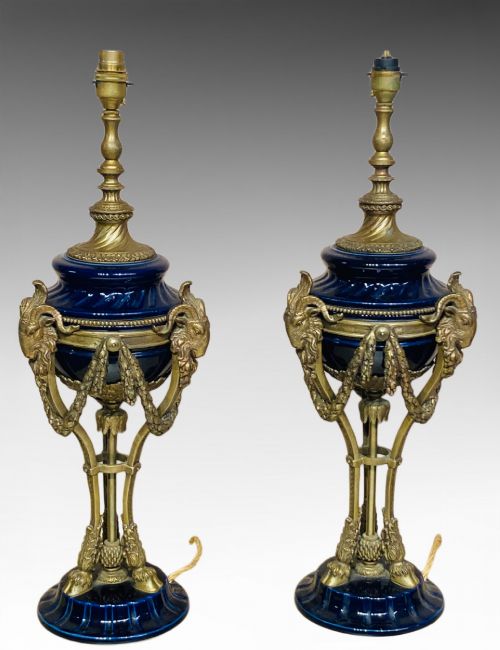
Makers combined gilded bronze with natural stones including white marble, coloured onyx, and slate for plinths and columns. Glass, crystal, and ceramic bodies such as blue glazed porcelain or Tole Peinte also appear frequently.
Fabric shades typically crown these mixed-media assemblies, balancing the heavy stone and metal bases.