
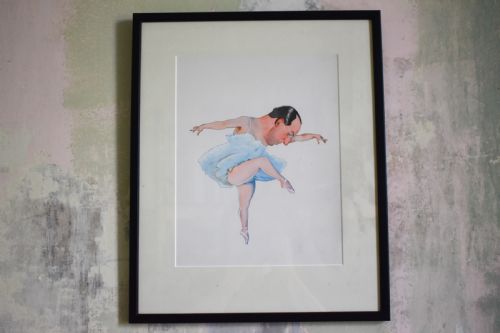
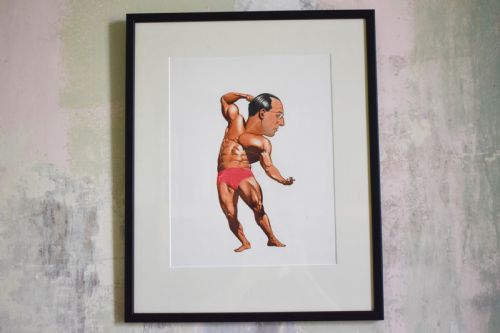


Original Watercolour Caricature
These original watercolour caricature works capture wit and satire on paper, offering characterful historical commentary for your walls.
Original Watercolour Caricature
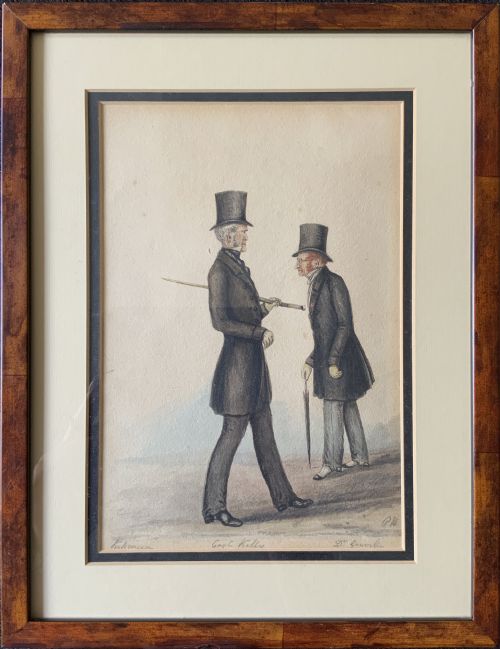
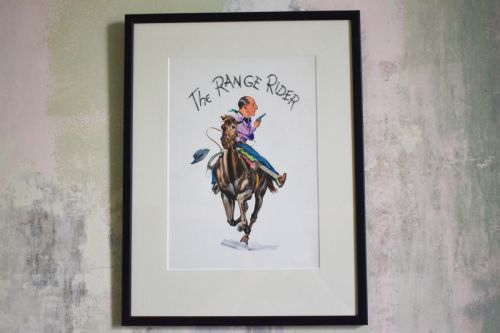
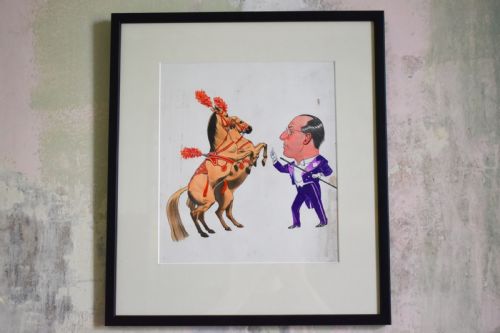
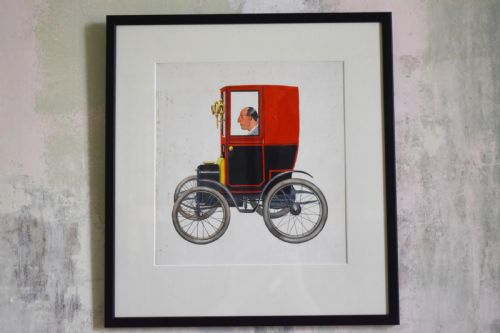
An original watercolour caricature brings together pen, ink, wash and watercolour on paper to depict exaggerated human or animal forms with satirical intent. When you search for original watercolour caricature, you encounter framed artwork and wall art spanning the Victorian, Edwardian and mid-century periods. The selection ranges from 19th-century double portraits and military studies to 1930s cartoon watercolours and early 20th-century motoring illustrations.
The pieces on this page originate predominantly from British hands, capturing social observation and humorous portraiture through the distinct lenses of Georgian, Victorian and early 20th-century illustrators. You will find works framed under glass in wood, sometimes with gilt detailing, preserving the delicate paper surfaces from atmospheric damage. Whether signed by known hands or bearing monograms, each sheet represents a singular, hand-painted moment of social satire.
Materials and techniques
These works rely on a foundation of paper, upon which artists laid down pen and ink line work before applying transparent watercolour washes. The combination of fine ink contours with fluid wash allowed creators to build tone, shade and comic expression swiftly and with precision.
Framing materials such as wood and glass protect these fragile works on paper, occasionally accented with gilt mouldings to highlight the border of the artwork. The physical construction places the watercolour sheet behind glass, ensuring the paper and pigments remain shielded from environmental wear while displayed on walls.
The listings span from the 18th century through the 1930s, utilising paper, wood, glass, pen, ink, wash and gilt.
Assessing quality and execution
Condition and preservation of the paper support also define the standing of a piece, with clean, stable sheets holding greater visual clarity than those marred by heavy foxing or fading. Furthermore, the presence of legible signatures, period framing and detailed provenance elevates specific examples within the wider spectrum of illustrative art.
Thomas Rowlandson·Snaffles·John Leech·John Nixon
The Original Watercolour Caricature Glossary
- Watercolour
- A painting method in which the paints are made of pigments suspended in a water-based solution. It is traditionally applied to paper to achieve translucent layers of colour.
- Wash
- A thin, transparent layer of diluted watercolour or ink spread evenly across paper. It provides background depth and subtle tonal shading in illustrative works.
- Gilt
- A thin layer of gold or gold-like material applied to wood framing. It adds a decorative metallic border that complements the period aesthetic of the artwork.
Original Watercolour Caricature: Frequently Asked Questions
How should I hang these watercolours?
Keep them away from direct sunlight to prevent the watercolour pigments and paper from fading over time. Ensure the room has stable humidity levels to protect the paper and wooden framing.
Hang them at eye level on interior walls using secure picture hooks suitable for the weight of the framed artwork.
What subjects do these caricatures show?
The subjects range from military life and garrison towns to theatrical visits and social satire involving geese or human figures. Each piece captures specific humorous observations characteristic of its period.
Artists often focused on contemporary social types, manners and notable public figures of the Georgian, Victorian and Edwardian eras.
Are these works signed by the artists?
Many pieces feature artist signatures, monograms or contemporary attributions written on the paper or mount. Some bear specific names associated with 19th-century and early 20th-century illustration.
Unsigned examples rely on stylistic evidence, period materials and subject matter to indicate their origin and date.
How do I identify a 19th-century piece?
Nineteenth-century works typically display paper stocks, ink formulations and watercolour palettes consistent with the Victorian and Georgian periods. Hand-drawn pen lines and specific framing styles often accompany these earlier dates.
Examining the reverse of the frame or the paper support can occasionally reveal period inscriptions or dealer notes confirming the era.