

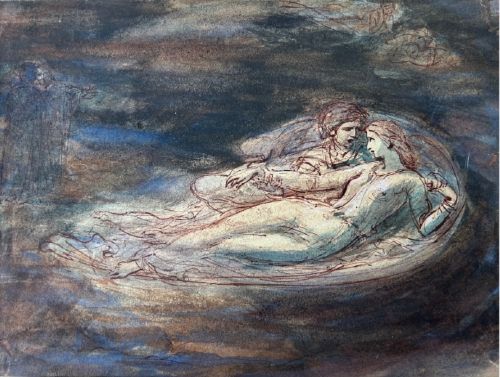


![Pen and Ink Sketch - Female Nudes by William Edward Frost [1810-1877]](https://www.sellingantiques.co.uk/photosnew/dealer_kendallhouse/dealer_kendallhouse_full_1758970795762-8493507346.jpg)


Original Victorian Drawing
Original victorian drawing encompasses hand-rendered works on paper capturing landscapes, marine scenes, and portraits from the nineteenth century.
Original Victorian Drawing
An original victorian drawing represents unique works on paper produced during the nineteenth century, capturing everything from intimate domestic scenes and architectural studies to sweeping British landscapes. Buyers encounter works executed in diverse styles, including academic realism, Gothic revival, and tonalist approaches linked to the period. These pieces take the form of wall art, framed sketches, and standalone sheets intended originally for private albums or public exhibition.
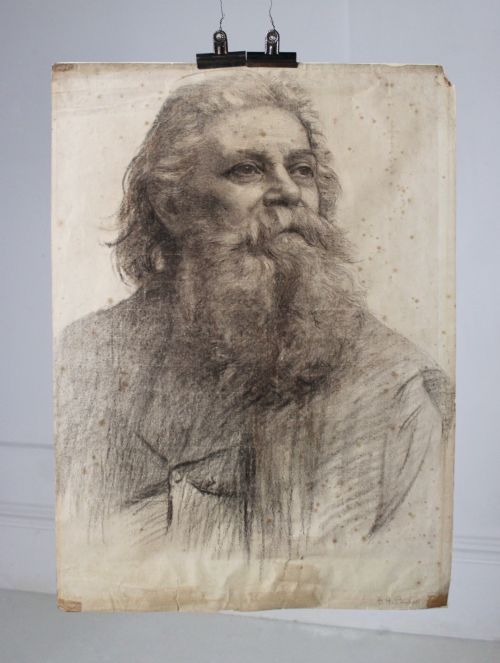
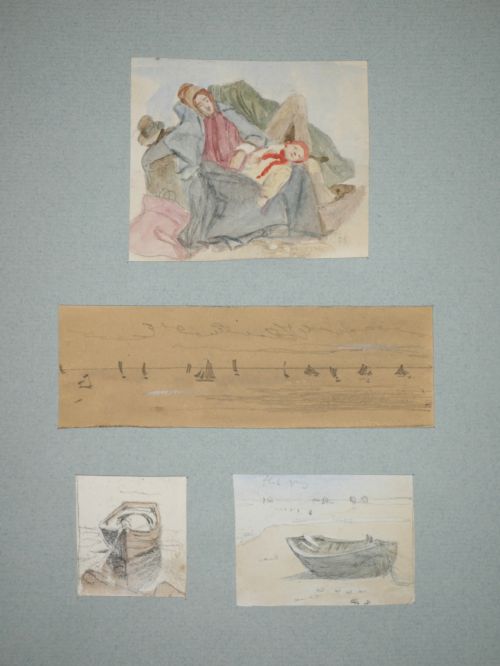
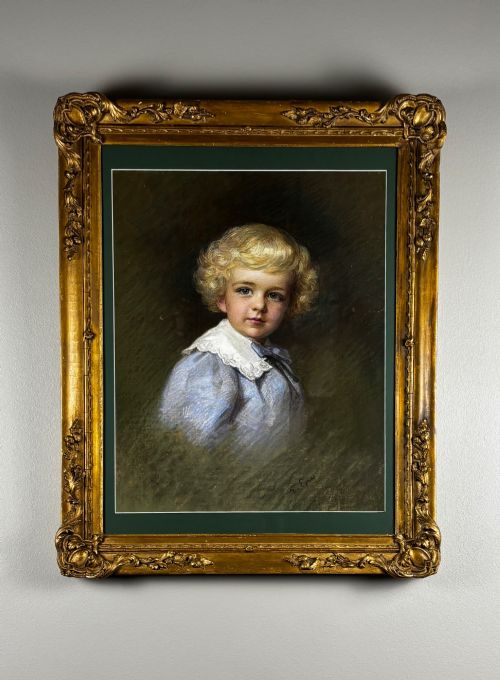
Portraits and figure studies appear frequently, alongside coastal views of places like Scarborough and architectural renderings of notable buildings such as Norwich Cathedral. Many examples originate from named artists working within British and European schools, while others remain attributed to anonymous hands of the period. The selection ranges from swift preparatory ink studies to highly finished watercolour paintings mounted behind glass in period frames.
How They Were Made
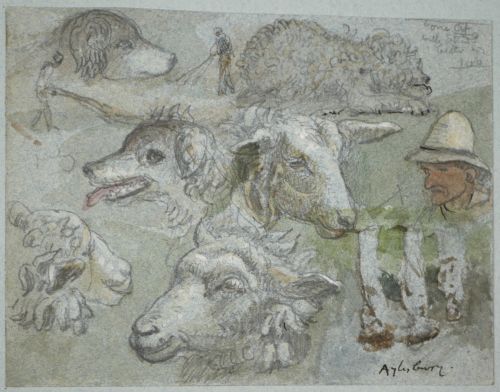
Artists of this era worked primarily on paper supports, applying mediums such as graphite, charcoal, chalk, and ink to build form and tone. Watercolours and pastels introduced colour, often layered with pen and wash to create depth in landscape and genre subjects. Many sheets received protection behind glass within wooden frames, preserving the fragile pigments and delicate pencil marks from atmospheric degradation.
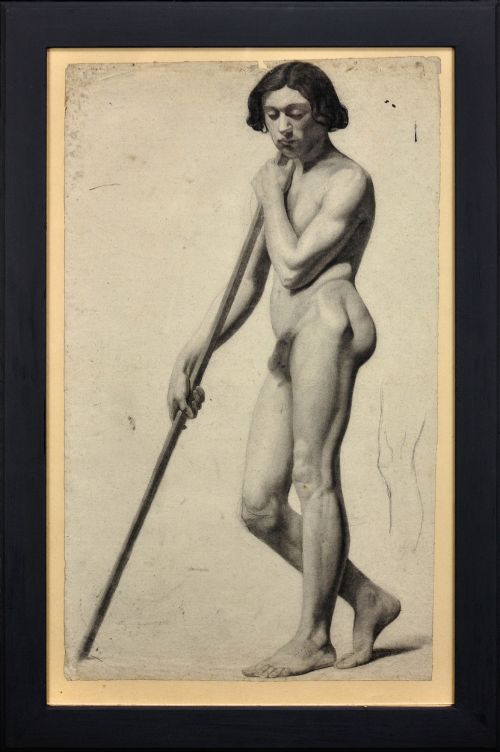
Techniques varied from rapid plein-air sketching using charcoal on canvas or paper to careful studio compositions executed in grisaille. Artists utilised academic methods for life studies of the human figure, balancing strict anatomical accuracy with expressive handling of line. Ink and wash drawings often relied on precise quill or steel nib work combined with diluted pigments to establish shadow and light.
Several Victorian sketches capture cats, dogs, and domestic pets observing household activities with distinct expressions of feline or canine judgment.
What Varies in Quality
The degree of finish and anatomical precision separates standard instructional exercises from accomplished works by recognised practitioners of the period. Superior examples demonstrate a confident mastery of line and tone, capturing light and atmosphere with economy and assurance rather than hesitant repetition. Compositional balance and the preservation of the paper support without excessive fading or discoloration significantly influence the visual impact of the work.
Context also distinguishes pieces, with works retaining documented provenance or attribution to established painters carrying stronger historical interest. The handling of difficult subjects, such as complex architectural perspectives or subtle facial expressions in portraiture, reveals the underlying skill of the hand. Quality resides in the directness of the observation and the harmony between medium and paper.
Alfred Young Nutt·James Smetham·Emily Eyres·Albert Ludovici Jnr·Henry Arthur Roberts·William Frederick Settle·William Edward Frost·Louis Wain·Charles H Poingdestre·William Manners·George De Paris·Matthew Hale·Josiah Gilbert·Joseph Hansom·Alexandre Decamps·George Richmond·John Baragwanath King·Henry Bright·Alexander Melville
The Original Victorian Drawing Glossary
- Grisaille
- A monochrome painting executed entirely in shades of grey, often used as a preliminary study or to imitate sculptural reliefs.
- Pre-Raphaelite
- A style associated with a nineteenth-century group of artists rejecting academic convention in favour of detailed observation and bright colour.
- Wash
- A thin, semi-transparent layer of diluted ink or watercolour applied to paper to create smooth areas of tone or background shadow.
- Academic Realism
- A rigorous artistic approach taught in official institutions emphasising accurate proportion, detailed rendering, and traditional subject matter.
- Provenance
- The documented history of ownership associated with an artwork, tracing its origin and transition through collections.
Original Victorian Drawing: Frequently Asked Questions
What subjects are common in these drawings?
Nineteenth-century works on paper frequently depict English and European landscapes, coastal views, and architectural landmarks such as cathedrals. Portraiture of gentlemen, ladies, and family pets also appears regularly alongside mythological or literary scenes.
Artists often recorded everyday genre scenes, marine sketches of ships at sea, and botanical studies of gardens. These diverse subjects reflect the varied interests of draftsmen working both in the studio and outdoors.
How do I identify the medium used?
Examine the surface texture under magnification to distinguish between dry media like graphite, charcoal, and pastel versus fluid applications of ink and watercolour. Charcoal and soft pencil leave powdery or smudged traces, whereas ink creates sharp, permanent lines often combined with translucent washes.
Pastels impart a velvety texture with soft edges, while watercolours show pooling or transparent layering across the paper grain. Understanding these visual characteristics helps clarify the specific techniques employed by the artist.
Where were these nineteenth-century works created?
Many pieces originate from studios across Britain, capturing domestic scenes, local countryside, and urban landmarks. Artists also travelled abroad to produce architectural studies and topographical views of continental Europe.
Regional art schools and academies provided training where draftsmen completed life studies and academic portraits. These locations are often recorded through inscriptions, signatures, or historical documentation accompanying the artwork.