
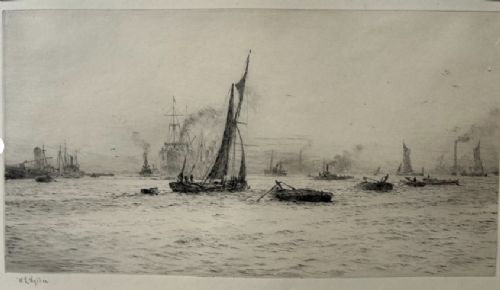
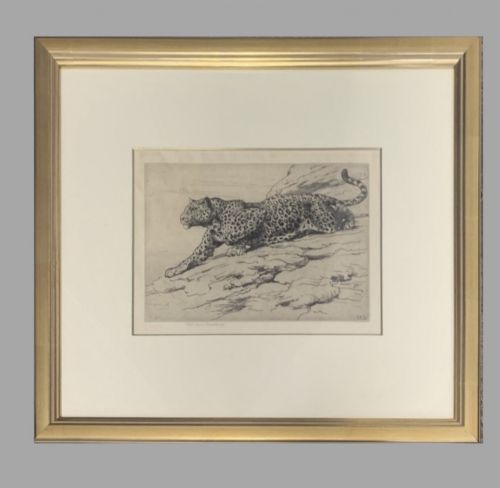
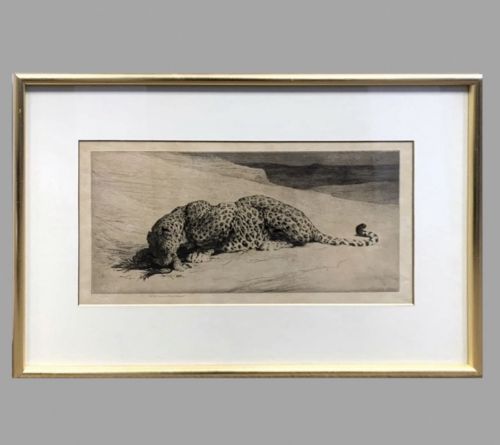
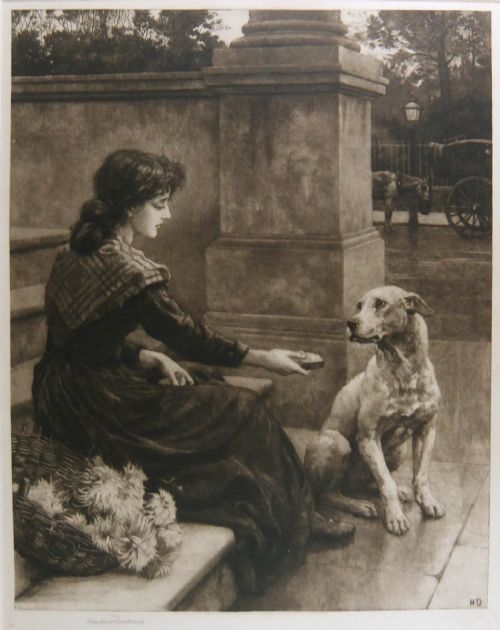
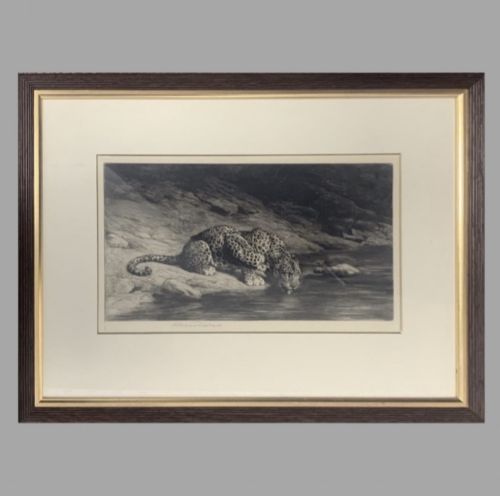
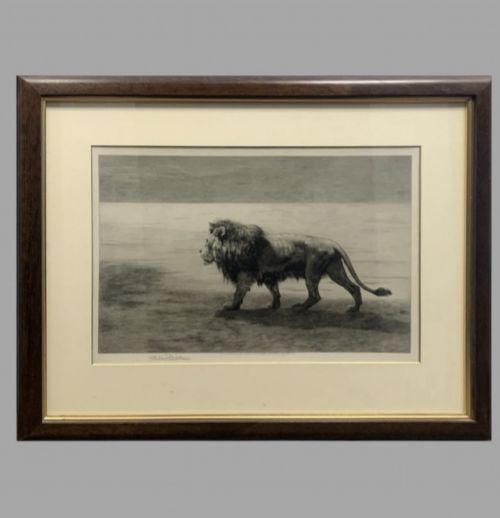
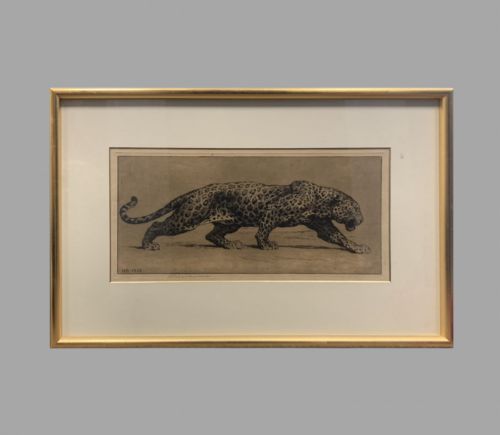
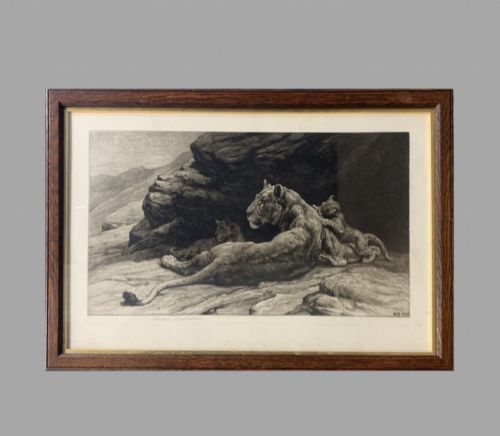


Original Signed Etching Print
An original signed etching print captures the direct touch of the artist through ink on paper and vellum.
Original Signed Etching Print
When you search for original signed etching print, you find works created across the Victorian era, the Edwardian period, and into the mid-twentieth century. These pieces include river scenes, maritime subjects, animal studies, and architectural views.
The selections span early twentieth-century realism, Edwardian maritime, and modern British styles. Artists pressed inked metal plates onto paper and vellum, signing their finished proofs in pencil.
Materials and methods
Makers pressed ink into etched metal plates and transferred the image onto paper or vellum under heavy pressure. Some examples incorporate aquatint or drypoint techniques to build tone and line.
Finished works appear within glass, wood, oak, and gilt wood frames, sometimes accented with gold leaf. The combination of metal, ink, and paper defined the medium.
Listings span from Victorian and Edwardian eras through to the 1960s, utilising paper, vellum, oak, and gilt wood.
Evaluating quality
Quality rests in the clarity of the plate impression and the crispness of the pencil signature. Stronger examples maintain rich ink density and clean margins on the paper or vellum.
The preservation of the paper support and the framing materials influence the integrity of the piece. Early artist proofs tend to show sharper lines than later impressions from worn plates.
William Lionel Wyllie·Herbert Dicksee·Anne Goldthwaite·John Merrifield·Augustus Edwin John·Edgar J Maybery·Albert Terry·Norman Janes·Frank Greenwood·CB Prescott·Deidre Borlase
The Original Signed Etching Print Glossary
- Etching
- A printmaking method where acid bites lines into a metal plate to hold ink. The plate then transfers the design under pressure.
- Artists proof
- A trial proof pulled outside the standard edition for the artist. These carry personal verification and signature.
- Drypoint
- A technique where a sharp needle scratches directly into the metal plate without acid. This creates a soft, velvety burr in the printed lines.
- Vellum
- A fine parchment made from calfskin used as a printing support. It yields deep contrast and a smooth surface.
- Aquatint
- A printmaking variation used to create tonal areas of shadow and wash. Resin on the plate creates a textured field under acid.
Original Signed Etching Print: Frequently Asked Questions
How do I care for my framed etching?
Keep the framed work away from direct sunlight and damp environments to protect the paper and ink. Acid-free backing materials prevent discoloration over time.
Ensure the glass remains intact to shield the delicate surface from dust and atmospheric moisture.
What is the difference between an etching and an engraving?
Etchings rely on acid to cut lines into the metal plate, producing softer, flowing strokes. Engravings use a sharp tool called a burin to cut directly into the metal.
This physical cutting creates crisper, more rigid lines compared to the chemical bite of an etching.
Why are some prints signed in pencil?
Artists sign their proofs in pencil to verify the quality of the impression and confirm their personal approval. Pencil graphite resists fading better than certain early inks.
This signature distinguishes a finished artist proof from unsigned commercial editions.
How can I tell the period of a print?
Look to the stylistic cues, subject matter, and framing materials typical of eras like the Victorian period or mid-century modern British movement. Signatures and biographical dates of the makers provide clear chronological markers.
Paper types and printing characteristics also point toward specific decades of production.