

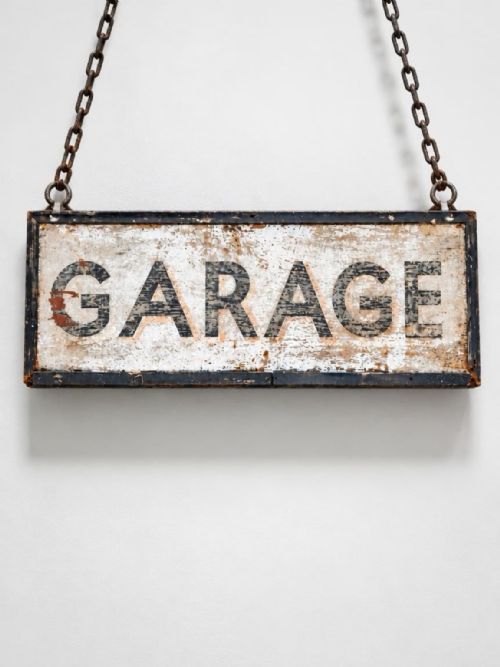
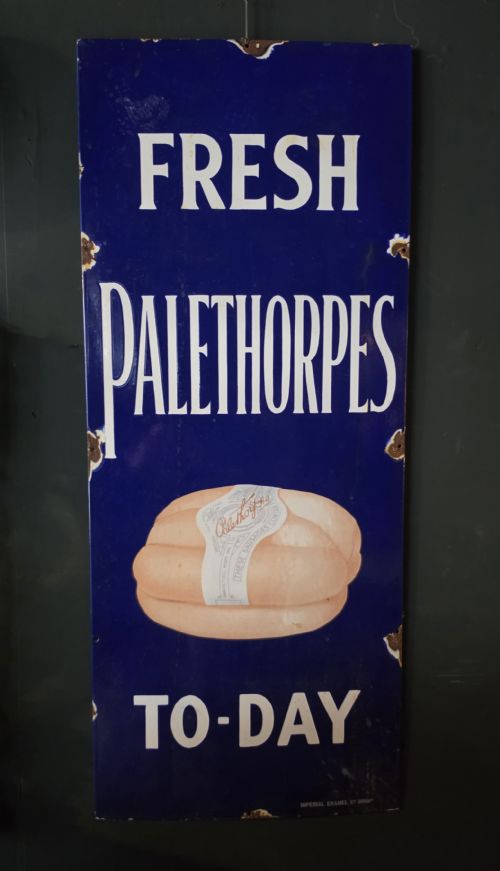
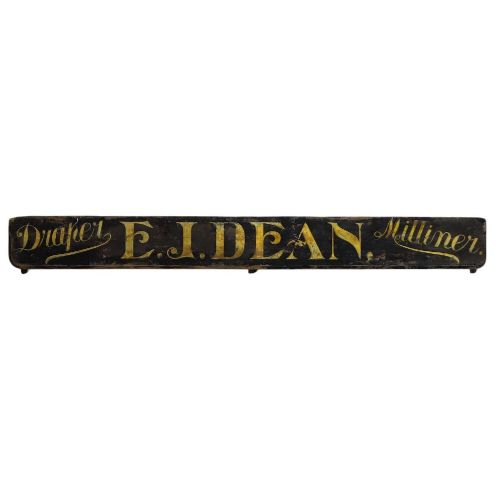
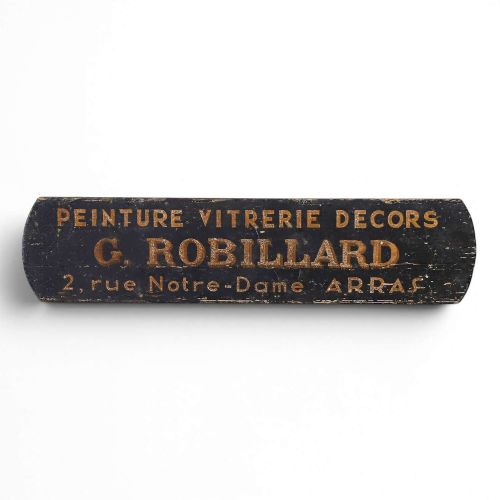


Original Shop Sign
An original shop sign brings authentic commerce into a room, offering immediate character through weathered paint and durable vitreous enamel.
Original Shop Sign
An original shop sign represents surviving commercial advertising from the nineteenth and early twentieth centuries, spanning periods from Victorian and Edwardian eras up to the 1930s. These pieces take several distinct forms, including vitreous enamel wall signs, hand-painted trade signs on wood, and specialised advertising clocks.
Buyers most frequently encounter durable vitreous enamel advertising signs alongside timber trade signs, often originating from grocers, milliners, drapers, and newspapers. The selection ranges from large regional panels to smaller double-sided markers designed to hang perpendicular to a street frontage.
Materials and construction
Makers produced these pieces using sheet iron or steel coated in vitreous enamel, fusing glass powder to metal at high temperatures to create weather-resistant advertising surfaces. This technique yielded glossy finishes that withstood outdoor elements for decades.
Timber signs utilised pine and other woods, shaped into frames or panels before artisans applied hand-painted lettering and imagery. Painted glass panels set inside original wooden frames provided alternative shopfront displays during the Belle Époque and Edwardian periods.
Original Shop Sign Retail Price Guide 2026
Typical asking prices for original shop sign among the pieces listed under this phrase on Sellingantiques today, from the lower quarter to the upper quarter. They describe what is for sale here now, not the wider market.
Sausage enthusiasts can appreciate that historic butchers utilised specialised enamel advertising to promote regional smallgoods.
Judging quality and condition
Quality rests in the legibility of the typography, the crispness of the original painted or enameled graphics, and the integrity of the substrate. Pieces that retain their factory mounting brackets or original wooden frames carry higher distinction.
The degree of surface patination dictates visual appeal, separating examples with honest weathering from those with heavy structural degradation. Surviving advertising pieces that maintain their vibrant primary colours demonstrate superior manufacturing standards from their respective periods.
The Original Shop Sign Glossary
- Vitreous Enamel
- A material created by fusing powdered glass to a substrate, usually sheet iron or steel, by firing. This process produced a hard, glossy, and chemically resistant surface ideal for outdoor signage.
- Trade Sign
- A board or hanging marker identifying a specific merchant, artisan, or business. These items were displayed outside shops to announce services such as millinery or drapery.
- Belle Époque
- A period of French and European history generally dated from the late nineteenth century to the outbreak of the First World War. Objects from this era often display refined hand-painted artistry.
- Double Sided
- A sign constructed with advertising displays on both front and reverse surfaces. Such pieces allowed pedestrians approaching from either direction along a pavement to read the message.
Original Shop Sign: Frequently Asked Questions
Where were original shop signs displayed?
Merchants mounted these pieces directly onto exterior brickwork, above shopfront doorways, or projected them outwards on iron brackets to catch pedestrian traffic.
Interior walls also accommodated specialised advertising clocks and framed paper posters to promote specific goods within the trading room.
How do I date an enamel sign?
Dating relies on the typography style, the specific brand or product advertised, and the manufacturing methods evident in the iron or steel base. Victorian and Edwardian examples often feature serif lettering and simpler borders.
Later pieces from the 1920s and 1930s introduced bolder sans-serif fonts and brighter, more varied enamel colour palettes.
Can these signs be hung outdoors again?
While vitreous enamel resists moisture, hanging antique pieces outside exposes them to modern pollution and weathering that can accelerate rust formation around fixing holes. Most collectors choose to display them indoors to preserve the remaining original paint and enamel.
Wall mounting indoors requires sturdy fixings matched to the substantial weight of sheet iron and timber panels.
What is the difference between enamel and painted wood signs?
Enamel signs utilised fused glass on metal to achieve a weather-proof, glossy finish designed for long-term exterior use. They maintained their vibrant hues despite exposure to rain and sunlight.
Painted wood signs relied on skilled brushwork on timber panels or glass, resulting in a more tactile, textured surface that typically suited sheltered shopfronts or interior placement.