



Original Pastoral Canvas
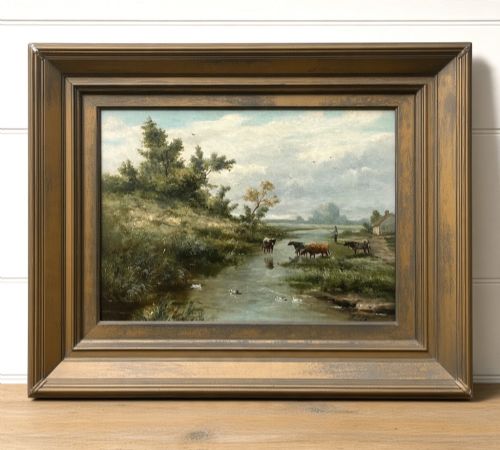
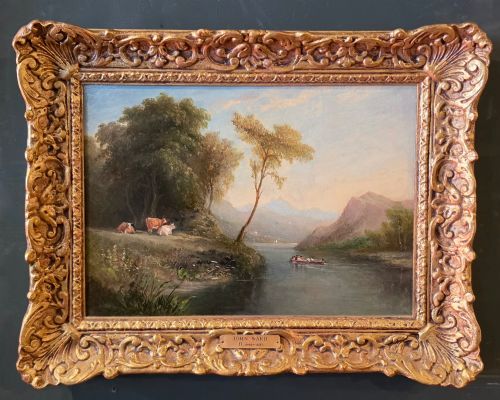
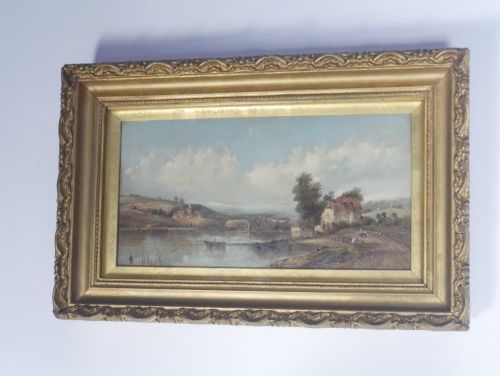
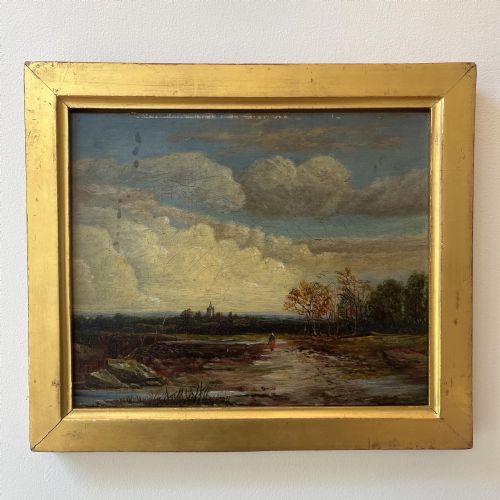
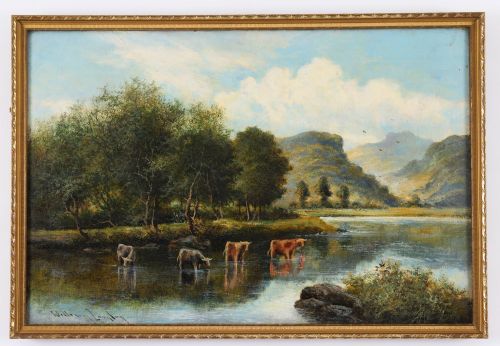
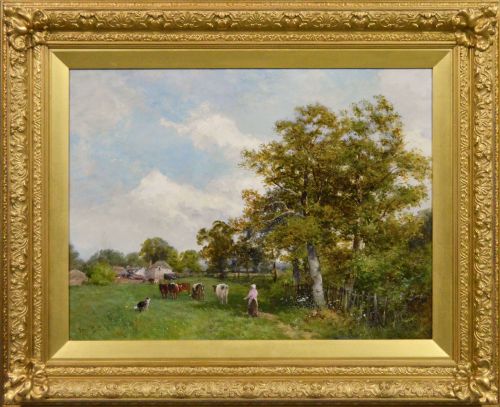
Original pastoral canvas works bring country life, cattle and river scenes onto oil on canvas, offering a direct view of rural history.
Original Pastoral Canvas
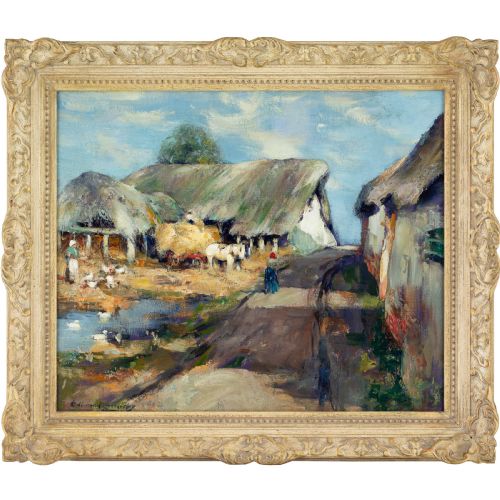
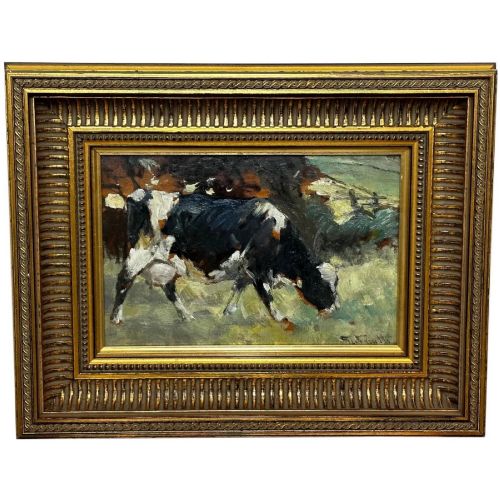
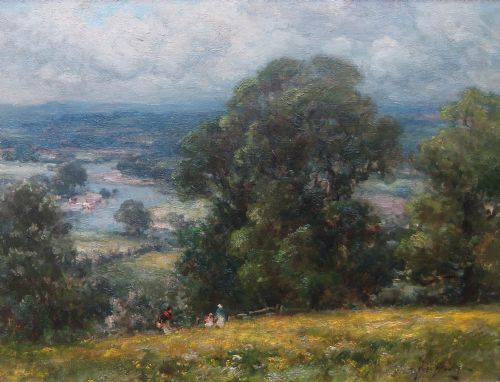
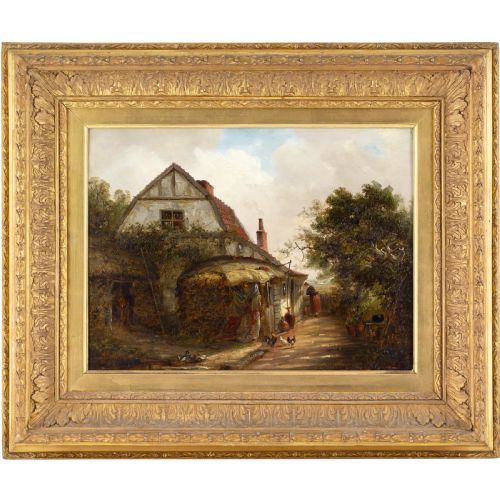
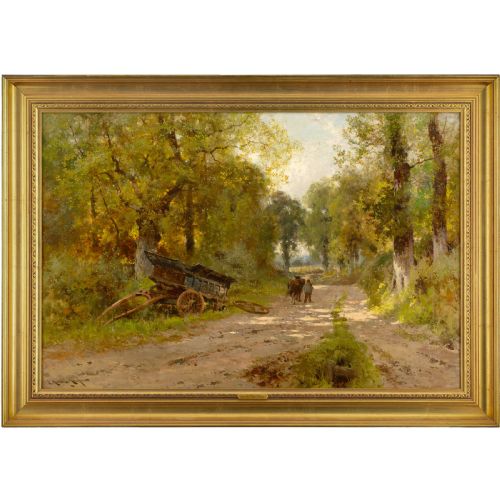
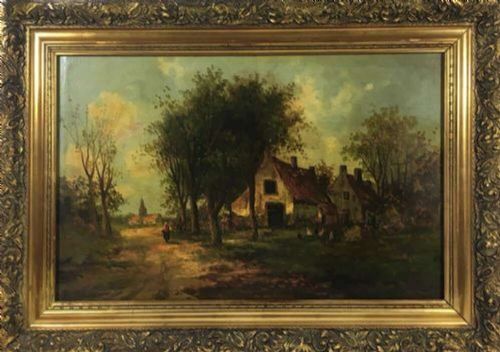
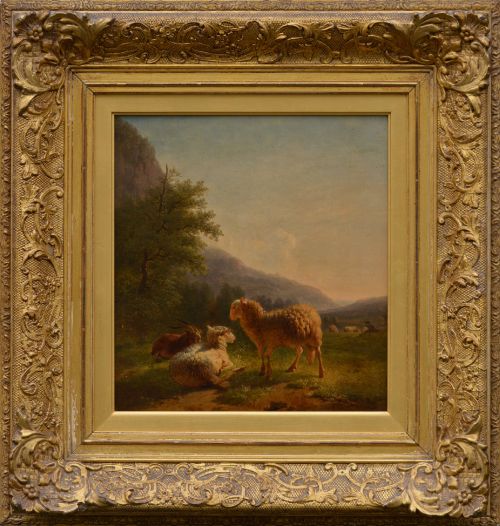
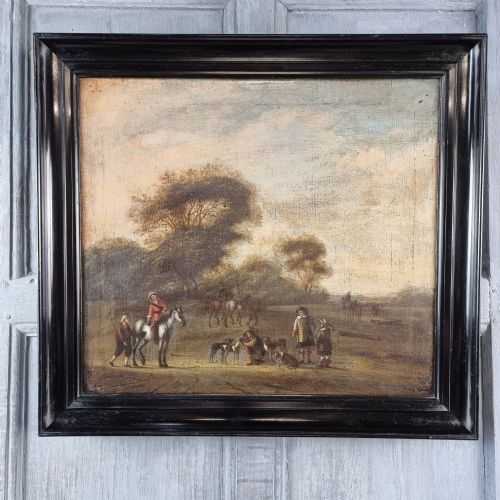
An original pastoral canvas captures rural and agricultural scenes, focusing on farmyards, river landscapes, and figures working in the countryside. These works represent quiet rural moments through depictions of cattle, sheep, and farm labourers at rest.
The pieces found here span from the late seventeenth century through the nineteenth and twentieth centuries. Works from the Victorian and Edwardian periods, alongside British Impressionism and the Barbizon School, form the core of the selection.
Common compositions include shepherds with flocks, milkmaids, and river views framed by willows or woodland. Artists often record specific local regions across Britain and France, grounding the idyllic subjects in recognisable topography.
How They Were Made
These works rely on oil paint applied to stretched canvas, often supported by wooden stretcher frames. Painters built up pigment through varied brushwork to render texture in foliage, water, and animal fleeces.
Many paintings retain their period framing, constructed from wood with applied gesso and giltwood finishes. These frames provide structural support and historical context for the canvas surface.
Original Pastoral Canvas Retail Price Guide 2026
Typical asking prices for original pastoral canvas among the pieces listed under this phrase on Sellingantiques today, from the lower quarter to the upper quarter. They describe what is for sale here now, not the wider market.
Listings feature works created using oil paint on canvas, housed within period wooden and giltwood frames.
What Varies in Quality
Quality rests on the precision of brushwork and the artist's command of light, atmosphere, and anatomy. Finer canvases capture natural movement in livestock and convincing depth in landscape perspective.
The handling of surface texture and the preservation of the original paint layer distinguish superior examples. Retained provenance, legible signatures, and strong compositional balance mark the upper tier of works.
William Langley·Eugène Verboeckhoven·John Horace Hooper·Thomas Sidney Cooper·Ernest Higgins Rigg
The Original Pastoral Canvas Glossary
- Barbizon School
- A nineteenth-century French movement dedicated to naturalistic landscape painting. Artists associated with the group worked directly from nature, influencing later rural painting across Europe.
- Giltwood
- Wood coated with a thin layer of gold leaf or gilt powder, commonly used on nineteenth-century picture frames. This finish provides a reflective border that complements the tones of an oil painting.
- Gesso
- A paint mixture consisting of a neutral binder mixed with chalk, gypsum, or pigment. It served as a preparation layer on wooden frames before gilding.
- Impressionism
- A style of painting emphasising loose brushstrokes and the shifting qualities of natural light. British practitioners applied these principles to traditional rural subjects.
Original Pastoral Canvas: Frequently Asked Questions
What subjects appear in pastoral paintings?
These works typically depict rural scenery, including farmland, riverbanks, and woodland paths. Common focal points involve domestic animals such as sheep, cattle, and carthorses alongside agricultural workers.
Scenes frequently capture specific times of day, such as morning light or eventide. Figures are often shown engaged in traditional tasks like harvesting, herding, or fishing.
How do I date an oil painting?
Dating relies on stylistic clues, framing methods, and stretcher construction. Canvas types and artist signatures or exhibition records help narrow the period of creation.
Costume and agricultural technology depicted in the scene offer further chronological markers. Comparison with documented works by the same artist confirms the timeline.
How should I care for canvas art?
Keep paintings away from direct sunlight and fluctuating humidity to prevent paint cracking and canvas distortion. Stable indoor environments protect both the oil pigments and the wooden stretcher frames.
Dust the surface gently with a soft, dry brush without applying pressure. Avoid using liquid cleaners or touching the painted area directly.
What is the Barbizon influence?
The Barbizon influence stems from French painters who prioritized direct observation of rural landscapes and atmospheric weather. This approach encouraged artists to paint farmyards and open fields with greater realism.
British painters adopted these ideals, blending them with local traditions of landscape and animal painting. The resulting works focus on unidealized, everyday rural life.