
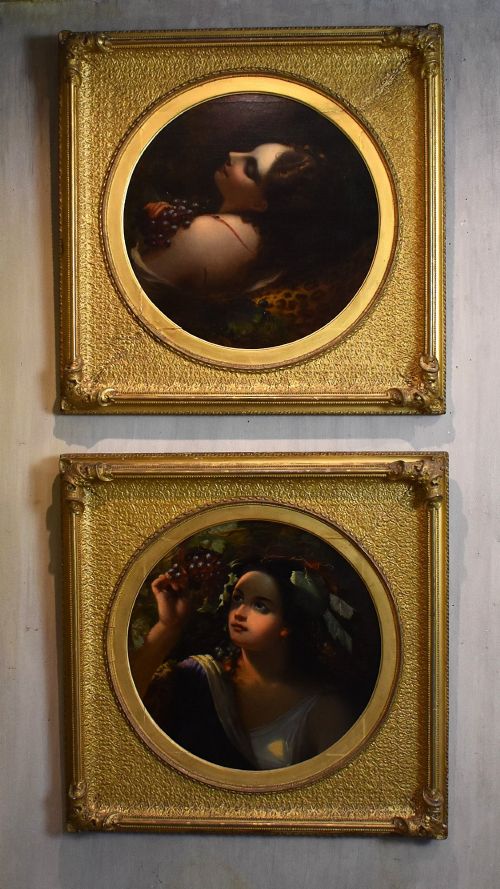
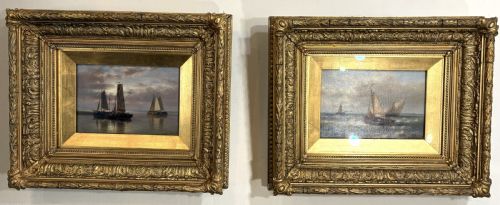


Original Oil Artwork Pair
An original oil artwork pair brings balanced composition and matched pigment to a room, offering two complementary canvases created by the same hand.
Original Oil Artwork Pair
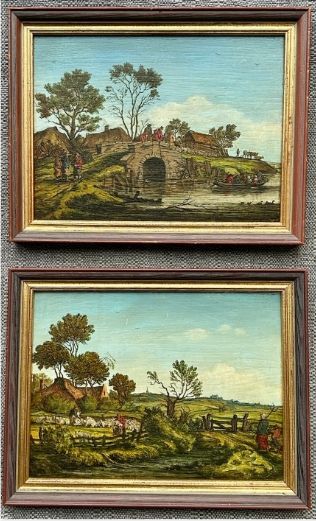
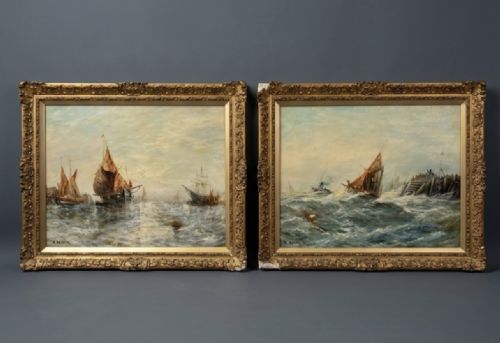
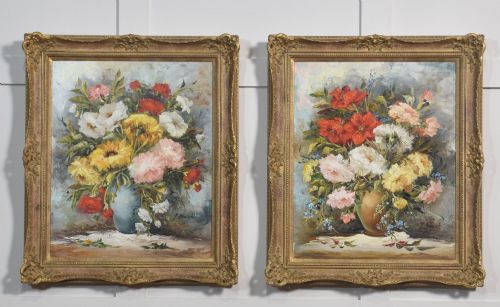
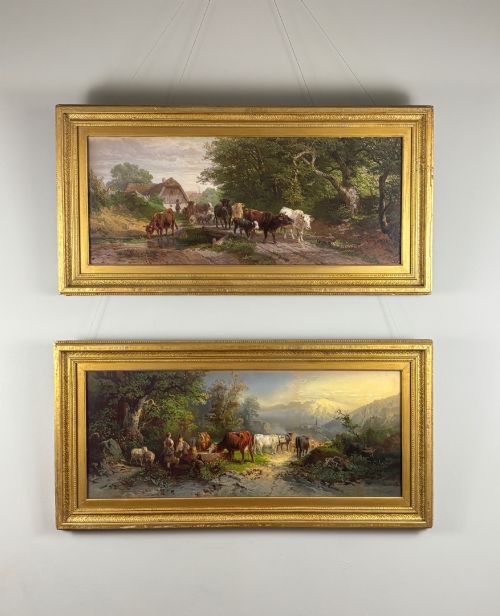
An original oil artwork pair consists of two related paintings executed in oil, often depicting matching subjects such as maritime scenes, landscapes, coastal views, and still lifes. These works span the nineteenth century through the early twentieth century, encompassing Victorian and Edwardian periods.
The pairings on this page appear on canvas, wood panels, and board supports. Many retain their period frames, incorporating materials such as giltwood, gesso, and gold leaf to complement the painted surfaces.
Subjects range from architectural views and pastoral scenes to portraits and botanical studies. These duos originate from various European schools, including Flemish, Spanish, and English traditions.
How original oil artwork pair pieces were made
Artists applied oil paint to prepared canvas, wood panels, or boards using bristle brushes. The medium allowed for rich colour blending and layered impasto textures that dry slowly to a durable finish.
Surrounding frames utilise carved wood finished with gesso and gold leaf or giltwood highlights. These frames were constructed specifically to house and protect the paired panels or canvases.
Several artists clearly enjoyed painting sheep just as much as grand cathedrals, proving that a humble flock makes an excellent companion piece to an Italian town.
What varies in quality
The strength of the composition and the handling of light determine the visual impact of each painting in the set. Superior works demonstrate confident brushwork and balanced tonal harmony between both panels.
The preservation of the original painted surface and the condition of the supporting canvas or wood panel influence the integrity of the piece. Associated frames that retain their original gilding contribute to the completeness of the object.
W Klombeck·Manuela Bonati·Johann Friedrich Voltz·Theodore Jensen·Abraham Hulk I·John Grenville Fennell·Evelyn Chester·Gustave De Bréanski·Adrian Van Porten·Frank Hider·R Palnay·Lewis J Wood·Daniel Sherrin·Samuel Sidley·W A Clark·Federico Andreotti·Alfred Vickers Senior·Edgar Bundy·John W Morris·Thomas Rose Miles·Samuel Hart Turpin·R Allan·John Holland Snr·Henry Schafer·John Moore Ipswich
The Original Oil Artwork Pair Glossary
- Oil paint
- Pigment suspended in a drying oil, typically linseed, which provides flexibility and depth of colour. This medium allows artists to work slowly, blending tones directly on the support.
- Giltwood
- Wood carved and coated with gold leaf or gold paint to create a decorative metallic finish. It frequently frames nineteenth-century paintings.
- Impasto
- Paint applied thickly to a canvas or panel, standing visibly above the surface. This technique captures light and adds tactile dimension to the artwork.
- Gesso
- A white paint mixture consisting of a binder mixed with chalk, gypsum, or pigment, used as a prepared surface for wood panels and frames before gilding or painting.
- Canvas
- Heavy woven fabric stretched across a wooden frame to serve as a durable support for oil painting. It provides a slightly textured ground for the brushwork.
Original Oil Artwork Pair: Frequently Asked Questions
How should I hang an original oil artwork pair?
Hang the two pieces side by side at eye level, maintaining equal spacing between them to preserve their visual balance.
Ensure they are positioned away from direct sunlight and moisture to protect the oil pigment and wooden frames.
What subjects appear in these pairs?
Common subjects include maritime scenes, pastoral landscapes, architectural views, and floral still lifes.
Artists frequently created these matching compositions to decorate domestic interiors with balanced themes.
How do I care for oil paintings on wood panels?
Dust the surface gently with a soft, dry brush and avoid using water or chemical cleaners.
Keep the room at a stable temperature and humidity level to prevent the wood panels from warping.
Are these paintings signed by the artists?
Many works feature artist signatures or inscriptions either visibly on the front or recorded on the reverse.
Signatures help attribute the pieces to specific nineteenth-century painters and regional schools.