

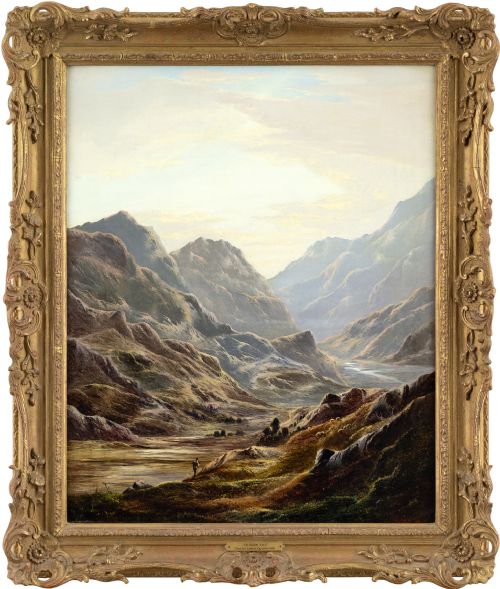


Original Mountain Artwork
Original mountain artwork captures crags, lochs and high passes through oil, watercolour and canvas from the nineteenth century onwards.
Original Mountain Artwork
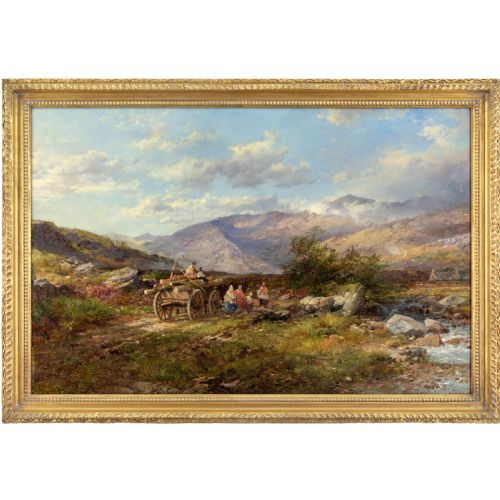
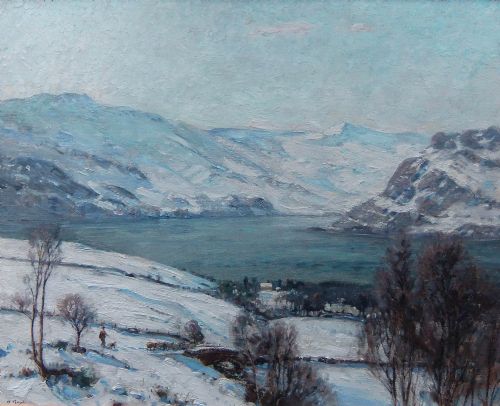
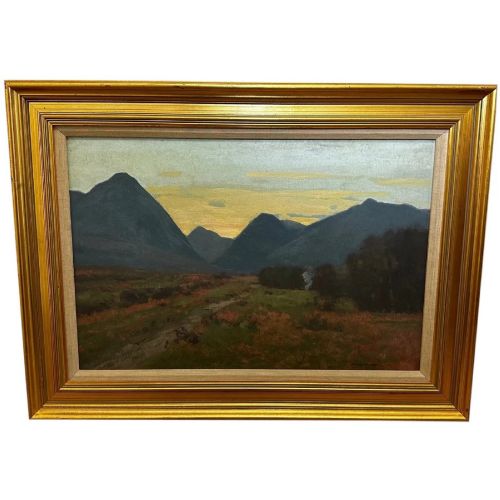
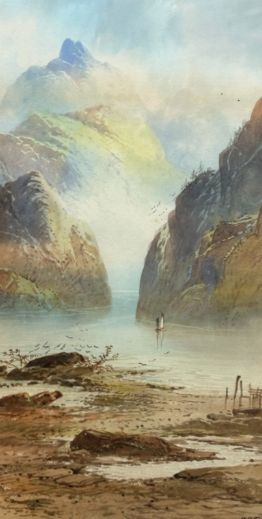
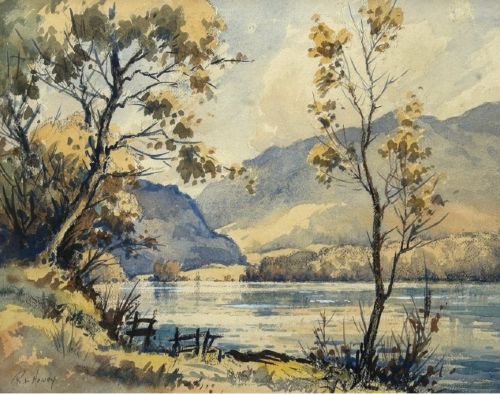
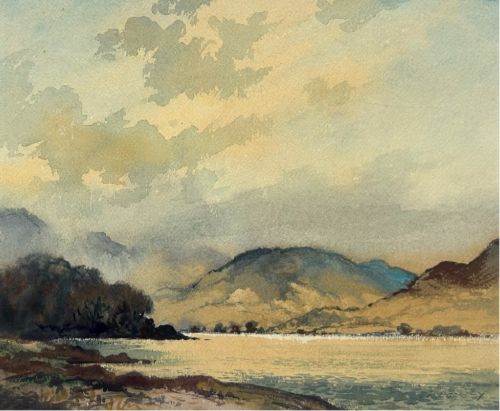
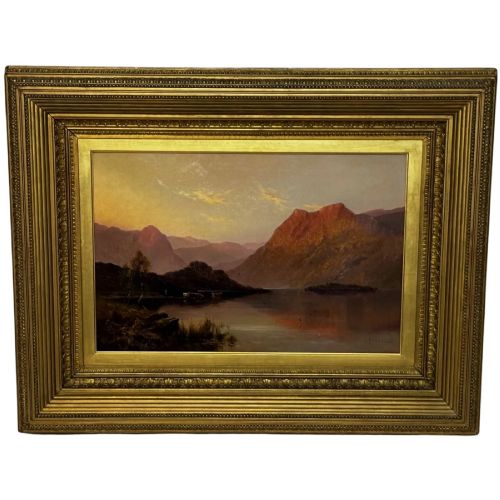
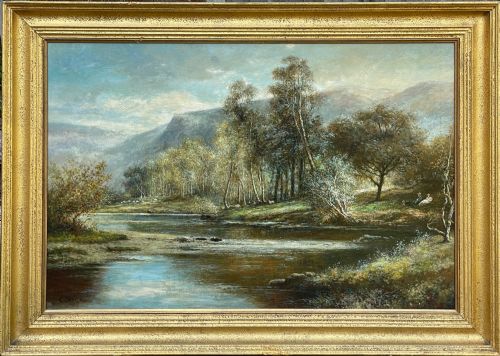
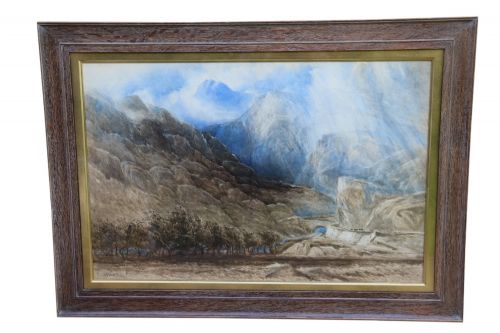
Original mountain artwork brings topographies of Snowdonia, the Scottish Highlands and the Lake District into domestic spaces through nineteenth and twentieth century paintings. Collectors encounter watercolours on paper and oil paintings on canvas depicting Highland cattle, quiet loughs and steep passes.
Most examples originate from British and continental schools working in oil or watercolour between the Victorian era and the mid twentieth century. These pieces record specific regional views, often identified in titles by artists who travelled through rural Britain and Europe.
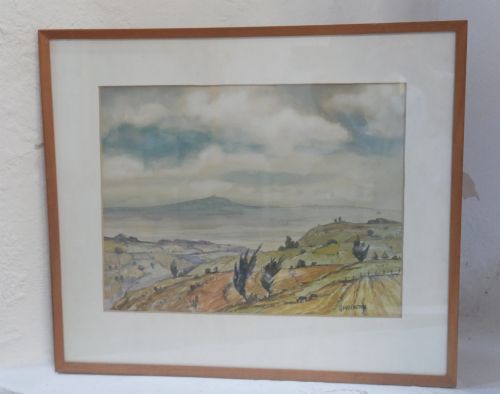
Framed works frequently retain their original gilt settings or glass protection, spanning periods from early Victorian depictions to later mid century watercolours. The subject matter centres on natural landscapes, valleys and mountain lakes.
How they were made
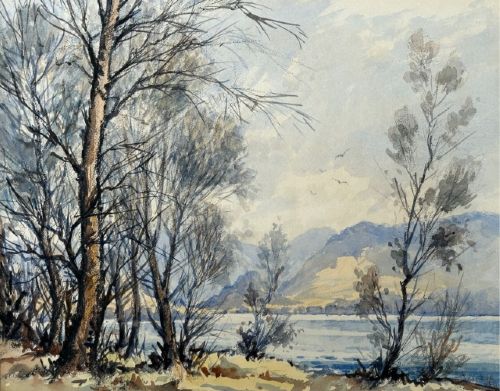
Artists applied oil paint to canvas or wood panels, building rich textures for rocky outcrops and atmospheric mists over lochs. Watercolour pigments were washed onto paper to capture the translucent light of mountain passes and clear lake waters.
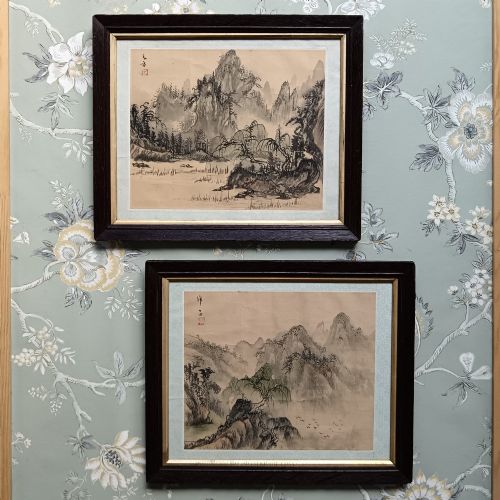
Works on paper were glazed and framed to protect delicate pigments, while oil paintings on canvas utilised heavy wooden stretchers and often sat within moulded gilt frames. Pen and ink drawings on paper also appear alongside traditional brush techniques.
Original Mountain Artwork Retail Price Guide 2026
Typical asking prices for original mountain artwork among the pieces listed under this phrase on Sellingantiques today, from the lower quarter to the upper quarter. They describe what is for sale here now, not the wider market.
Materials documented in the works include canvas, paper, wood panels, oil paint, watercolour, and gilt frames.
What varies in quality
Quality rests in the handling of light and the precision of topographical detail, where skilled artists delineate distant peaks and shifting weather with nuance. Lesser examples rely on formulaic brushwork and repetitive compositions without local observation.
The integration of the original frame alters the integrity of the piece, particularly where period gilt mouldings complement the age and palette of the canvas. The preservation of the paper or canvas surface without disruptive repairs maintains the visual impact.
John Syer RI·Herbert Royle·William Henry Earp·Alfred Fontville de Breanski Jr·Robert Leslie Howey·George Houston·Charles Leslie·Henry Martin Pope·John Grenville Fennell·William Hoggatt·Frank Hider·C Caldwell·William Grant Murray·John Douglas Perrett·Edward Horace Thompson·Stanley Orchart·Thomas Lound·James H Hulse·George Melvin Rennie·William Miller Frazer·Alfred de Breanski·Alfred de Breanski Snr
The Original Mountain Artwork Glossary
- Watercolour
- A painting method where fine pigment is suspended in a water-based solution and applied to paper. This technique allows for delicate washes and luminous depictions of sky and water.
- Oil on Canvas
- A medium utilising pigments bound in a drying oil, applied to a stretched woven fabric. It permits deep colour saturation and textured impasto work on mountain landscapes.
- Gilt Frame
- A wooden picture surround covered with a thin layer of gold leaf or metallic gilt paint. These frames often date from the same period as the artwork they enclose.
- Impressionism
- A style of painting emphasising light and its changing qualities rather than minute detail. Scottish and British examples capture the transient atmospheric conditions of northern hills.
Original Mountain Artwork: Frequently Asked Questions
What periods do these mountain paintings cover?
The works span from the early nineteenth century through the Victorian period and into the mid twentieth century. Artists recorded landscapes across these decades using traditional oil and watercolour methods.
Victorian and Edwardian pieces sit alongside later twentieth century watercolours, reflecting changing artistic approaches to British and European topographies.
How should I hang framed watercolours?
Watercolour paintings on paper require placement away from direct sunlight to prevent the fading of delicate pigments. Glazed frames protect the paper surface from atmospheric moisture and dust in domestic rooms.
Ensure wall fixings securely support the weight of the original wooden and gilt frames often found with these historic landscapes.
Are these works signed by the artists?
Many examples feature signatures or inscriptions by the artists, often noting the specific location depicted on the reverse or front. Signatures help attribute works to known painters of the British and continental schools.
Unsigned pieces rely on stylistic evidence, period framing and contemporary inscriptions to indicate their origin and date.
What subjects appear besides mountains?
Compositions frequently include Highland cattle, lakes, rivers, timber carts and figures crossing bridges within the mountain valleys. Coastal scenes and rural paths also feature alongside high altitude views.
Artists focused on the interaction between human activity and wild terrain, recording rural life near lakes and glens.