



Original London Artwork
Original london artwork captures the capital through watercolours, oils, and etchings spanning the nineteenth and twentieth centuries.
Original London Artwork
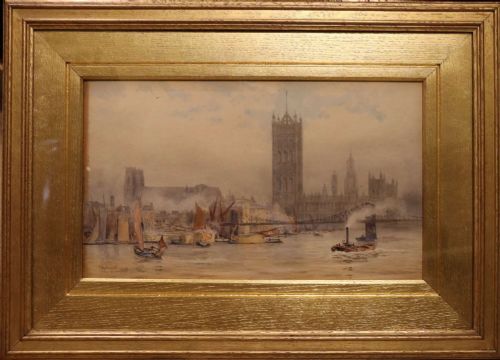
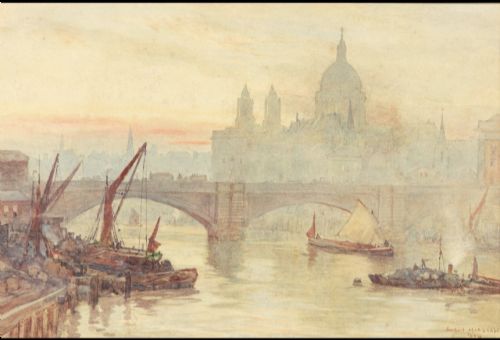
Original london artwork comprises paintings, watercolours, etchings, and drawings depicting capital scenes from the nineteenth and twentieth centuries. These pieces record familiar landmarks such as St Paul's Cathedral, the River Thames, Westminster Bridge, and Hyde Park through changing historical periods.
The version most commonly met on this page is the watercolour painting from the Edwardian era or early twentieth century. Artists often captured architectural landmarks and river views en plein air or from detailed topographical studies.
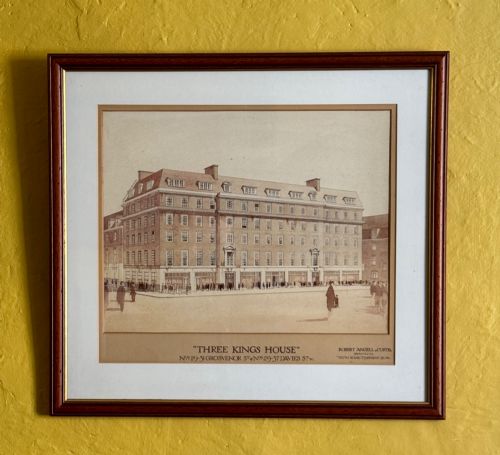
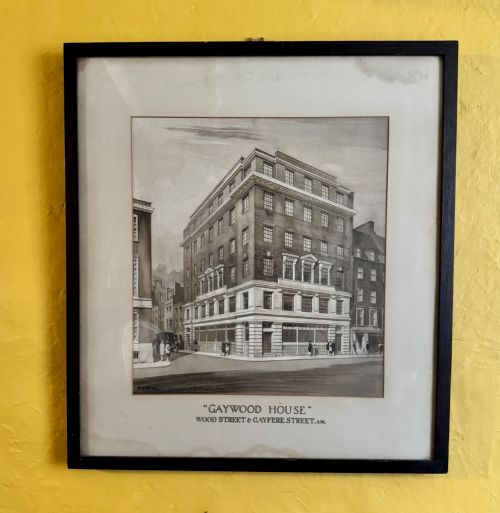
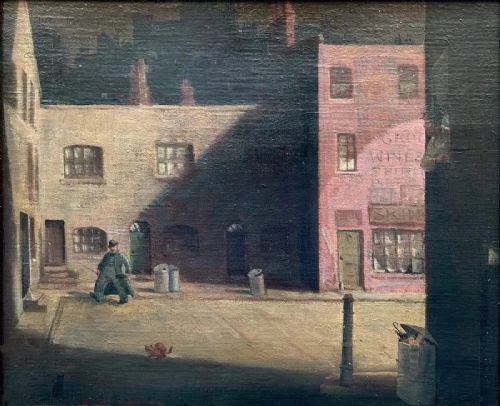
Beyond cityscapes, the selection includes oil portraits and framed design sketches linked to London addresses. Each piece offers a direct visual record of the city's streets, parks, and waterways across different decades.
Materials and Techniques
Watercolour paint on paper forms the foundation of many pieces, often combined with ink lines or pencil underdrawing to define architectural details. Artists applied washes to capture atmospheric effects such as London fog and changing light over the Thames.
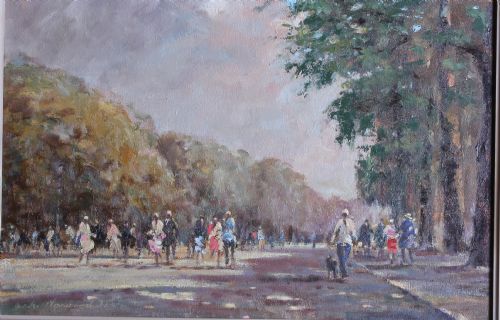
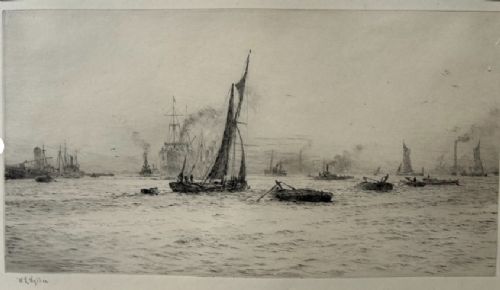
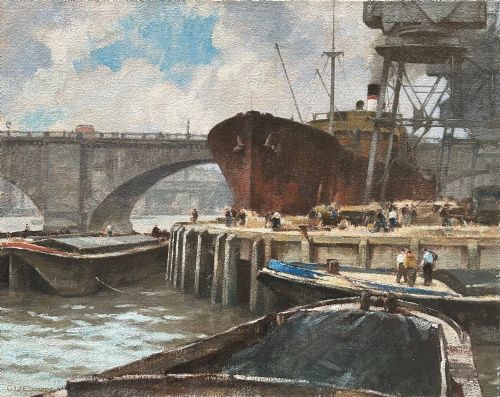
Oil paintings on canvas and panel provide heavier textures and deeper pigments for portraits and landscape views. Etchings and drypoint prints utilise inked metal plates pressed onto paper to produce fine, linear details of bridges and river reaches.
Original London Artwork Retail Price Guide 2026
Typical asking prices for original london artwork among the pieces listed under this phrase on Sellingantiques today, from the lower quarter to the upper quarter. They describe what is for sale here now, not the wider market.
Periods represented include the nineteenth century, Edwardian era, and the nineteen fifties.
Distinctions in Quality
The hierarchy of quality rests upon the sureness of the hand and the accuracy of topographical detail. Master watercolourists and established etchers command attention through precise perspective and dynamic handling of light upon water and stone.
Support materials and framing condition further separate standard topographical records from significant fine art pieces. Strong compositions with clear provenance and documented artist attribution elevate individual works within the broader range.
Herbert Menzies Marshall·William Lionel Wyllie·Charles James Lauder·Rowland Henry Hill·Jack Merriott·Beatrice Parsons·Frank W Scarborough·Edgar J Maybery
The Original London Artwork Glossary
- Etching
- A printmaking method where acid bites lines into a metal plate to hold ink. This technique allows artists to produce highly detailed architectural views of bridges and streets.
- Topographical
- Representing specific places accurately. These works focus on recognisable London landmarks, buildings, and parks.
- Drypoint
- An intaglio printmaking technique where an artist scratches directly into a metal plate with a sharp needle. This process creates a distinctive velvety burr along the printed lines.
- Watercolour
- A paint consisting of pigment suspended in a water-soluble vehicle. Painters apply washes of this medium onto paper to achieve translucent effects.
- Impressionism
- A style focused on capturing the visual impression of a moment, paying attention to light and atmosphere. British practitioners applied these principles to misty river scenes and parks.
Original London Artwork: Frequently Asked Questions
What periods do these London artworks cover?
The pieces span from the late nineteenth century through the mid twentieth century, encompassing Victorian, Edwardian, and post-war eras.
Artists during these decades recorded the rapid modernisation of the capital alongside its historic architecture.
How should I frame and display vintage watercolours?
Vintage watercolours require acid-free mounts and UV-protective glass to prevent fading of the pigments on paper.
Keep them away from direct sunlight and damp environments to preserve the integrity of the original medium.
What subjects are most common in these pieces?
River views of the Thames, bridges, cathedrals, and royal parks dominate the topographical selections.
Artists frequently returned to sites like St Paul's Cathedral, Westminster, and the Houses of Parliament.
How do I identify an original etching from a reproduction?
Original etchings display plate marks, slight indentation in the paper where the metal plate pressed down, and ink texture under magnification.
Mechanical reproductions lack these physical indentations and uniform ink pooling.