



Original Loch Artwork
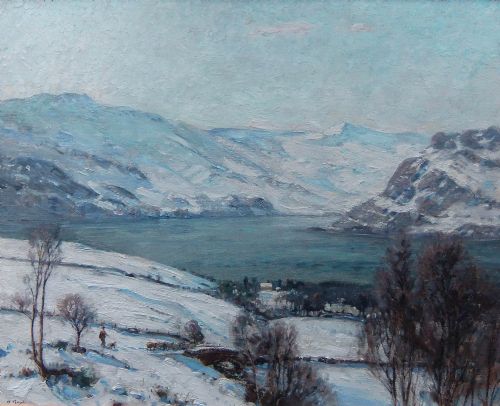
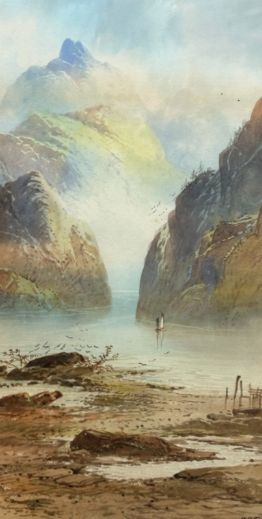
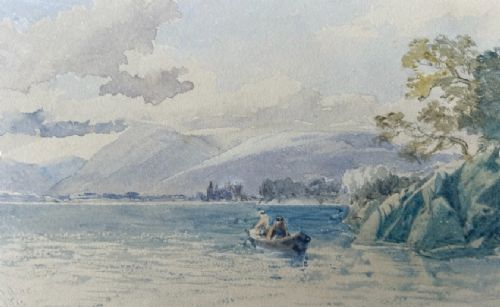
Original loch artwork captures the wild expanses of Scottish water and highland landscape through Victorian watercolour and twentieth-century oil paint.
Original Loch Artwork
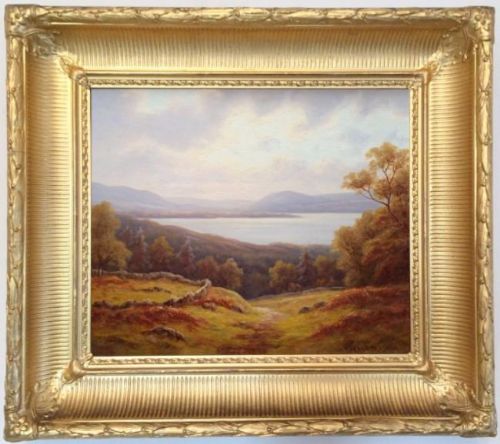
Original loch artwork comprises paintings depicting Scottish bodies of water and highland scenes, executed in mediums such as oil paint and watercolour on canvas or paper. When searching for original loch artwork, buyers encounter pieces ranging from Victorian landscape realism to twentieth-century British painting.
The subjects span notable Scottish locations including Loch Long, Loch Awe, Loch Leven, Loch Lomond, Loch Etive, Loch Tay, Loch Earn, and Loch Clare. These works frequently incorporate framing elements like wood and gesso to present the highland scenery.
Victorian examples dominate the selection, often featuring atmospheric morning mists, highland cattle, or ruined coastal castles. Later twentieth-century interpretations introduce styles associated with British and Scottish impressionism.
How they were made
Artists deployed oil paint on canvas or watercolour applied to paper, capturing the specific light and atmosphere of Scottish lochs. Many works utilise traditional wooden frames finished with moulded gesso to house the canvas or watercolour sheet.
The handling of paint ranges from the tight realism of nineteenth-century Victorian pieces to the looser brushwork seen in twentieth-century Scottish impressionism. Support materials vary between stretched canvas, wooden panels, and heavy paper substrates.
Original Loch Artwork Retail Price Guide 2026
Typical asking prices for original loch artwork among the pieces listed under this phrase on Sellingantiques today, from the lower quarter to the upper quarter. They describe what is for sale here now, not the wider market.
Highland cattle make frequent cameo appearances beside the water, seemingly unfazed by nineteenth-century morning mists.
What varies in quality
Quality rests upon the artist's ability to render the atmospheric effects of highland weather, mountain light, and water reflection convincingly. Stronger pieces demonstrate confident brushwork and a sophisticated palette rather than a mechanical transcription of scenery.
The integrity of the original canvas, paper, and gesso frame contributes significantly to the overall standard of a piece. Works by established named artists command greater attention through their compositional balance and historical provenance.
Herbert Royle·Thomas Miles Richardson Jnr·William Henry Earp·Everett Watson Mellor·Henry Hillier Parker·Stanley Orchart·William Miller Frazer·Daniel Sherrin·Alfred de Breanski Snr·James Kinnear·George Melvin Rennie
The Original Loch Artwork Glossary
- Canvas
- A heavy woven fabric used as a surface for oil painting, typically stretched across a wooden frame before work begins.
- Watercolour
- A paint consisting of pigment suspended in a water-soluble vehicle, applied to paper to achieve translucent washes of colour.
- Gesso
- A plaster mixture applied to wood frames or panels to prepare a smooth surface for gilding or painting.
- Impressionism
- A style of painting that emphasises accurate depiction of light in its changing qualities, visible in both British and Scottish works of the period.
Original Loch Artwork: Frequently Asked Questions
What periods do these paintings date from?
The available pieces span from the mid-nineteenth century through the Victorian era up to the mid-twentieth century. This timeline covers shifting artistic approaches from Victorian landscape realism to twentieth-century British impressionism.
Dates within the selection point to specific decades such as the eighteen-eighties, nineteen-tens, and nineteen-thirties. Each era brings distinct characteristics in framing and paint application.
Which materials are used in these works?
Painters employed oil paint and watercolour as primary mediums, working on stretched canvas or paper supports. Gesso and wood feature heavily in the original frames that accompany the paintings.
Glass occasionally protects works on paper such as watercolours, while oil paintings on canvas remain unglazed. These material combinations reflect standard studio practices of the nineteenth and twentieth centuries.
How do I identify a Scottish loch scene?
Titles often name specific locations like Loch Lomond, Loch Tay, or Loch Etive alongside geographic markers such as the Scottish Highlands. Visual cues include mountainous backdrops, highland cattle, and coastal castle ruins.
Artists frequently inscribed titles directly onto the canvas reverse, stretcher bars, or associated documentation. The landscape topography itself typically references genuine Scottish geography.
How should I care for an original painting?
Display works away from direct sunlight and excessive humidity to protect oil paint, watercolour pigments, and paper supports. Maintain stable indoor temperatures to prevent warping in the wooden frames and gesso ornamentation.
Glazed watercolours require protection from moisture ingress behind the glass, while unglazed canvas benefits from gentle dust removal using a soft brush. Professional framing conservation ensures long-term stability.