

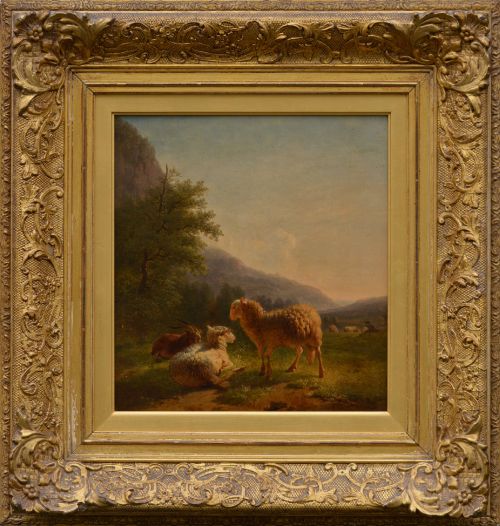


Original Livestock Painting
An original livestock painting brings the rural life of past centuries directly to your walls through authentic period brushwork.
Original Livestock Painting
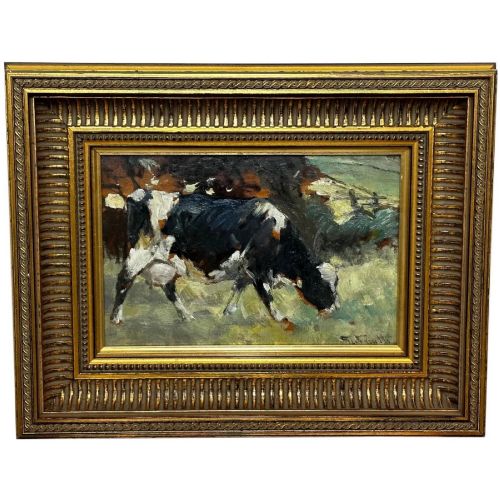
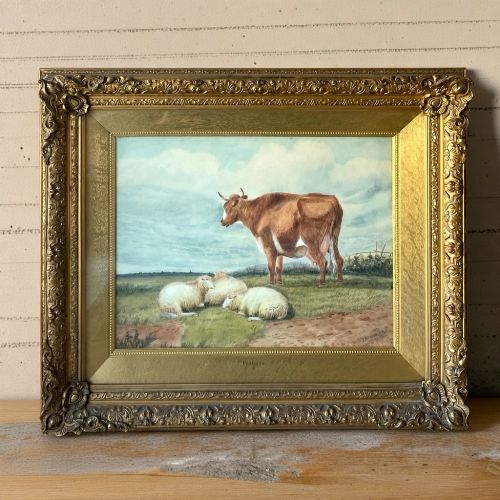
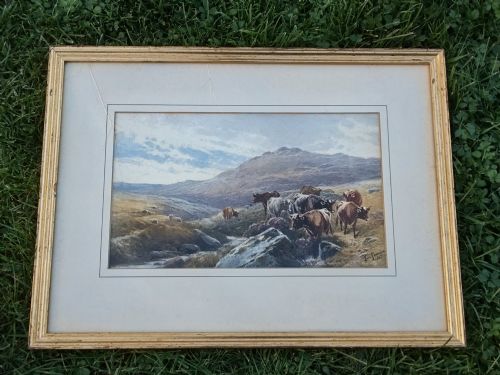
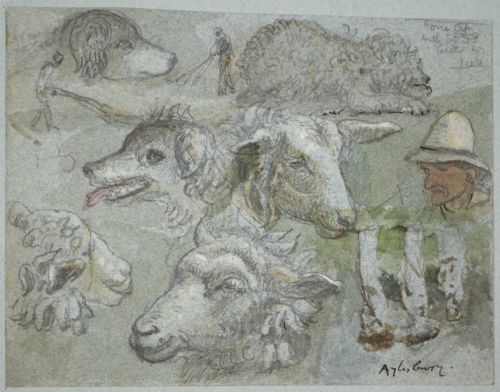
An original livestock painting captures farm animals and pastoral scenes across the nineteenth and twentieth centuries. These artworks range from intimate watercolours on paper to substantial oil paintings on canvas.
You will most frequently encounter nineteenth-century pieces alongside works from the Edwardian era and the early twentieth century. Common subjects include cattle, sheep and horses depicted in fields, at rivers or resting with farmers.
Materials and techniques
Artists painted primarily with oil on canvas or applied watercolour to paper, often housing the finished works in wooden or giltwood frames. Some pieces incorporate mixed media to build texture within the rural landscape.
The framing often matches the period of the painting, with original surrounds providing context for the artwork within. Canvas supports generally show the characteristic weave and stretcher marks of their era of origin.
Original Livestock Painting Retail Price Guide 2026
Typical asking prices for original livestock painting among the pieces listed under this phrase on Sellingantiques today, from the lower quarter to the upper quarter. They describe what is for sale here now, not the wider market.
Cows, sheep, horses, calves, ducks, and chickens all make regular appearances, proving that historical farmyard chaos is highly photogenic.
Evaluating quality in pastoral art
Quality rests upon the artist's ability to render the anatomy and posture of the animals with anatomical accuracy and naturalism. The handling of light, shade and atmosphere within the surrounding landscape elevates a piece significantly.
The condition of the canvas, paper and pigment preservation determines the visual impact of the work today. Original period framing that complements the artwork rather than distracting from it adds tangible merit to the piece.
Eugène Verboeckhoven·James Smetham·Johann Friedrich Voltz·Ernest Pile Bucknall·Andre de Moller·Claude Cardon·Henry Cheadle·Ernest Higgins Rigg·Owen Bowen·Thomas Baker of Leamington·T Sidney Cooper
The Original Livestock Painting Glossary
- Oil on Canvas
- A painting medium where pigments are suspended in drying oils and applied to a woven fabric stretched across a wooden frame. This combination allows for rich colour depth and lasting durability.
- Watercolour Painting
- Artwork created using water-soluble pigments on paper supports, producing translucent washes of colour. It requires precise brushwork as mistakes are difficult to alter.
- Giltwood
- Wood carved and coated with a thin layer of gold leaf or gold paint, frequently used for traditional picture frames. It adds a warm, reflective border to the artwork.
- Victorian Pastoral
- A nineteenth-century artistic style focusing on idealized or realistic scenes of rural and agricultural life. These works often celebrate the harmony between farm animals, workers and the English countryside.
- Mixed-Media Painting
- An artwork utilising more than one medium or material on the support surface. This approach combines elements like watercolour and ink to create varied textures.
Original Livestock Painting: Frequently Asked Questions
What periods do these paintings date from?
The works span from the early nineteenth century through the Edwardian era up to the mid-twentieth century. Most examples cluster in the Victorian period and the early nineteen-twenties.
This timeframe captures significant shifts in pastoral art, moving from traditional realism towards British Impressionism.
How should I care for an antique painting?
Keep the artwork away from direct sunlight and excessive moisture to protect the canvas and paper supports. Stable indoor temperatures prevent the wood and gesso frames from cracking.
Dust watercolours under glass gently with a dry cloth and avoid touching exposed oil paint surfaces.
Are these works signed by the artists?
Many of the listed pieces carry signatures or attributions to named painters from the nineteenth and twentieth centuries. These signatures help verify the authorship and historical context of the rural scene.
Unsigned works still offer stylistic clues that point to specific regional schools of pastoral painting.
What subjects appear most often in these scenes?
Cattle by rivers, sheep resting in fields and horses in evening landscapes dominate the imagery. Farm workers tending to calves, ducks and chickens also feature prominently.
The compositions reflect daily agricultural routines and rural topography from Britain and continental Europe.