
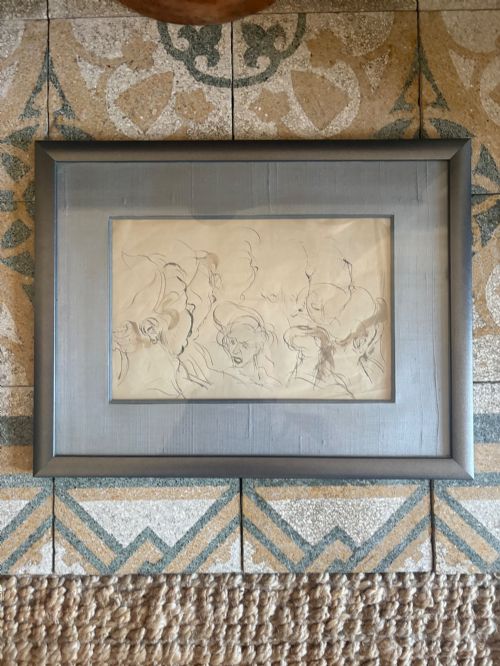


![Pen and Ink Sketch - Female Nudes by William Edward Frost [1810-1877]](https://www.sellingantiques.co.uk/photosnew/dealer_kendallhouse/dealer_kendallhouse_full_1758970795762-8493507346.jpg)


Original Ink Study Artwork
Original ink study artwork brings together direct preparatory sketches and finished graphic sheets across centuries of paper, ink, and wash.
Original Ink Study Artwork
When you search for original ink study artwork, you encounter hand-drawn sheets executed directly on paper, ranging from rapid preparatory sketches to detailed illustrative compositions. These works span centuries of production, appearing in periods from the eighteenth century through to nineteen sixty and later.
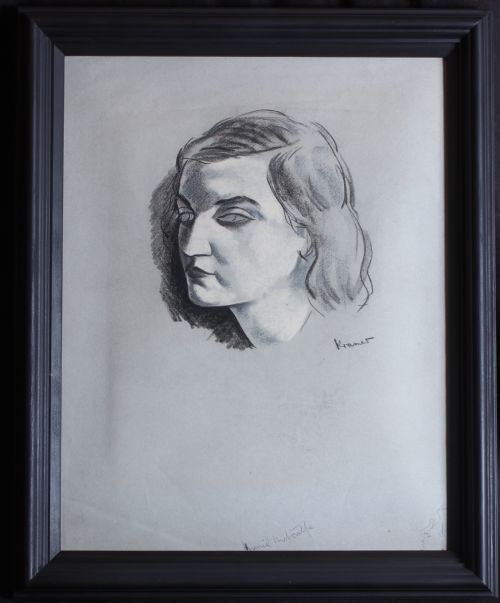
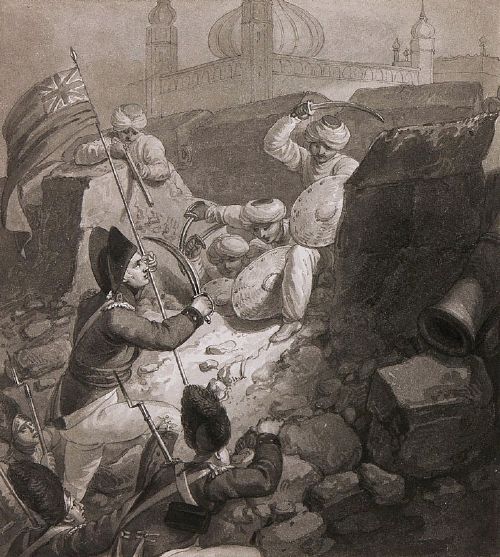
The selections on this page encompass various forms such as framed artwork, original drawings, and wall art. You find historical battle scenes, architectural studies of Gothic art, theatrical figures, and modernist nudes represented within these categories.
Origins stretch across British, Irish, French, and Dutch schools, reflecting diverse regional practices in draftsmanship. Pieces frequently arrive mounted in wood frames, sometimes protected behind glass.
Materials and construction methods
Draftsmen utilised paper as the primary support, applying iron gall or carbon inks with quill or steel pens. Wash techniques, watercolour, and gouache often supplement the ink lines to build tone, shade, and colour.
Preparatory works frequently display visible under-drawing, correction marks, and marginal annotations made by the artist during composition. Finished studies are typically preserved within wood frames, occasionally retaining period glass glazing.
Listings span from the eighteenth century through to nineteen sixty, featuring paper supports, ink, wash, gouache, and wood frames.
Distinctions in execution and condition
Quality rests upon the sureness of the draftsmanship and the expressive power of the line work. Superior examples demonstrate confident execution without hesitation, capturing form and movement economically.
Condition varies according to the stability of the paper support and the permanence of the ink. Tonal richness depends upon the preservation of the wash and the absence of heavy acidification or damp staining across the sheet.
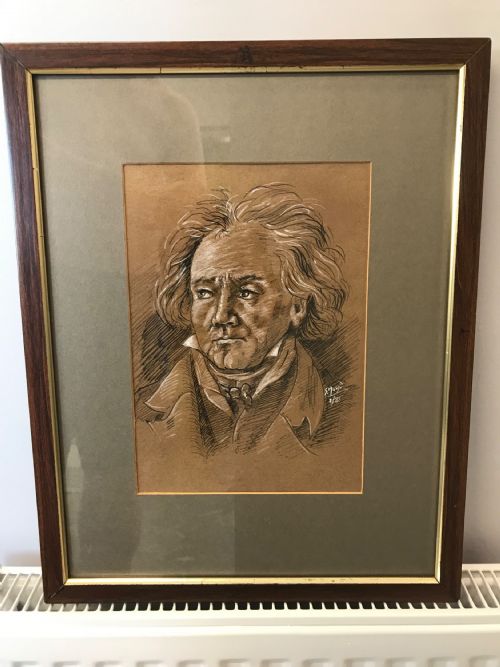
William Marshall Craig·Ludwig van Beethoven·Michael Healy·Alfred Dehodencq·William Edward Frost·Lucien Freud·Lawrence Stephen Lowry·Johan Noah Bemmel·Dame Laura Knight·Markey Robinson
The Original Ink Study Artwork Glossary
- Wash
- A diluted application of ink or watercolour used to create monochromatic tonal gradations and shadow behind ink lines.
- Preparatory study
- A preliminary drawing executed by an artist to plan a larger painting, mural, or finished composition.
- Gouache
- An opaque water-based paint composed of pigment, water, and a binding agent such as gum arabic, used here to add highlights.
- Modern British
- A stylistic category covering art produced in Britain during the twentieth century, bridging traditional realism and abstraction.
Original Ink Study Artwork: Frequently Asked Questions
What is an original ink study?
An original ink study is a hand-drawn work on paper executed by an artist using ink pens, washes, and occasionally gouache or watercolour. These sheets record direct observations, preliminary thoughts for larger paintings, or complete graphic compositions.
Unlike printed reproductions, each study contains the unique physical strokes, corrections, and tonal depths applied by the hand of the artist.
How do I display ink drawings safely?
Ink drawings require protection from direct sunlight and excessive humidity to prevent the paper from yellowing and the ink from fading. Framing under glass helps shield the delicate surface from airborne pollutants and physical damage.
Positioning pieces away from direct heat sources ensures the paper support remains stable over long periods of time.
How are different periods identified?
Periods are identified through stylistic conventions, the specific formulation of paper and ink, and framing methods typical of particular eras. Eighteenth-century works often display distinct laid paper and sepia wash techniques, while twentieth-century examples frequently show modernist tendencies or distinct artist signatures.
Comparative analysis with documented works by known schools or makers further clarifies the date of execution.
Why do some drawings include wash?
Artists added wash to ink drawings to establish volume, depth, and shadow quickly across the paper surface. Diluting ink with water allowed draftsmen to build atmospheric perspective and tonal contrast before applying finer pen lines.
This technique bridges the gap between linear drawing and fully painted compositions.