
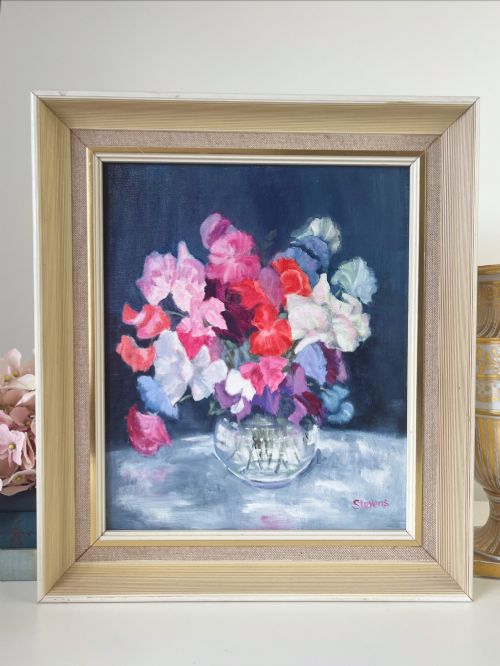
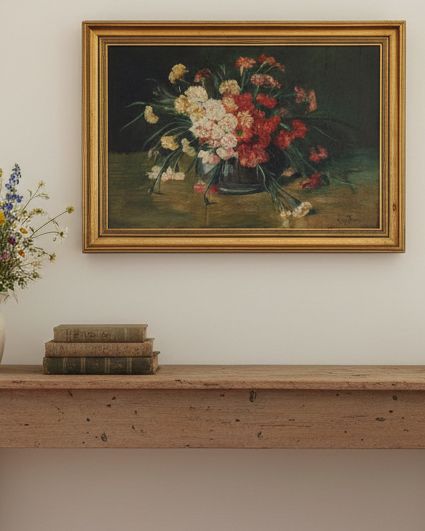
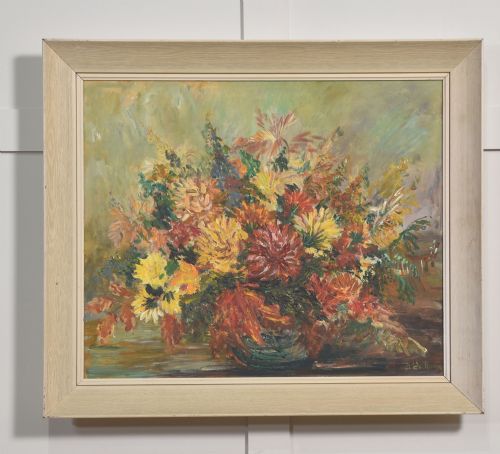
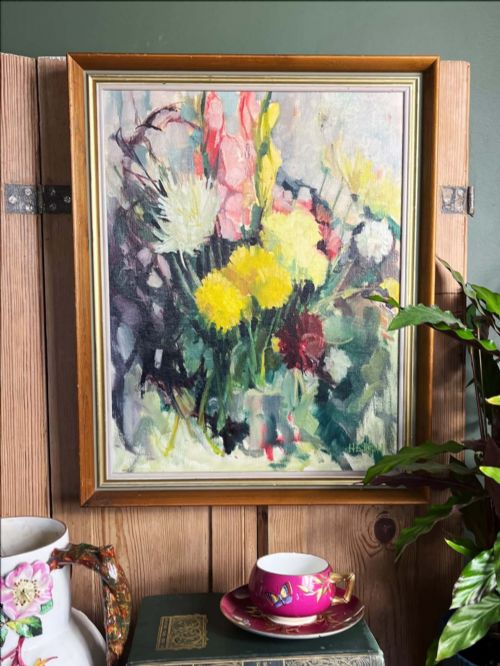
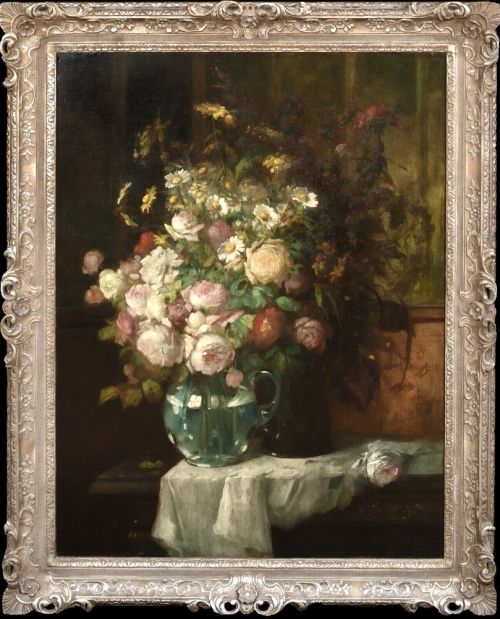
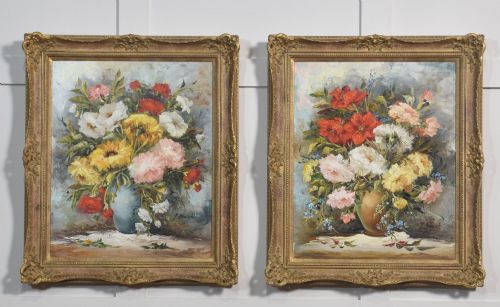
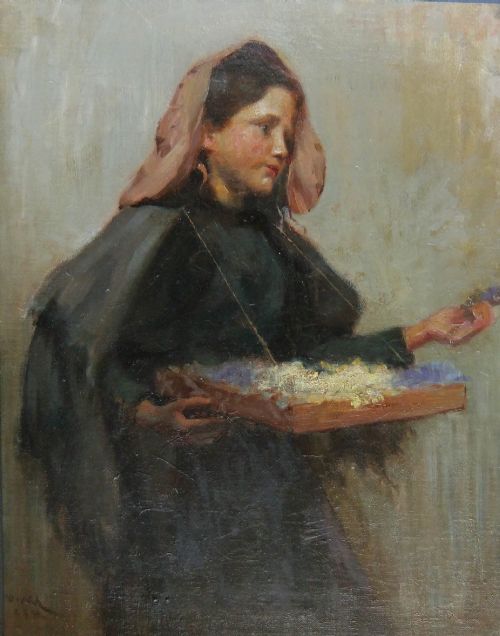
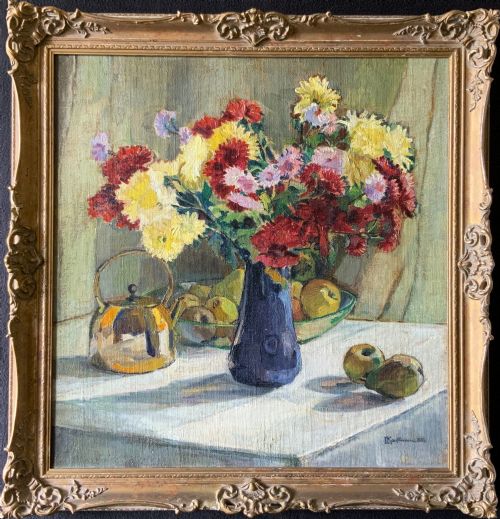
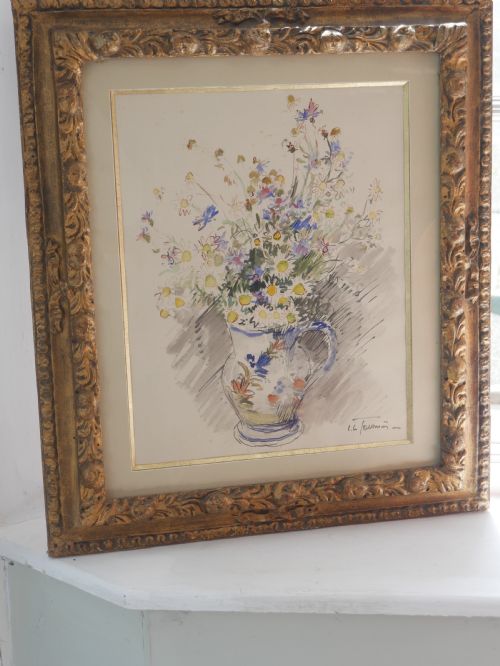
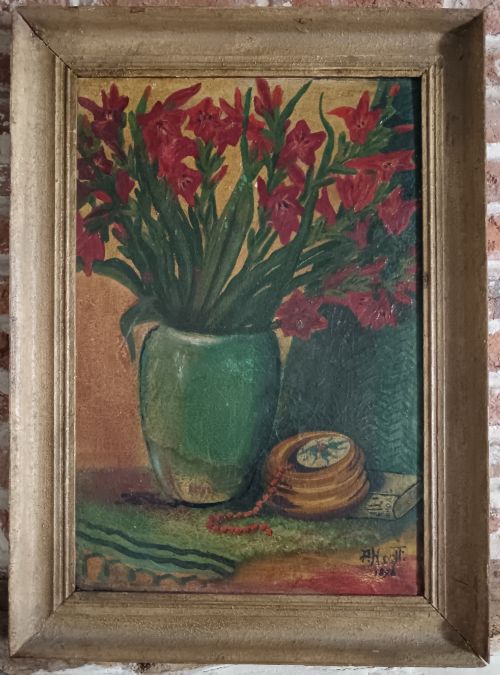

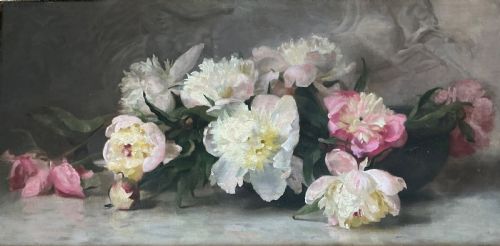


Original Impressionist Flower Painting
An original impressionist flower painting brings light, colour and texture to a room through loose brushwork and vibrant floral subjects.
Original Impressionist Flower Painting
An original impressionist flower painting captures botanical subjects through expressive brushstrokes and a focus on natural light rather than rigid botanical accuracy. When you examine an original impressionist flower painting, you will typically find still life studies of garden blooms, vases of cut flowers or sunlit windowsill arrangements.
The selections available range from late nineteenth century academic works to vibrant mid-century interpretations created across Britain and continental Europe. These pieces frequently employ oil paint or watercolour to translate fleeting atmospheric effects onto canvas, wood panel or paper support.
Makers and artists working within British Impressionism, Post-Impressionism and regional schools adapted these techniques to record domestic flora and garden scenes. You encounter framed oils in period gilt surrounds alongside delicate watercolours preserved under glass.
How they were made
Makers applied oil paint or watercolour onto prepared canvas, wooden boards, metal sheets or heavy paper using rapid, visible brushwork that prioritised mood over minute detail. Artists built up tactile surfaces through thick impasto or thin washes, capturing how natural light fell across petals and leaves.
Many works were housed in gilt wooden frames designed to complement the warm tones and painterly textures of the composition. Supporting grounds varied from traditional stretched linen to rigid panels and sturdy watercolour paper.
The listings span multiple decades from the nineteenth century through the 1960s, documenting a persistent fascination with domestic floral subjects across Britain and continental Europe.
What varies in quality
The strength of an original impressionist flower painting relies on the confidence of the brushwork and the harmony of the palette rather than mere age or subject complexity. Superior examples demonstrate a sure handling of light and shadow that gives depth and movement to the floral arrangement.
Compositional balance and the integration of the subject with its immediate interior or garden background distinguish masterly hands from routine studio output. The preservation of the original pigment vibrancy and the integrity of the period frame also contribute significantly to the standing of a piece.
Konstantin Stoitzner·William Watt Milne·Owen Bowen·Gertrude Hayes·Amile Coppieters·Florence Hess·Lester Sutcliffe·Ernest Higgins Rigg·Kershaw Schofield·Matthew Smith·Lilian Stannard·Maud Frances Eyston Sumner·Elizabeth T. Sutcliffe·William Thomas Wood·Henry D'Arcy Hart·Beatrice Parsons·Rowland Henry Hill
The Original Impressionist Flower Painting Glossary
- Impressionism
- A nineteenth century painting style characterised by relatively small, thin yet visible brush strokes, open composition and an emphasis on accurate depiction of light. This approach abandoned smooth, blended academic finishes in favour of immediate visual capture.
- Still life
- A work of art depicting mostly inanimate subject matter, typically commonplace objects which may be either natural or man-made. In these selections, the genre focuses specifically on floral displays and garden botany.
- Impasto
- Paint applied thickly to a canvas or panel, piling up in relief so that the strokes of the brush or palette knife remain clearly visible. This technique adds literal physical texture to flower petals and foliage.
- Post-Impressionism
- A predominantly French art movement that developed from about 1880 to 1914, extending impressionism while rejecting its limitations. Artists sought greater emotional expression and structural clarity through arbitrary colour and heavy outlines.
- Gilt frame
- A wooden picture surround covered with a thin layer of gold leaf or metallic paint. These frames enhance the luminous qualities of oil paintings from the Edwardian and mid-century periods.
Original Impressionist Flower Painting: Frequently Asked Questions
Where were these flower paintings typically displayed?
These works were traditionally hung in domestic drawing rooms, parlours and sunrooms to bring the vibrancy of the garden indoors. Owners valued them for adding warmth and colour to living spaces without the impermanence of cut flowers.
Today, they suit similar residential settings, functioning well in traditional sitting rooms or contrasting sharply against minimalist modern interiors.
How do I date an impressionist floral painting?
Dating relies on a combination of stylistic clues, framing materials, signature records and the physical support medium used by the artist. Mid-century works often utilise modern board or lighter canvas stretched on standardised commercial bars.
Earlier nineteenth century and Edwardian pieces frequently feature heavier wood stretchers, older framing methods, and distinct tonal palettes associated with specific regional art groups.
What is the difference between oil and watercolour in these works?
Oil paintings offer heavier texture, rich impasto and deep colour saturation built up in opaque layers on canvas or board. They project a robust physical presence well suited to traditional decorative schemes.
Watercolours provide a translucent, delicate finish on paper that emphasises luminous washes and light paper grounds, typically requiring protective glass framing.
How should I care for an antique painted canvas?
Keep painted canvases away from direct sunlight, high humidity and extreme temperature fluctuations to prevent the cracking of old oil pigments. Dust the surface very gently with a dry, soft brush and avoid using chemical cleaning agents.
Ensure that the hanging environment is stable and that the reverse of the canvas or panel remains protected from moisture accumulation.