


Original Fruit Painting
An original fruit painting captures centuries of careful observation on canvas, paper or wood panel.
Original Fruit Painting
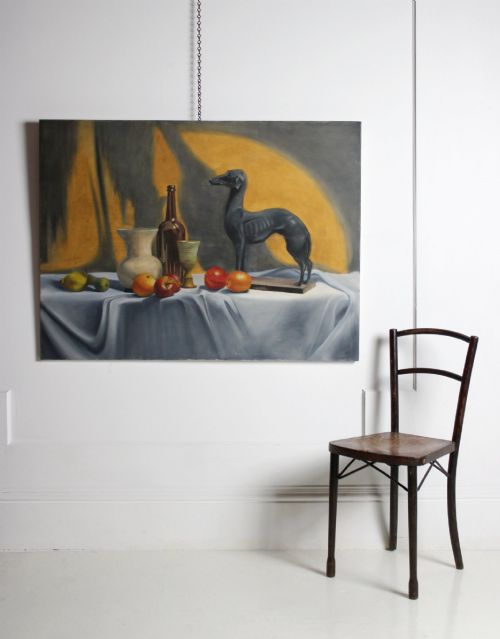
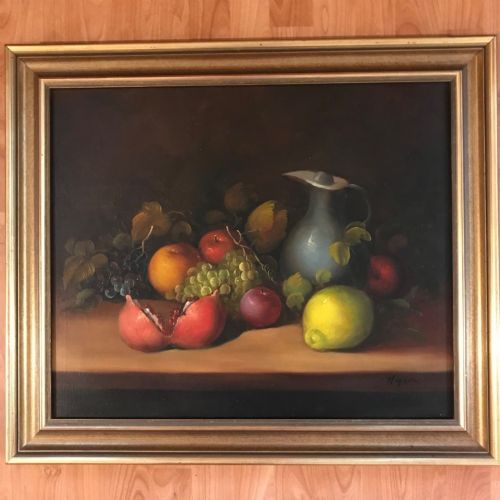
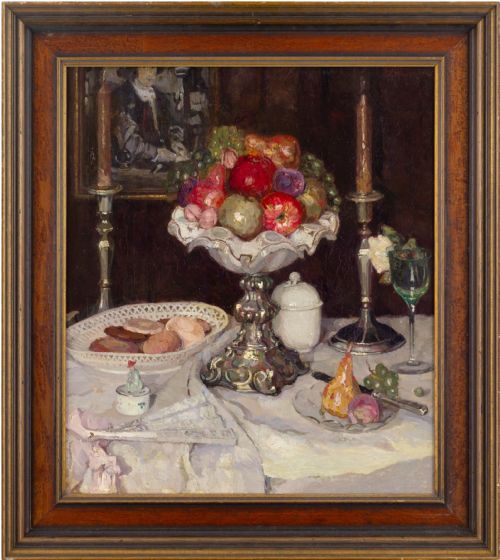
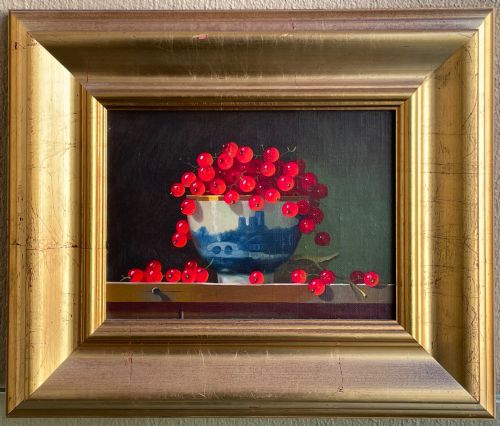
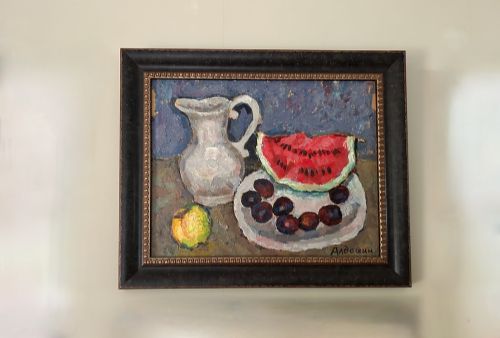
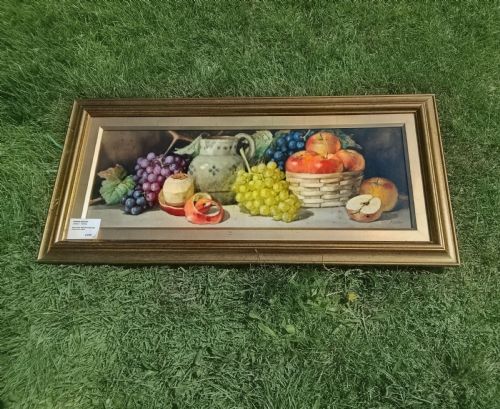
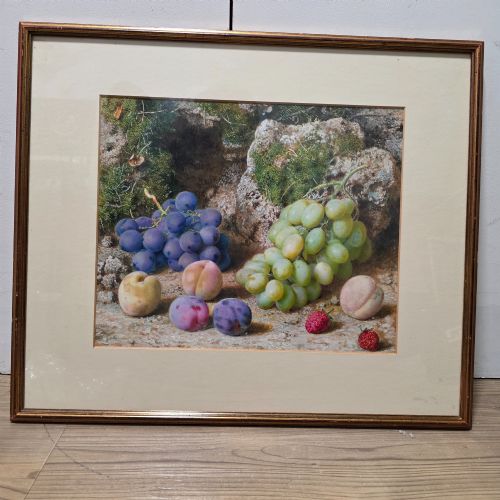
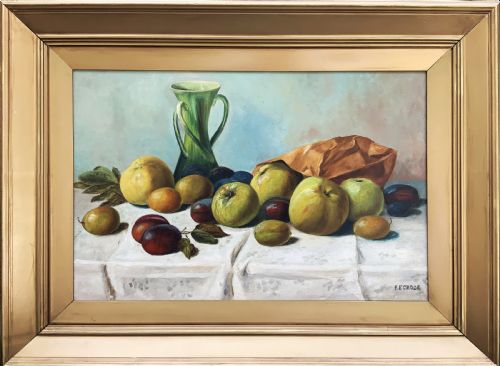
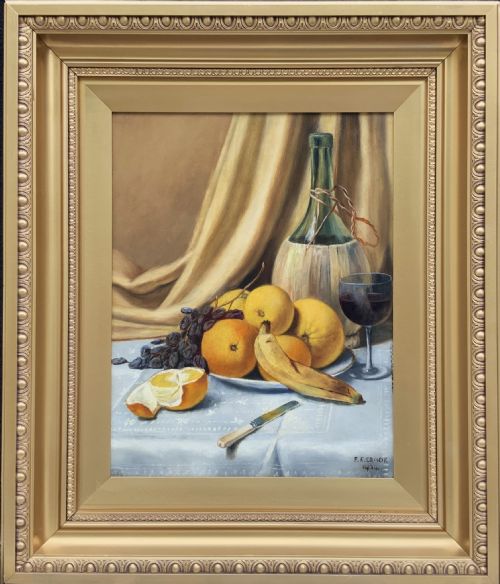
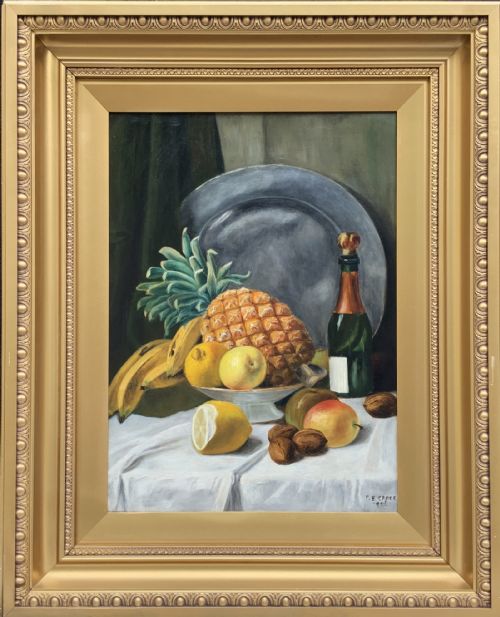
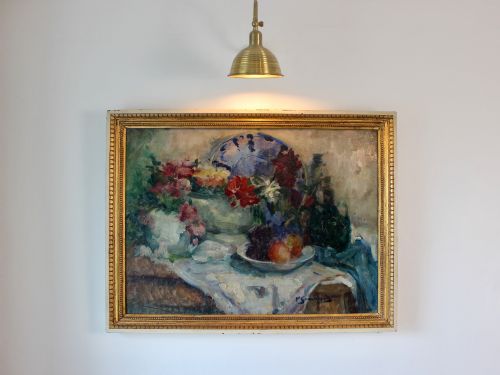
When searching for an original fruit painting, collectors encounter tabletop arrangements and botanical studies spanning from the nineteenth century through the mid-twentieth century. The selection ranges from detailed Victorian oils of grapes, apples and pomegranates to looser Impressionist and modernist interpretations on canvas, board and paper.
Nineteenth-century examples frequently show heavy drapery, glass pitchers or porcelain bowls beside piles of seasonal produce. Mid-century works lean towards flattened perspectives, brighter colour palettes and abstracted table settings framed by contemporary European aesthetics.
Materials and technique
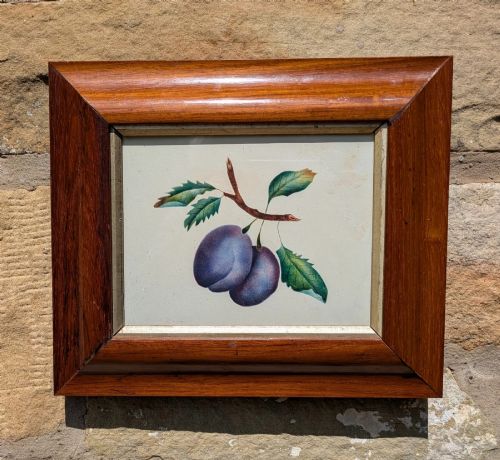
Artists painted primarily in oil on stretched canvas, wooden panels or milk glass, building rich textures through layered brushwork. Watercolour and gouache on paper appeared frequently for botanical studies and delicate plum or lemon arrangements.
Frames play an integral part in the construction of these pieces, utilising solid wood, gilded mouldings and ornate swept designs that match the period of the artwork.
Materials span oil on canvas, watercolour on paper, gouache, and oil on milk glass.
What dictates quality
Quality rests upon the artist's ability to render light, shadow and translucency within soft skins of grapes, peaches and plums. Superior pieces demonstrate confident brushwork and balanced composition rather than rigid symmetry.
The relationship between the fruit and its vessel, whether a pewter jug, a Chinese ginger jar or a simple ceramic plate, dictates the visual depth of the composition. Original period frames that retain their original gilding elevate the status of the painting.
Else Preußner·Ian Parker·Vladimir Aldoshin·Arthur Dudley·John Sherrin·Victor Simonin·James Tower·Evelyn Chester·Henri Joseph Pauwels·William Duffield·Vincent Clare·Helena Maguire·John Gilbey Bowles·Maud Frances Eyston Sumner·John Robertson Reid·E. Cremer·Oliver Clare·Alfred Arthur Brunel de Neuville·George Lance·Thomas Ditmas·J Mead·R.Villa·Jozsef Molnar
The Original Fruit Painting Glossary
- Canvas
- A heavy woven fabric stretched across a wooden frame to provide a durable foundation for oil paint.
- Wood Panel
- A rigid timber support used by artists before stretched canvas became dominant, offering a smooth, stable surface.
- Watercolour
- A paint method utilising water-soluble pigments on paper to create translucent layers of colour.
- Gilded Wood
- Timber frames coated with a thin layer of gold leaf or metallic powder to reflect light around the artwork.
- Impressionism
- An art style focusing on accurate depiction of light and loose brushstrokes rather than microscopic botanical detail.
Original Fruit Painting: Frequently Asked Questions
What periods do these paintings cover?
The available selection spans from the early nineteenth century through the Edwardian era up to mid-century modern works from the 1950s and 1960s.
Victorian and Edwardian pieces tend towards traditional realism, while later twentieth-century examples embrace modernist and post-impressionist influences.
How should I care for an oil painting on wood panel?
Keep wooden panel paintings away from direct heat sources and drastic humidity changes to prevent warping of the timber base.
Display them out of direct sunlight and dust the surface gently with a dry, soft brush when needed.
How do I distinguish between watercolours and oil paintings?
Watercolours are painted on paper, protected under glass, and display translucent washes of pigment where the paper grain shows through.
Oil paintings utilise thicker paint layers on canvas, board or panel, showing visible brush texture without glass protection.