
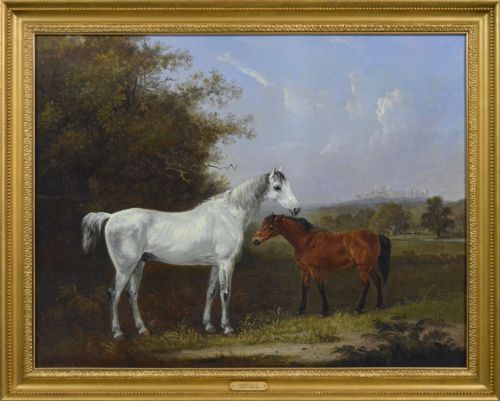
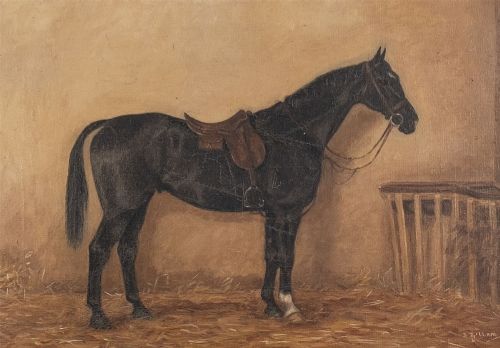
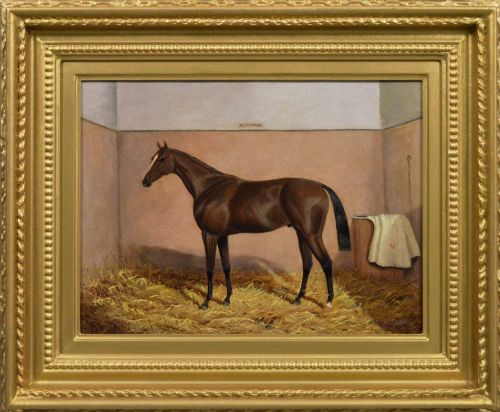

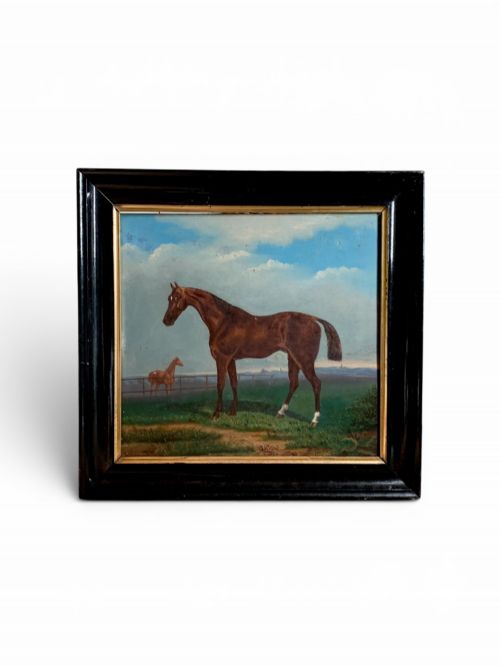


Original Equine Painting
An original equine painting brings the power and character of horses straight to your wall, captured through centuries of skilled brushwork.
Original Equine Painting
An original equine painting captures horses through centuries of observation, ranging from detailed Victorian sporting art to mid-century modern works. These pieces show animals in various settings, from individual portraits of champions in stables to working horses in landscapes.
Most examples found here date from the nineteenth and twentieth centuries, painted by British and French artists working in oils or watercolours. The selection includes framed wall art depicting racehorses, stallions, mares, and ploughmen with their teams.
Buyers often encounter single portraits and paired studies on canvas, paper, or panel. Each piece records the anatomy and spirit of the animal according to the artistic conventions of its period.
How they were made
Artists built these works using oil paint on canvas and wood panels, or watercolours and pastels on paper. Oil paint allowed for rich layering and deep textures to render the sheen of a horse coat, while watercolours offered swift, translucent application.
Support materials range from traditional stretched canvas to sturdy wood panels and heavy paper sheets. Many works retain their period framing beneath glass or within ornate moulded surrounds.
One recorded artwork catches a young foal caught red-handed stealing fruit from a basket.
What varies in quality
Quality rests upon the artist's command of equine anatomy, movement, and proportion. The finest works capture bone structure, muscle tension, and light across the coat with absolute conviction.
Brushwork precision and composition set individual pieces apart. Strong works integrate the horse naturally into its landscape or architectural setting rather than treating subject and background separately.
Albert Clark·John Ferneley Senior·John Rattenbury Skeaping·Helena Maguire·Arthur Winter Shaw·W.A. Clark·Walter Duncan·Ernest Higgins Rigg·George Cole
The Original Equine Painting Glossary
- Equine art
- Artwork depicting horses, encompassing portraits, racing scenes, and working animals in landscapes. This genre has a long history in British and European painting.
- Sporting art
- A category of painting dedicated to equestrian sports, horse racing, hunting, and canine subjects. These works often record specific champion animals and notable events.
- Gouache
- An opaque water-based paint that dries to a matte finish, frequently combined with watercolour on paper. It provides solid highlights and rich colour blocks.
- Panel painting
- Art executed on a rigid flat surface such as wood rather than stretched canvas. Wooden panels were favoured for smaller works and earlier traditions.
Original Equine Painting: Frequently Asked Questions
How do I date an equine painting?
Dating relies on the artist's active period, the style of the clothing and tack visible in the composition, and the materials used for the canvas or paper support. Framing styles also provide useful clues, though frames are frequently replaced over time.
Examining the reverse of the canvas or panel often reveals old signatures, stamps, or dealer labels that narrow down the date of creation.
What is the difference between an oil and a watercolour horse painting?
Oil paintings use pigment suspended in drying oils on canvas or wood, offering rich textures, deep tones, and the ability to rework areas. Watercolours use water-soluble pigments on paper, resulting in lighter, more translucent effects.
Watercolour and pastel works are typically displayed under glass for protection, whereas traditional oil paintings on canvas remain open to the room.
How should I hang and light an antique painting?
Antique paintings need protection from direct sunlight and damp environments to prevent fading of watercolours and cracking of oil paint. Stable indoor temperatures keep both canvas and wooden panels secure.
Use picture lights designed with low-heat LED bulbs mounted above the frame to illuminate the artwork safely without causing heat damage.
What subjects are common in vintage horse art?
Common subjects include named racehorses, working horses ploughing fields, hunting scenes, and quiet portraits of stallions and mares in paddocks. Artists recorded these animals to celebrate agricultural labour, sporting triumphs, and personal companions.
Scenes range from solitary studies against plain backgrounds to complex landscape narratives featuring handlers and dogs.