

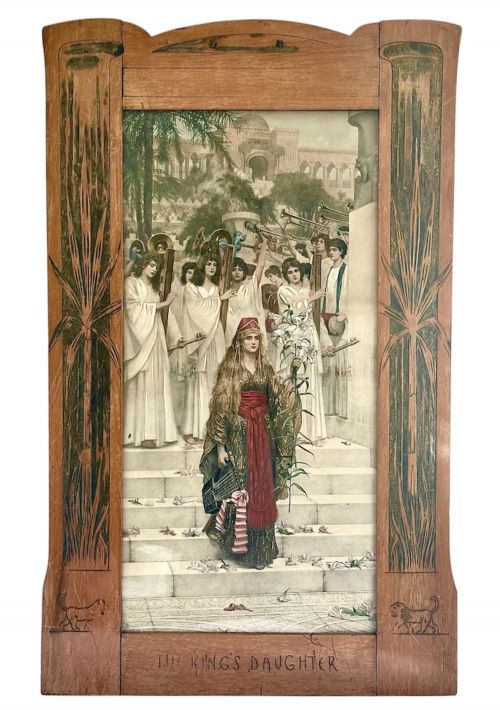


Orientalist Portrait Art
Orientalist portrait art brings intense nineteenth-century character studies and depictions of Eastern figures into your home.
Orientalist Portrait Art
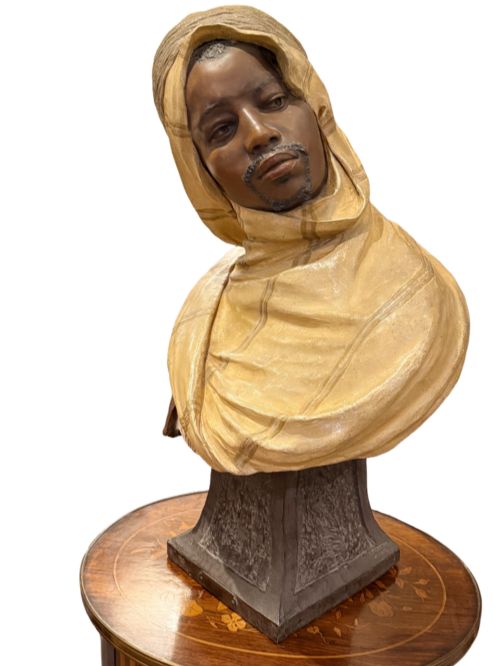
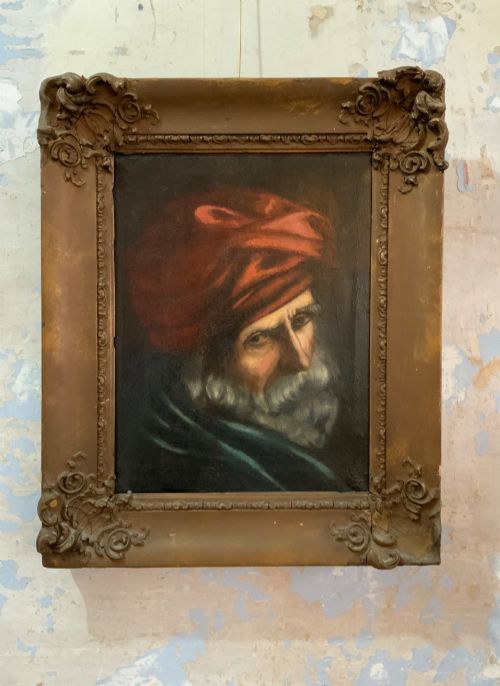
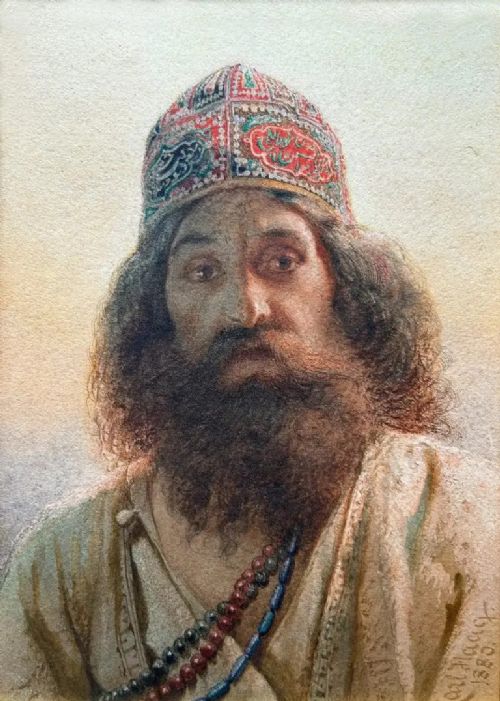
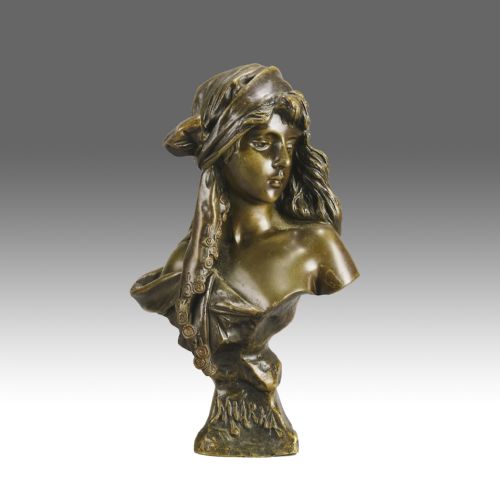
Orientalist portrait art captures figures from the East and Near East through nineteenth-century European and international eyes. These works range from oil paintings on canvas and panel to charcoal drawings, watercolours, photogravures, and bronze busts.
The subjects frequently include Persian gentlemen, Arab men and women, Egyptian dervishes, and figures in theatrical or traditional attire. Pieces span from the Victorian era into the Art Nouveau and Art Deco periods, showing varied interpretations of distant cultures.
Materials and methods
Artists worked primarily in oil paint upon canvas, board, or panel, utilising rich pigments to render deep shadows, textiles, and skin tones. Works on paper include watercolours and heightened charcoal drawings alongside printed photogravures.
Sculptural pieces are cast in bronze, often paired with giltwood or standard framing for wall art. Each medium dictates the level of fine detail achieved in depicting facial expressions and garments.
Orientalist Portrait Art Retail Price Guide 2026
Typical asking prices for orientalist portrait art among the pieces listed under this phrase on Sellingantiques today, from the lower quarter to the upper quarter. They describe what is for sale here now, not the wider market.
Several gentlemen depicted in these portraits gaze past the viewer with an intensity suggesting they have spotted a particularly slow waiter.
Judging quality
Quality rests upon the psychological depth of the portrait, the precision of brushwork or casting, and the preservation of the surface. Finer works capture individual likeness and character rather than generic types.
The handling of light, shadow, and fabric texture separates standard decorative items from masterworks. Original framing and clear artist signatures further distinguish superior examples.
Carl Haag·Emmanuel Villanis·Herbert Gustave Schmaltz·Georges-Charles Coudray·Frederick Goodall
The Orientalist Portrait Art Glossary
- Orientalism
- A nineteenth-century artistic movement focused on subjects from the Middle East, North Africa, and Asia. It often romanticised or documented the people and architecture of these regions.
- Photogravure
- A printmaking technique producing an image from a photographic negative transferred to a metal plate. It creates rich continuous tones resembling a photograph.
- Giltwood
- Wood that has been treated with gold leaf or gilt paint to give a metallic gold finish. It commonly appears on traditional picture frames.
- Charcoal drawing
- A form of dry art using compressed organic carbon material on paper. Heightened versions include white chalk for dramatic highlights.
- Panel painting
- A painting executed on a flat panel of wood rather than stretched canvas. This rigid support was favoured for smaller, highly detailed works.
Orientalist Portrait Art: Frequently Asked Questions
What is orientalist portrait art?
Orientalist portrait art comprises paintings, drawings, prints, and sculptures depicting people from Eastern cultures, predominantly produced during the nineteenth and early twentieth centuries.
These pieces reflect European and international artistic interpretations of societies in the Middle East and North Africa.
How were these portraits displayed?
Paintings and prints were traditionally framed and hung in formal drawing rooms, libraries, and galleries. Bronze busts stood upon pedestals, mantelpieces, or designated display tables.
Their striking subjects made them central conversation pieces in nineteenth-century homes.
How do I care for oil paintings?
Keep oil paintings out of direct sunlight and away from rapid temperature fluctuations to protect the canvas and paint layers. Dust the surface gently with a soft, dry brush without applying pressure.
Avoid using water or liquid cleaners on aged paint and canvas.
How do I identify a bronze sculpture?
Bronze sculptures feel heavy for their size and often show foundry marks, artist signatures, or rich patination developed over decades. A magnet will not stick to genuine bronze.
Casting methods changed over time, helping to date the piece alongside the stylistic markers of the base or mount.