


Oriental Tree of Life Carpet
An oriental tree of life carpet brings centuries of Persian textile heritage into a room through botanical imagery and wool knotted by hand.
Oriental Tree of Life Carpet
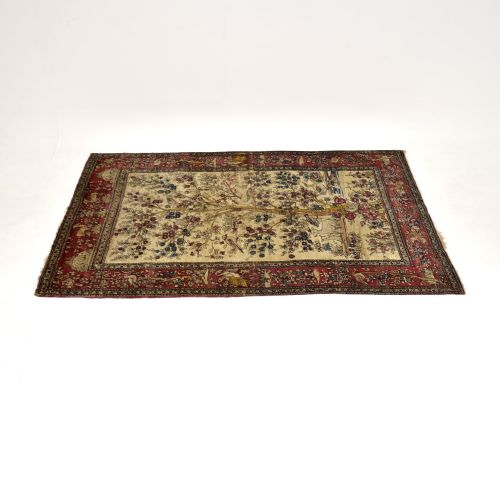
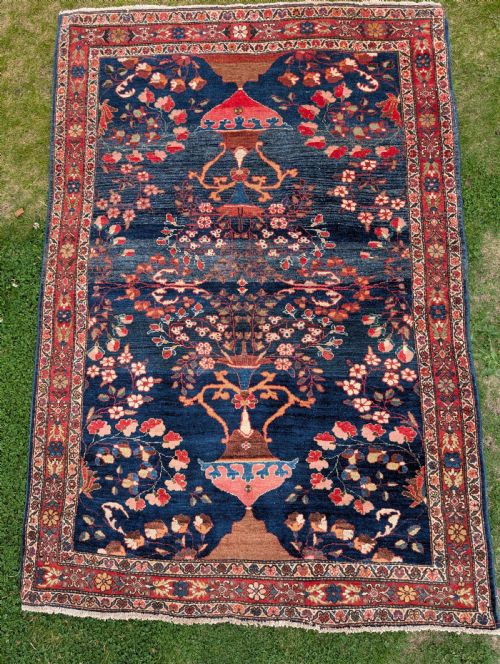
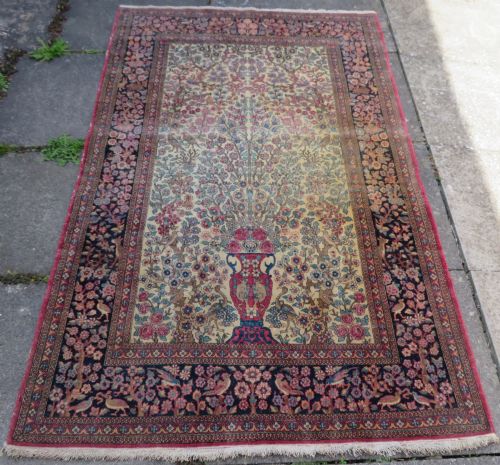
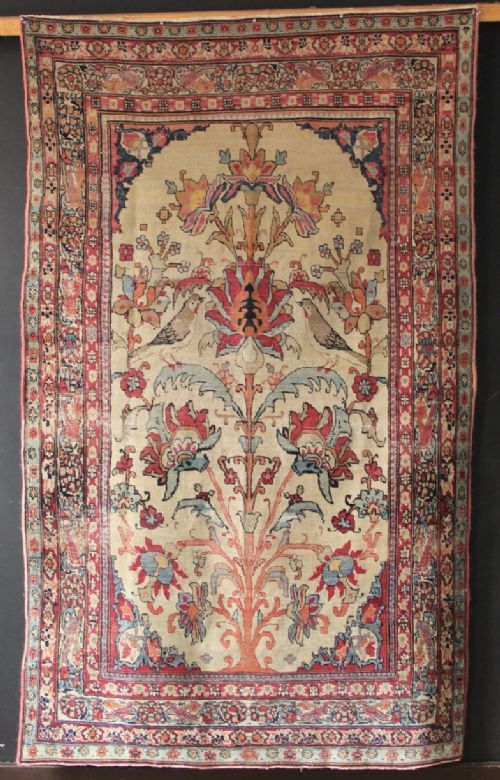
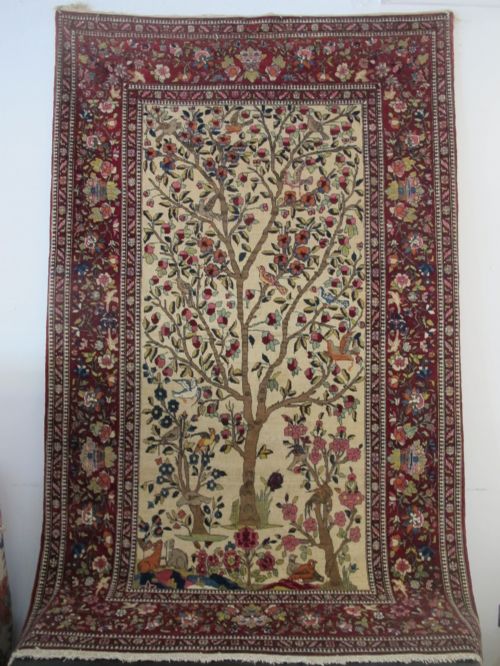
An oriental tree of life carpet is a woven floor covering that centres on a symbolic arboreal motif, depicting branches, blossoms, and roots rooted in Persian tradition. Buyers searching this phrase will find hand-knotted room-sized carpets alongside smaller area rugs and prayer formats originating from distinct tribal and urban workshops across Persia.
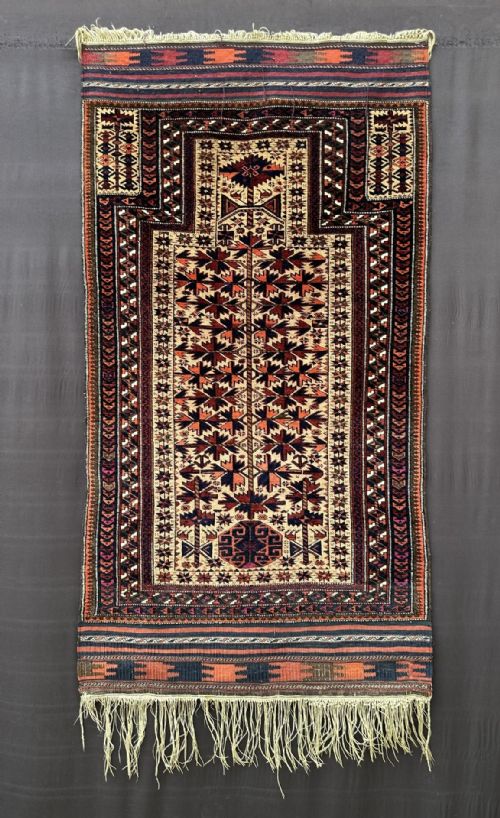
The pieces appearing here span from the mid nineteenth century into the early twentieth century, showing regional variations from Kashan, Isfahan, Kirman, and Baluch tribal territories. Most examples employ traditional formats designed to sit as focal points in a drawing room or study, rendered in durable wool and sometimes incorporating camel hair or cotton foundations.
Materials and construction
Weavers constructed these carpets predominantly using sheep wool for the pile, dyed with natural colorants and knotted by hand onto cotton or wool warp and weft foundations. Certain regional pieces, particularly those from Baluch and tribal makers, incorporate natural camel hair within the field to provide a soft, undyed brown background tone.
The structural density varies according to origin, with urban centres like Isfahan and Kashan producing tightly knotted pictorial surfaces, while nomadic and village groups such as the Bakhtiari and Timuri employ coarser, sturdier structures suited to daily use.
Listings feature pieces dated from 1860 through 1930, constructed from wool, cotton, camel hair, and silk across Persian urban and tribal styles.
Judging the weave
Quality in these textiles rests upon the precision of the knotting, the fineness of the wool, and the complexity of the botanical drawing within the central motif. Superior examples display crisp botanical outlines and harmonious vegetable dye palettes that age gracefully across the field.
The handling of the pile and the integrity of the original side cords and ends also distinguish finer weaving. Denser knot counts allow for intricate rendering of leaves and vases, whereas simpler tribal pieces rely on robust wool and bold, uncrowded compositions for their visual impact.
Ahmadi
The Oriental Tree of Life Carpet Glossary
- Tree of life
- A central motif representing fertility, eternity, and the connection between earth and heaven through branching foliage and blossoms. This design forms the primary focus of the carpets grouped under this search.
- Warp
- The vertical foundation threads stretched tightly on the loom before knotting begins. Wool and cotton are the primary materials utilised for these structural elements.
- Weft
- The horizontal threads passed across the warp after each row of knots is secured. They bind the structure together and influence the flexibility of the carpet.
- Prayer rug
- A format featuring a central mihrab or arch design, traditionally oriented towards Mecca during daily devotions. These pieces are typically smaller in scale than full room carpets.
- Millefleurs
- A decorative style characterised by a background densely filled with tiny flowers and blossoms. This French term is frequently applied to elaborate Persian pictorial weaving.
Oriental Tree of Life Carpet: Frequently Asked Questions
Where were these carpets made?
Production spans urban centres like Isfahan, Kashan, and Kirman, alongside tribal regions including Baluch, Bakhtiari, and Qashqai territories. Each area utilised distinct weaving structures and dye traditions.
City workshops favoured fine wool and intricate floral curves, while tribal weavers produced bolder geometric interpretations with local materials.
How should I care for an antique rug?
Protect the textile by placing it in areas away from direct, harsh sunlight to prevent dye fading. Regular gentle vacuuming without a rotating brush roll keeps dust from settling into the wool pile.
Rotating the rug every year ensures even wear from foot traffic and furniture placement across the room.
What materials make up the foundation?
Most pieces combine a wool pile with either cotton or wool foundations for the warp and weft threads. Some specific tribal rugs introduce undyed camel hair into the pile or field for natural warmth and tone.
Examining the reverse reveals the material composition and the tightness of the knot structure.