

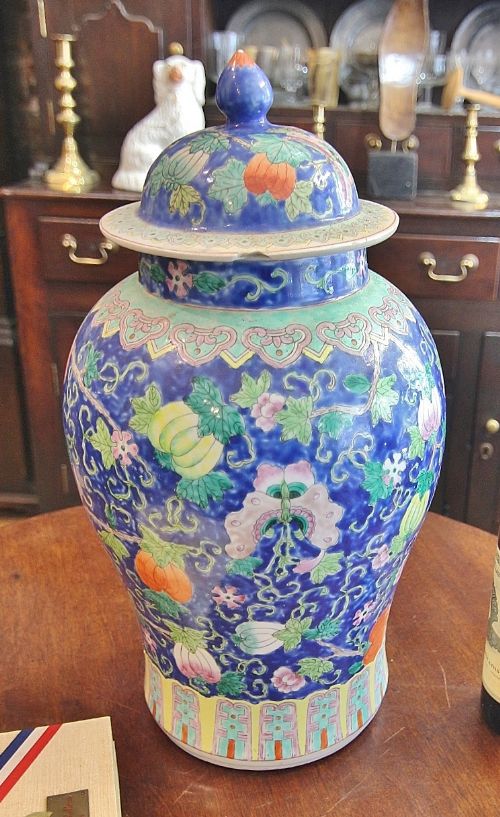


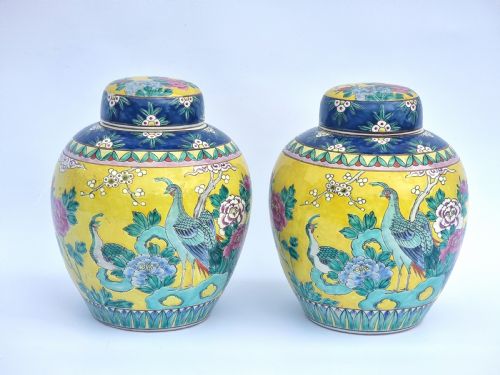


Oriental Temple Jar
An oriental temple jar commands a room with its scale and rich palette, bringing centuries of ceramic tradition directly into your interior.
Oriental Temple Jar
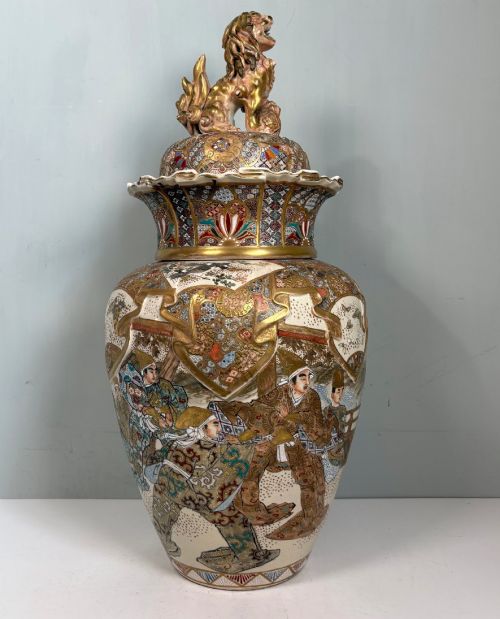
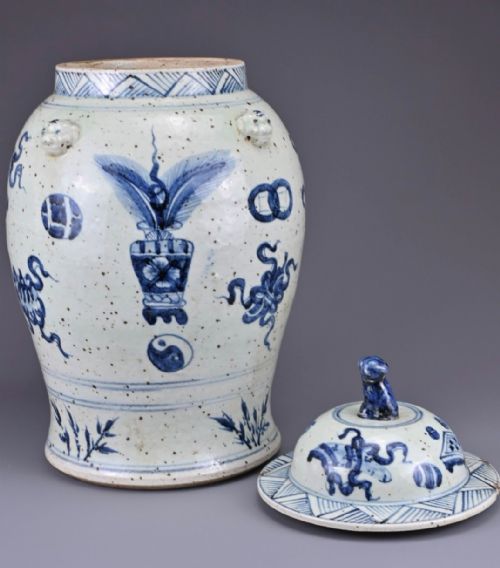
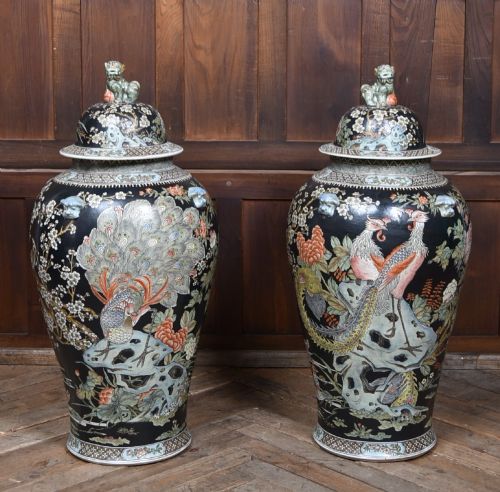
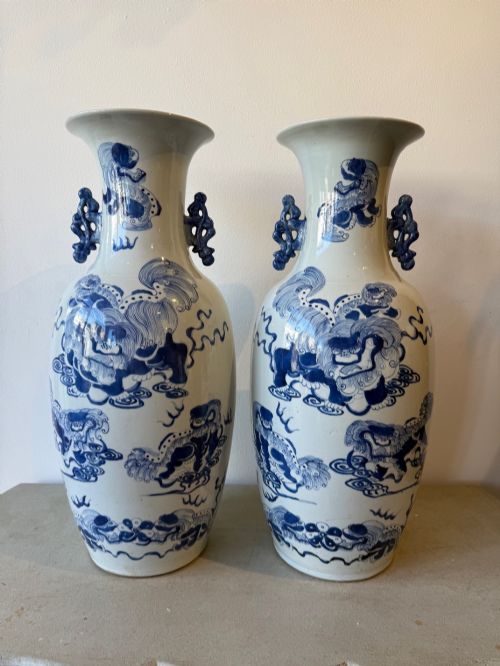
An oriental temple jar stands as a striking vessel, often topped with a matching cover, originally designed to hold precious commodities or simply to anchor a decorative scheme. When searching for an oriental temple jar, buyers encounter substantial ceramic forms spanning the nineteenth century and earlier eras. The pieces appearing on this page originate from distinct stylistic traditions, predominantly Japanese and Chinese workshops.
The selection here encompasses robust ginger jars, grand floor vases, and lidded baluster forms decorated in deep blue and white, vibrant Imari palettes, or intricate Satsuma and Cantonese styles. Many items arrive in matched pairs, offering symmetry for a mantelpiece or a grand entrance hall. These vessels range from domestic export pieces to monumental works created for specific display.
Originating across multiple periods such as the Qing Dynasty, the Meiji period, and the broader nineteenth century, these jars reflect diverse regional aesthetics. Some specimens retain their original covers, while others function successfully as table lamps mounted with brass and ormolu. Collectors find that each jar carries the distinct brushwork and glaze characteristics of its specific kiln.
How They Were Made
Potters shaped these vessels from fine porcelain or earthenware, throwing the clay on a wheel or building larger forms in sections before applying detailed hand-painted designs. Artisans utilised cobalt blue underglazes, polychrome enamel pigments, and occasionally gold leaf to build complex pictorial and geometric surfaces.
Firing took place in high-temperature kilns where reactive glazes matured, sometimes producing intentional crazing or deep tonal variations across the ceramic body. Metal mounts in brass or ormolu were frequently added later to secure rims or adapt the vessels into functional lighting.
One signed Satsuma jar hides tiny painted beetles among its floral gilding for observant guests to discover.
What Varies in Quality
The standard of painting defines the division between ordinary production and masterwork execution, visible in the precision of brush strokes and the complexity of the narrative scenes. Crisp registration of underglaze blue and cleanly applied enamel colours indicate superior control in the kiln.
Completeness significantly influences the desirability of a piece, particularly whether a jar retains its original matching cover without restoration. The crispness of moulded details and the weight of the ceramic body further separate standard export wares from exceptional palace-grade commissions.
The Oriental Temple Jar Glossary
- Imari
- A Japanese style of porcelain decorated in underglaze blue, iron red, and gold. This palette originated in Arita and became widely exported to European markets.
- Baluster
- A vase form with a rounded body that tapers toward the base and flares at the neck. This silhouette provides stability and a balanced canvas for painted scenes.
- Satsuma
- A type of Japanese earthenware featuring a crackle glaze decorated with polychrome enamels and gilding. These pieces often depict dense figural landscapes and floral motifs.
- Ginger jar
- A broad-shouldered container with a high-domed cover, traditionally used for storing spices or preserved ginger. The form translates well to ornamental display.
- Garniture
- A set of three or more matching vases and jars designed to be displayed together on a mantelpiece or cabinet top. Such sets create visual symmetry in formal interiors.
- Doucai
- A Chinese porcelain technique where outlines are painted in underglaze blue, filled with enamel colours, and refired at a lower temperature. This method produces a vibrant layered effect.
Oriental Temple Jar: Frequently Asked Questions
How were temple jars originally used?
These large vessels served primarily for storing valuable commodities such as spices, tea, and herbs in elite households and temples. Their substantial covers kept contents sealed against moisture and pests in domestic environments.
Over time, their decorative qualities outstripped their utility, leading makers to craft them specifically for display in formal reception rooms and halls. Pairs were frequently placed on furniture tops or directly on the floor to demonstrate the owner's taste.
How do I identify an Imari jar?
An Imari jar typically displays a distinct colour scheme combining deep underglaze cobalt blue with iron red and touches of gold leaf. The surface is often densely packed with floral panels, rocks, and bird motifs.
Originating in the town of Arita, this Japanese export ware bridges traditional Eastern forms with tastes popular in nineteenth-century Europe. The porcelain body feels heavy and dense under hand inspection.
Can I use temple jars as lamps?
Many large jars and ginger jars are safely converted into table lamps or fitted with wiring through professional mounting. This practice preserves the decorative ceramic body while adding functional lighting to a room.
Conversions often utilise brass or ormolu mounts that secure the top without permanently damaging the historic material. Buyers frequently encounter nineteenth-century pieces that arrived with these mounts already integrated.
What is the difference between Satsuma and porcelain?
Satsuma pieces are constructed from earthenware rather than true porcelain, resulting in a slightly heavier, opaque body covered in a characteristic fine crackle glaze. This porous base requires lower firing temperatures than porcelain.
Porcelain rings clearly when struck and remains completely vitrified, whereas Satsuma provides a softer ground for intricate enamel and gilt painting. Both materials appear frequently across nineteenth-century Japanese decorative arts.