


Oriental Table Cabinet
An oriental table cabinet brings intricate lacquer, carved hardwood and portable storage into a room, offering a glimpse into global trade and craftsmanship.
Oriental Table Cabinet
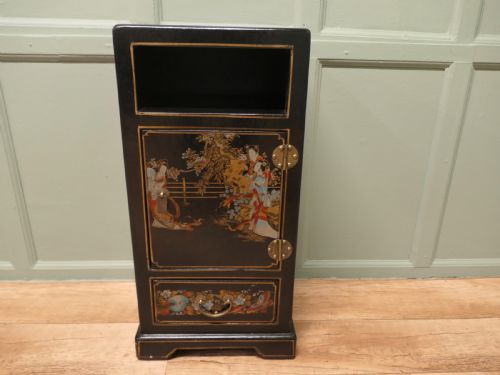
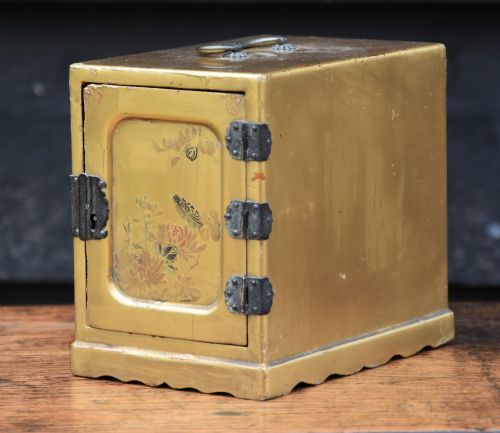
An oriental table cabinet is a compact, highly decorative storage piece designed to sit on a desk, sideboard or larger table. These items emerge primarily from nineteenth and early twentieth century workshops in China and Japan, reflecting diverse regional aesthetics and craftsmanship.
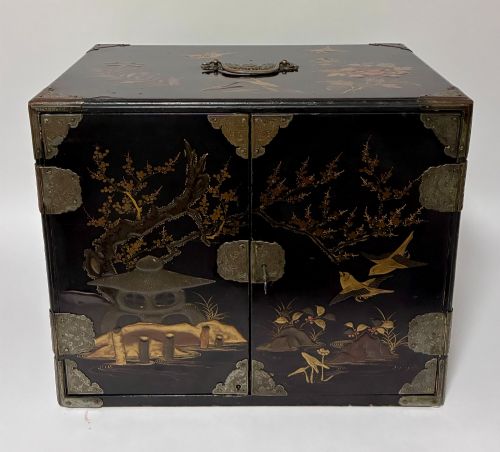
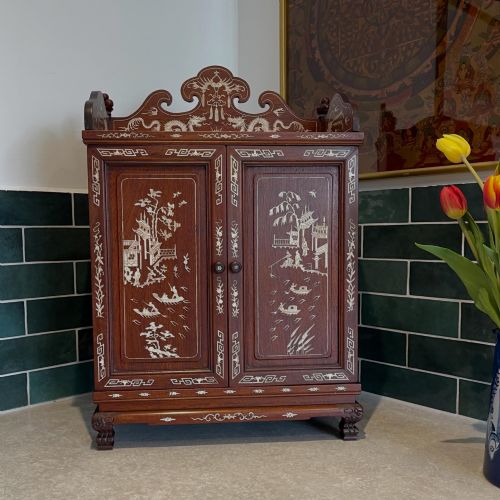
The most common examples encountered on this page date from the late nineteenth century through to the 1930s. They range from small lacquer kodansu boxes to miniature elm chests and intricately detailed tabletop cupboards.
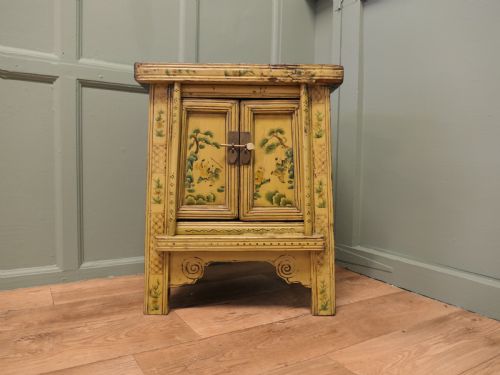
Makers utilised traditional forms such as the Qing Dynasty style or incorporated elements of the Aesthetic Movement and Chinoiserie. Buyers often select them for holding small valuables, stationery or simply as standalone decorative focal points.
Materials and construction
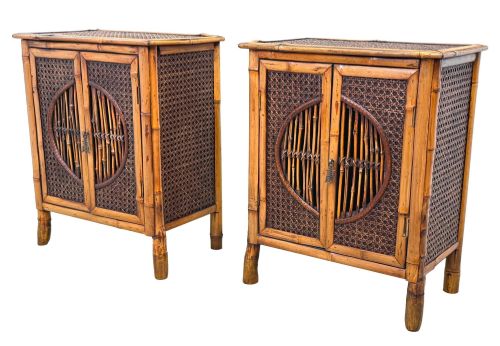
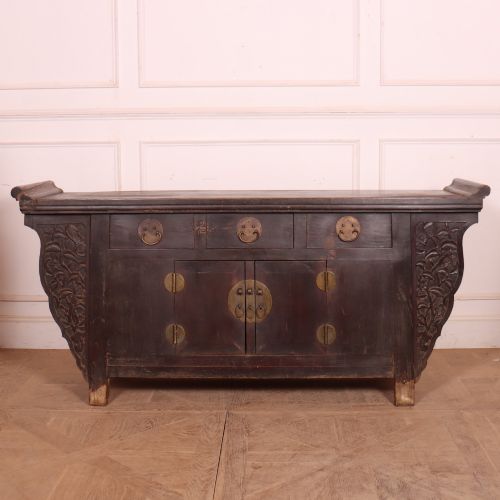
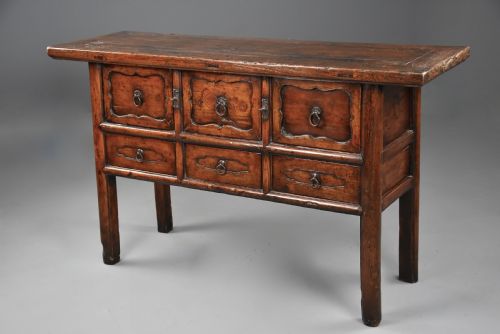
Makers constructed these cabinets using dense timbers such as Chinese elm, rosewood, Hongmu and hardwood, occasionally pairing them with tiger bamboo. Elm and hardwood provided sturdy internal structures capable of supporting intricate surface decoration.
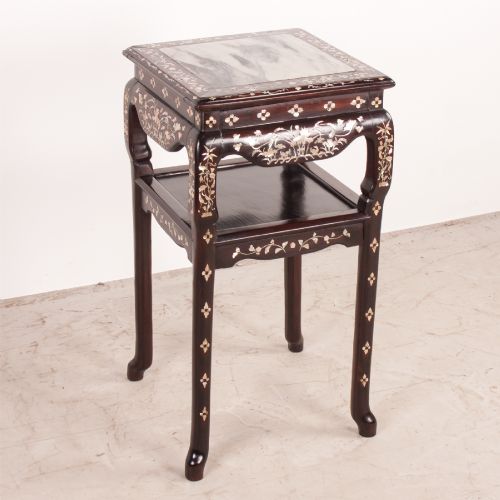
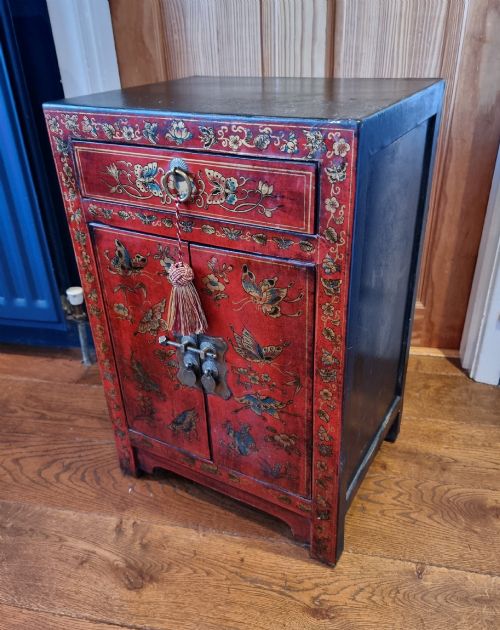
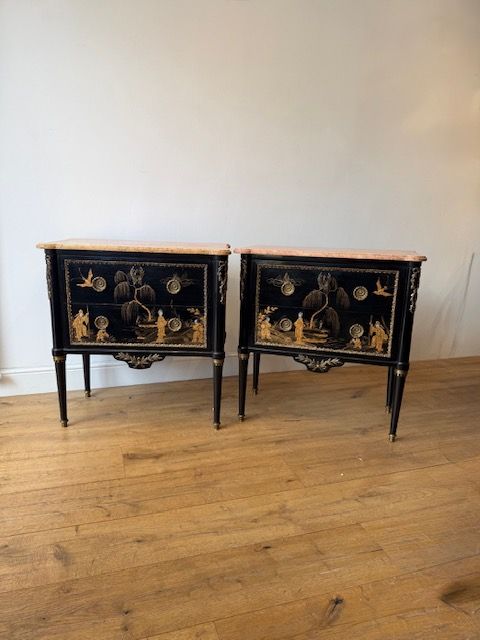
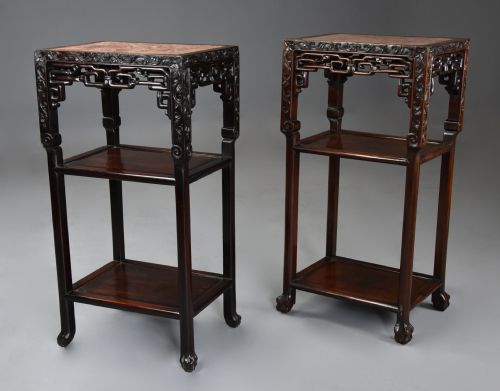
Surfaces were frequently finished with layers of black, red or gilt lacquer, sometimes featuring mother of pearl inlay, bronze animal mounts or delicate painted Chinoiserie scenes. Natural materials like marble inserts occasionally topped related tables and stands.
Joinery methods relied on traditional mortise and tenon techniques suited to fine furniture. The application of multiple lacquer coats required careful drying and polishing between stages to achieve a smooth, durable finish.
Several miniature cabinets include hidden compartments designed to outsmart curious guests.
Distinctions in quality
Quality in an oriental table cabinet depends heavily on the depth and precision of the surface decoration, whether carved cinnabar, gilded lacquer or inlaid mother of pearl. Superior pieces exhibit crisp lines and securely anchored decorative elements rather than flat, uniform printing.
The choice and seasoning of the underlying timber dictate the structural integrity of the piece over time. Cabinets formed from dense hardwoods like Hongmu or well-figured elm command greater appreciation than those utilising softer, more reactive woods.
Interior fittings and hardware, including bronze mounts, hinges and small drawer construction, reveal the maker's attention to detail. Finely dovetailed drawers and original, intact metalwork indicate a higher standard of manufacture.
Gabriel Viardot
The Oriental Table Cabinet Glossary
- Chinoiserie
- European artistic interpretation of Chinese and East Asian stylistic motifs, popular in furniture decoration.
- Kodansu
- A traditional Japanese small portable cabinet or chest of drawers, often intricately lacquered.
- Lacquer
- A durable resin finish applied in multiple layers to wood, creating a smooth and glossy surface.
- Meiji Period
- The era in Japanese history spanning from 1868 to 1912, known for opening trade and refined craftsmanship.
- Qing Dynasty
- The final imperial dynasty of China, lasting from 1644 until 1912, defining a distinct period of artistic output.
Oriental Table Cabinet: Frequently Asked Questions
What is an oriental table cabinet?
An oriental table cabinet is a small, portable storage chest originating from East Asia, designed to rest on furniture rather than stand on the floor.
These pieces typically feature decorative lacquer, carved woodwork or metal mounts, serving both practical storage and aesthetic roles.
How were table cabinets used?
Historically, owners utilised these compact cabinets to store letters, documents, jewellery and small precious items.
Their tabletop scale allowed them to be kept close at hand in studies, parlours or bedrooms.
How do I date a table cabinet?
Dating relies on examining the materials, construction methods, wear patterns and stylistic markers present in the piece.
Nineteenth-century examples often display hand-applied lacquer and traditional joinery, while later twentieth-century items show different manufacturing signatures.
How do I care for lacquer?
Lacquer surfaces require protection from direct sunlight and extreme humidity fluctuations to prevent cracking or fading.
Dusting gently with a soft, dry cloth is usually sufficient for routine maintenance without chemical polishes.
Where should I place one?
A table cabinet suits placement on sturdy surfaces like sideboards, desks or wide console tables where its details can be appreciated.
Ensuring stable placement away from heat sources protects the antique wood and finish.