




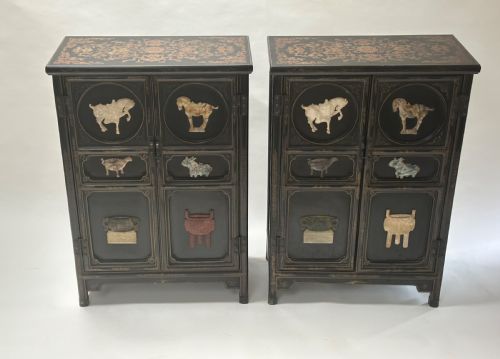
Oriental Sideboard Cabinet
An oriental sideboard cabinet brings deep lacquer and rich carving into a room, offering practical storage disguised as art.
Oriental Sideboard Cabinet
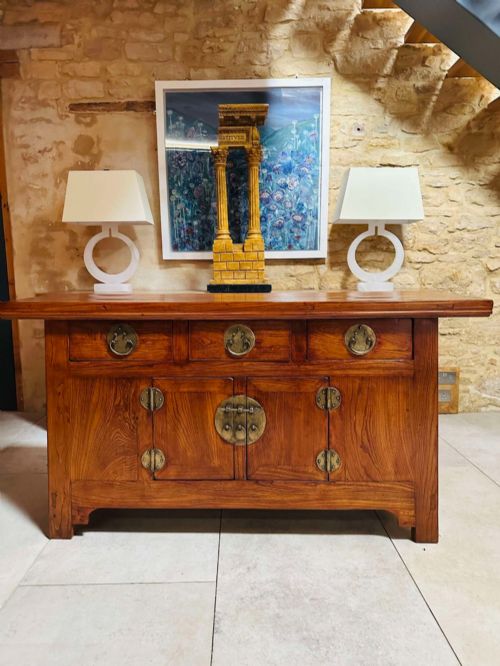
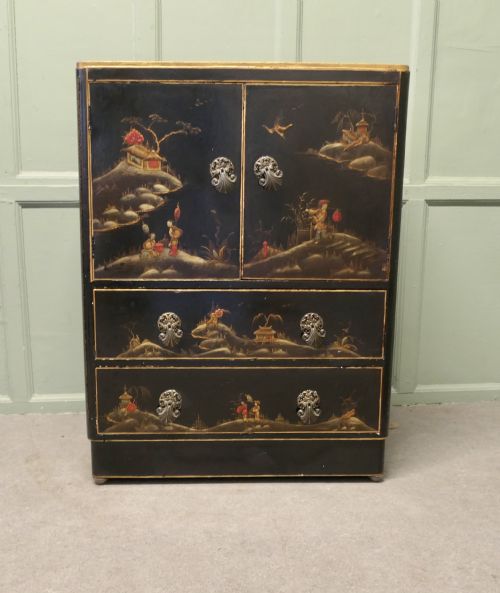
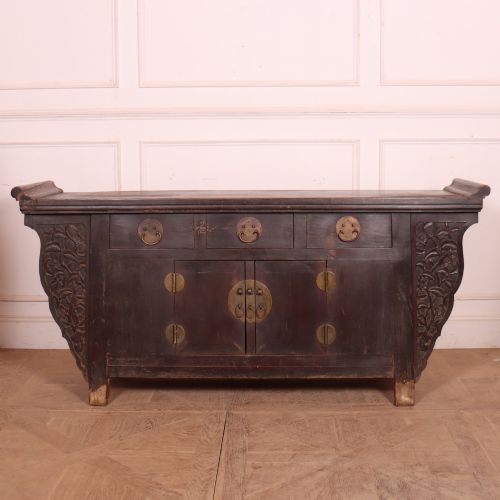
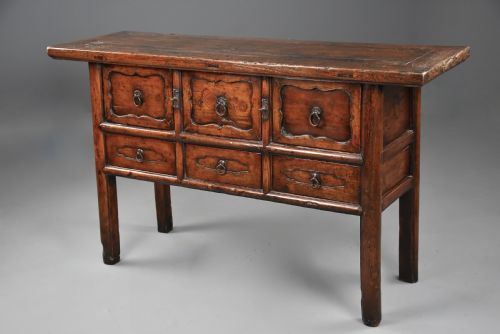
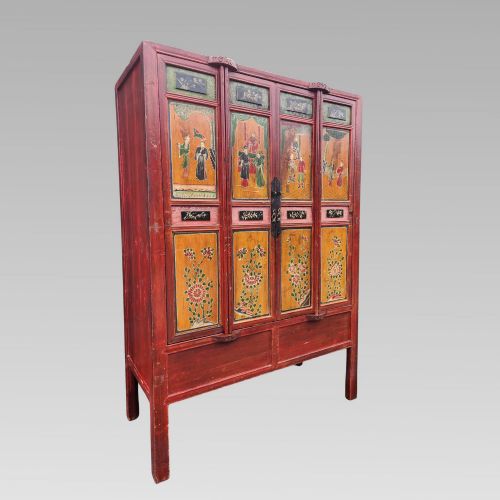
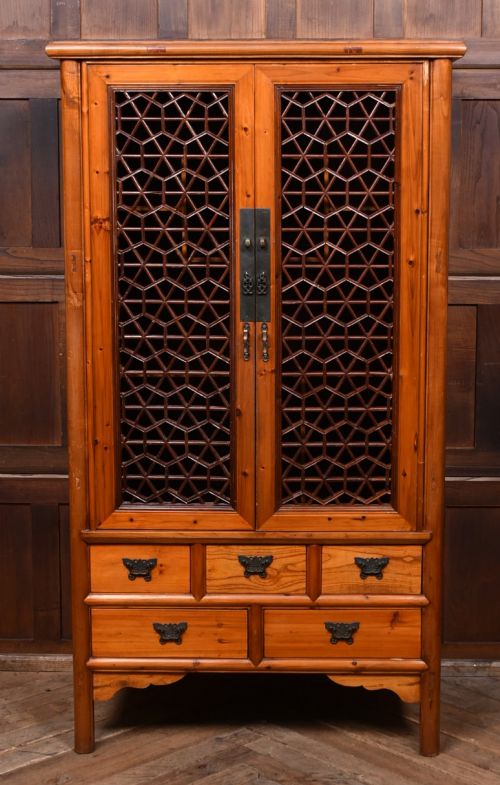
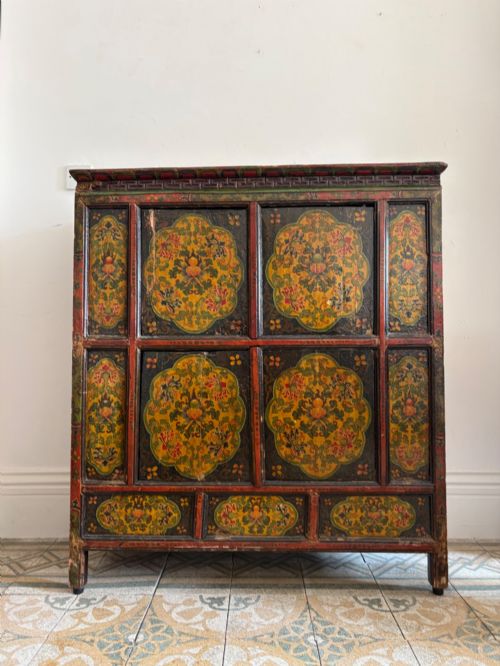
An oriental sideboard cabinet serves as a substantial storage piece, combining the utility of cupboards and drawers with distinct decorative motifs from Eastern and Revival traditions. Buyers seeking an oriental sideboard cabinet encounter various forms, from rustic provincial elms to highly polished black and red lacquer finishes.
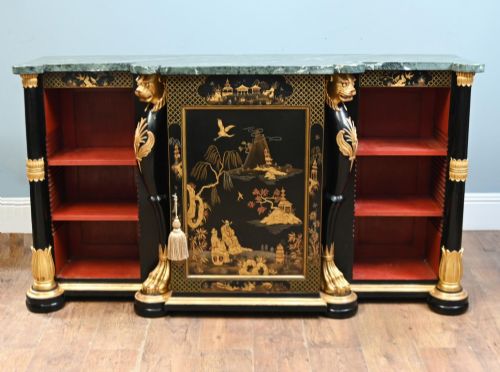
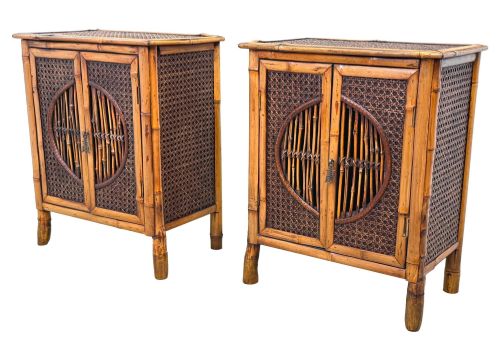
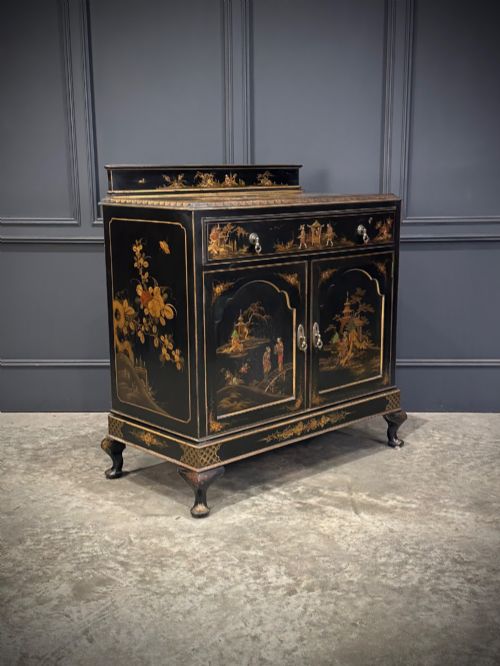
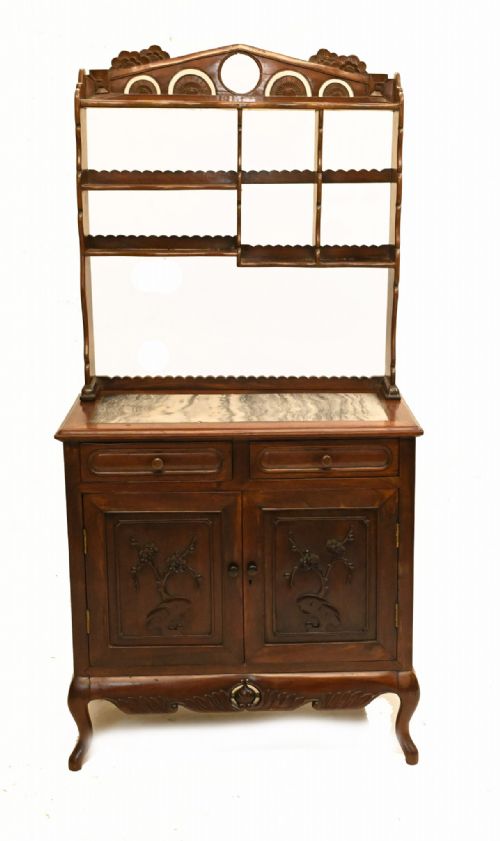
The pieces on this page span the nineteenth century through the early twentieth century, incorporating diverse regional origins such as China, Japan, Tibet, and Korea. Alongside these authentic imports, British and European makers contributed interpretations influenced by Chinoiserie and Aesthetic Movement designs.
Common formats include low sideboards, taller marriage cabinets, and side cabinets fitted with brass hardware. These items adapt easily to modern dining rooms and hallways, providing enclosed shelving alongside historical presence.
Materials and construction methods
Carpenters utilised native timbers such as Chinese elm, teak, padauk, and walnut for the foundational carcasses. Hardwoods provided the structural stability needed for large sideboards and heavy storage cupboards.
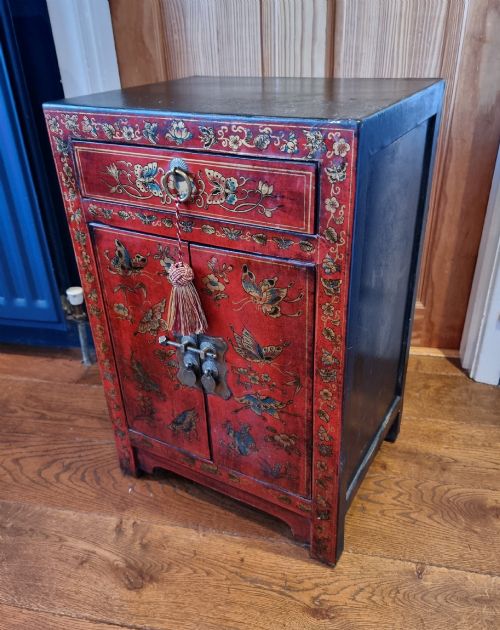
Surfaces frequently received multiple layers of lacquer in black or red, sometimes decorated with hand-painted floral motifs and birds. Brass and iron hinges, lock plates, and drawer pulls functioned as both structural fastenings and visual centrepieces.
Oriental Sideboard Cabinet Retail Price Guide 2026
Typical asking prices for oriental sideboard cabinet among the pieces listed under this phrase on Sellingantiques today, from the lower quarter to the upper quarter. They describe what is for sale here now, not the wider market.
Some miniature table-top cupboards offer all the presence of a full-sized sideboard while sitting comfortably on top of a desk.
Distinguishing quality across examples
The depth and execution of hand-carved elements separate standard utility furniture from finer artistic commissions. Crisp detailing in wood reliefs and precise joinery indicate superior workshop standards.
The condition and application of the lacquer finish heavily influence the overall standard. Smooth, even surfaces with well-preserved hand-painted details reflect superior craftsmanship compared to heavily worn or clumsily restored alternatives.
Gabriel Viardot·Mercier Frères
The Oriental Sideboard Cabinet Glossary
- Chinoiserie
- European artistic interpretation of Chinese and East Asian decorative styles, popular during various revival periods. This style heavily influences the black and red lacquered cabinets found in Western collections.
- Lacquer
- A durable resin finish applied in multiple coats and polished to a smooth sheen. It protects the underlying wood while providing a canvas for painted or gilt decoration.
- Padauk
- A dense tropical hardwood known for its deep reddish-brown colour and strong grain. Cabinet makers utilised this timber for substantial sideboards requiring high durability.
- Jap japonaisme
- The nineteenth-century European fascination with Japanese art and design principles. This movement inspired Western makers to incorporate Japanese motifs into walnut and lacquered cabinets.
- Tansu
- A traditional Japanese mobile storage chest or cabinet typically constructed for domestic utility. Examples include specialised kitchen variants equipped with numerous small drawers.
Oriental Sideboard Cabinet: Frequently Asked Questions
What is an oriental sideboard cabinet?
An oriental sideboard cabinet is a low storage unit originating from Asian traditions or created in Europe under the influence of Chinoiserie design. These pieces combine enclosed cupboard space with decorative surfaces suited for living areas.
They generally feature hinged doors, internal shelving, and characteristic brass or iron hardware. Their designs range from simple provincial elms to highly ornate lacquered finishes.
How were these cabinets used historically?
Households utilised these cabinets for storing garments, household provisions, or valuable tableware depending on their size and regional origin. Marriage cabinets, for instance, held blankets and dowry items in traditional Chinese homes.
Kitchen variants in Japan stored utensils and foodstuffs close to hand. Today, their enclosed shelving adapts well to contemporary dining rooms as credenzas or living rooms as media units.
How can I tell the period apart?
Distinguishing periods relies on examining the construction marks, timber types, and stylistic influences present in the woodwork. Nineteenth-century provincial pieces often display rustic elm construction with minimal hardware, whereas later revival pieces incorporate European cabinet-making techniques.
Factory marks or stamps from European makers help date pieces produced during the height of the Aesthetic Movement. Regional construction methods also provide clues to whether a piece originates from China, Japan, Korea, or Europe.