





Oriental Porcelain Ginger Jar
An oriental porcelain ginger jar brings centuries of ceramic artistry into a room, offering both traditional storage and striking decorative presence.
Oriental Porcelain Ginger Jar
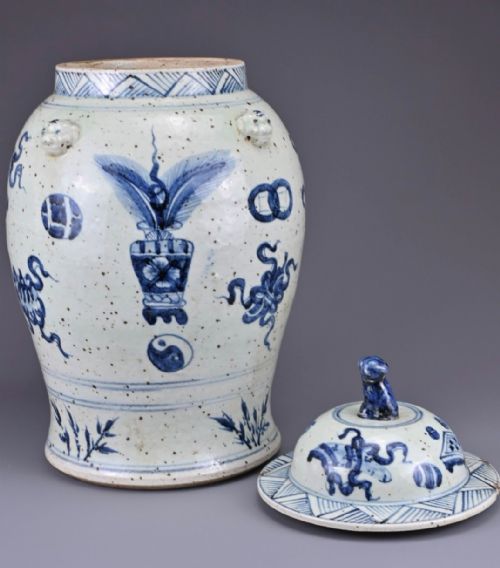
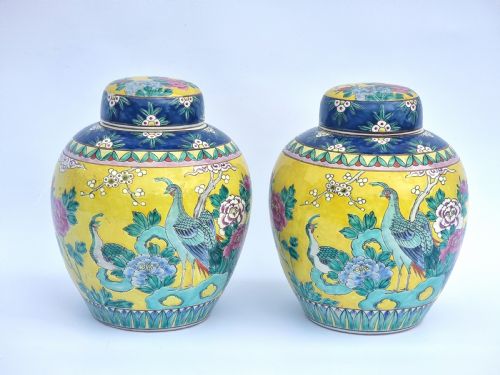
An oriental porcelain ginger jar is a lidded vessel originally designed for holding spices, later collected for its intricate painted decoration. The pieces found here span from the seventeenth century through to the early twentieth century, originating from both Chinese and Japanese kilns.
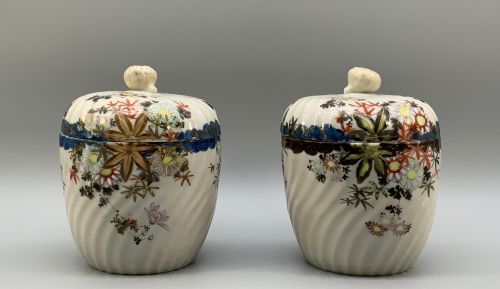
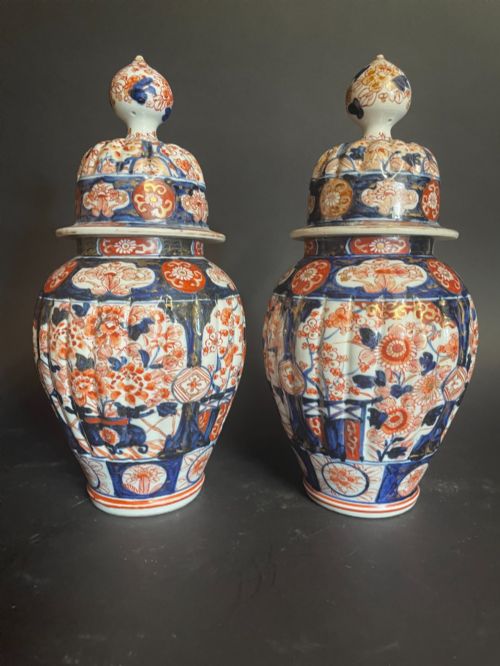
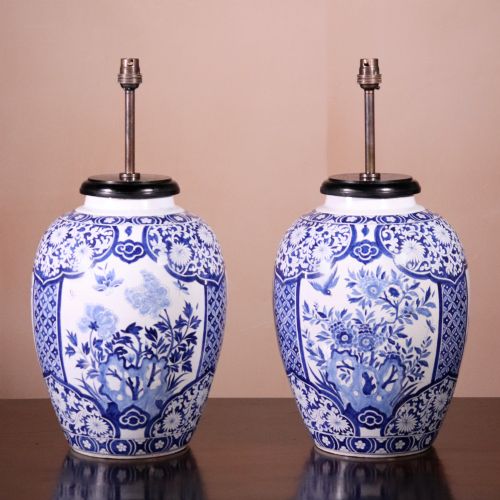
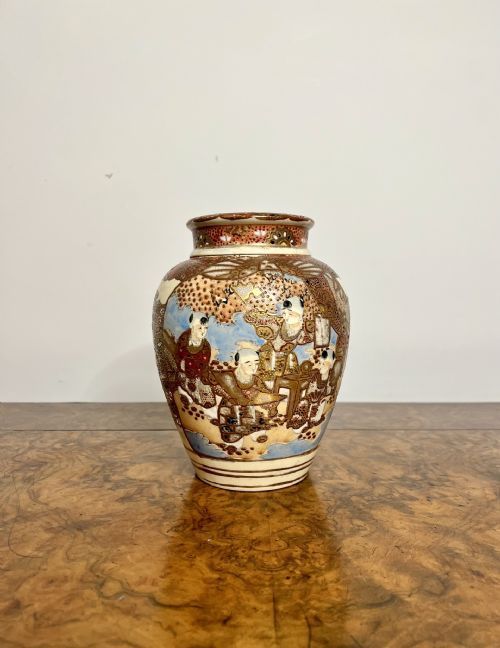
Buyers will most frequently encounter nineteenth-century examples on this page, including traditional blue and white designs, rich Imari palettes, and finely detailed Satsuma wares. Many of these lidded jars and covered vases retain their original covers, though several have been adapted over time to function as table lamps with fitted mounts.
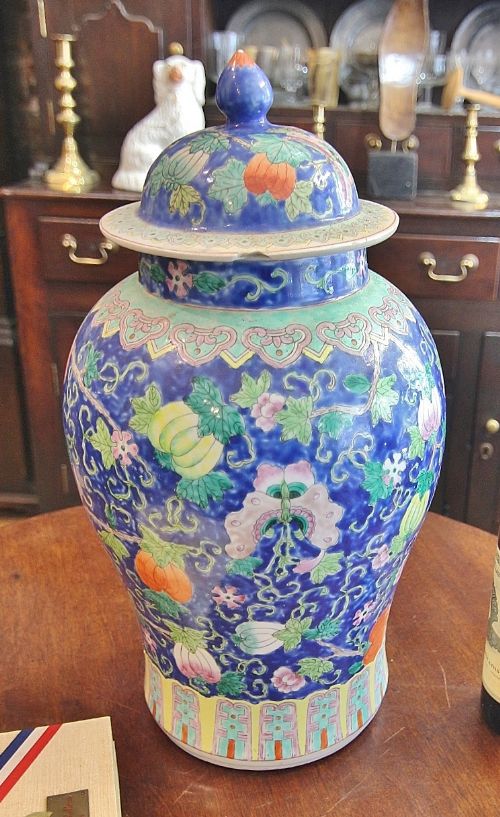
The forms range from compact tea caddies and small canisters up to large baluster vessels, often accompanied by wooden stands or detailed with ormolu mounts. These items reflect both traditional domestic utility and the extensive export trade directed toward European interiors.
How they were made
The bodies of these jars are formed from hard-paste porcelain or earthenware, shaped upon the potter's wheel and fired at high temperatures to achieve a durable ceramic base. Artisans then applied underglaze cobalt blue or overglaze enamel pigments by hand, utilising fine brushes to create detailed floral, landscape, and figural scenes.
Certain pieces incorporate applied gold leaf, crackle glaze finishes, or contrasting wucai enamels, requiring multiple firings to fix the decorative layers securely. Metal components such as brass or ormolu mounts were subsequently added to secure lids or adapt the jars into lamps during later Victorian and Edwardian alterations.
Listings feature porcelain, earthenware, brass, and gold leaf across seventeenth to twentieth-century forms.
What varies in quality
Quality in these jars rests primarily upon the precision and fluidity of the hand-painted brushwork, distinguishing spontaneous artistic execution from mechanical repetition. Finer examples display meticulous detail in facial expressions, foliage, and geometric borders, alongside carefully controlled glaze application and balanced proportions.
The survival of a matching original cover significantly elevates a piece, as does the clarity of period marks or signatures from recognised makers and kilns. The condition of the enamel and the stability of the porcelain body also dictate the standing of an individual jar within the broader spectrum of surviving wares.
Yamashu·Tokyo Taizan·Samson
The Oriental Porcelain Ginger Jar Glossary
- Imari
- A style of Japanese porcelain featuring a distinctive palette of underglaze blue, iron red, and gilt highlights. This decorative approach became immensely popular for export to European markets during the nineteenth century.
- Satsuma
- A type of Japanese earthenware characterised by a pale, ivory-coloured crackle glaze richly decorated with enamels and raised gold. These wares often depict detailed figural scenes and traditional landscapes.
- Famille Verte
- A Chinese ceramic palette dominated by green enamel colours, introduced during the Qing Dynasty. Artisans used this scheme to render vibrant botanical and narrative compositions.
- Baluster
- A vertical architectural form featuring a rounded lower body that tapers toward a narrow neck. Many ginger jars and covered vases adopt this characteristic silhouette.
- Doucai
- A Chinese porcelain technique combining underglaze blue outlines with overglaze polychrome enamels filled inside the borders. This method creates a contrasting, layered visual effect on the finished vessel.
Oriental Porcelain Ginger Jar: Frequently Asked Questions
What were ginger jars used for originally?
These vessels served primarily to store and transport spices, salt, and oils in ancient households. Merchants packed precious commodities inside them for safe trade across Asian and European markets.
Over time, European collectors repurposed the empty vessels purely for interior decoration. Their broad shoulders and secure lids made them ideal ornamental centerpieces on mantelpieces and side tables.
How do I spot an antique ginger jar?
Examine the base and glaze for signs of age, such as kiln grit, natural wear, and subtle irregularities in the porcelain body. Hand-painted brushstrokes typically show slight variations under magnification compared to modern printed transfers.
Check for period-specific pigments and traditional potting techniques that align with historical styles. Makers' marks or reign characters can also provide a reliable indication of production eras.
Are converted jar lamps still valuable?
Wired lamp conversions are common, particularly among nineteenth-century pieces adapted for Edwardian and Victorian interiors. Many collectors appreciate these functional alterations while valuing the underlying ceramic artistry.
The original character of the jar remains intact if the drilling or mounting was executed carefully without damaging the main painted body.
How should I clean porcelain ginger jars?
Dust the surface gently with a soft, dry brush to prevent dirt accumulation within the detailed enamel crevices. Avoid harsh chemical cleaners or submersion in water, especially on pieces with exposed ormolu mounts or fragile gold leaf.
Keep the jars away from direct sunlight to protect overglaze enamels from fading over extended periods.