


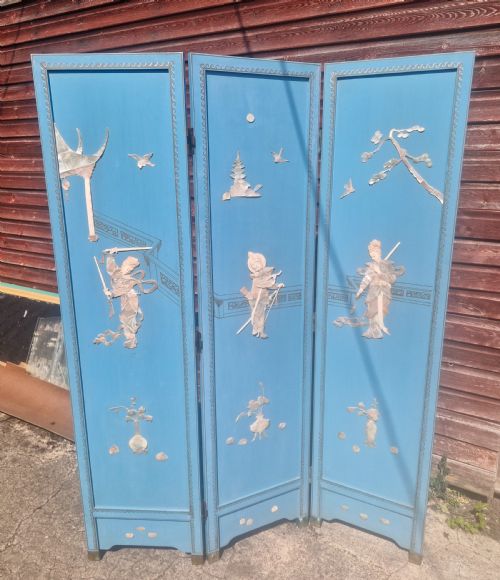


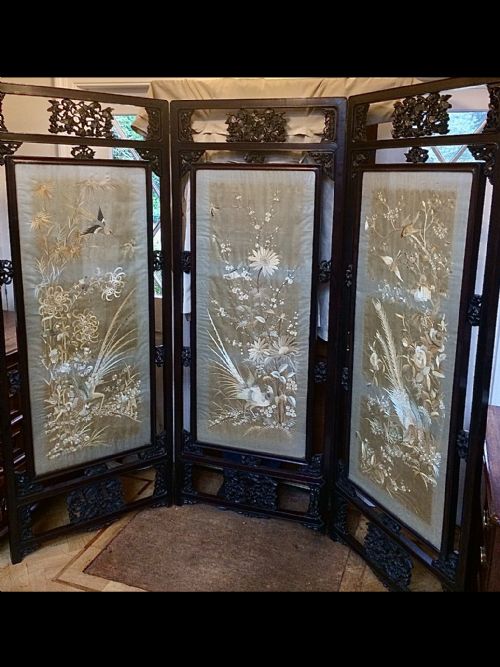
Oriental Partition Screen
An oriental partition screen divides a space with decorative panels that bring depth and architectural interest to a room.
Oriental Partition Screen
When you search for an oriental partition screen, you encounter folding panels designed to divide rooms, create privacy or act as decorative backdrops. The pieces gathered here span folding screens, room dividers and table screens, offering various ways to segment an interior.
Most examples you meet on this page originate from Chinese, Japanese, Burmese or Indian workshops, appearing in configurations from three to eight folds. These dividers range from tall freestanding barriers intended for large rooms down to smaller dressing screens and table formats.
The periods represented stretch from the Victorian era and the late nineteenth century through to the mid-twentieth century, including the Chinese Qing Dynasty and Republic Era. Styles shift between Chinoiserie, Chinese Traditional, Anglo-Indian and Japanese Export designs.
How they were made
Wood and hardwood form the structural framework for these panels, providing the solid support necessary for tall folding screens. Brass elements often appear in the hardware and hinges that allow the individual leaves to articulate smoothly.
Surface decoration relies heavily on lacquer and lacquered wood, built up in layers to create a smooth, durable finish. Artisans applied gold leaf, pigment, silk cotton and paint to build intricate pictorial scenes and floral motifs across the panels.
Carving represents another primary technique, seen in deep relief work depicting dragons and traditional motifs into hardwood or lacquer grounds. Fretwork also appears in regional variants, creating open geometric patterns within the wooden frames.
Oriental Partition Screen Retail Price Guide 2026
Typical asking prices for oriental partition screen among the pieces listed under this phrase on Sellingantiques today, from the lower quarter to the upper quarter. They describe what is for sale here now, not the wider market.
One Victorian example doubles as an antique photographic prop screen.
What varies in quality
The depth and precision of the carving distinguish finer pieces from simpler items, particularly where intricate details emerge from the wooden ground. Richness in the application of lacquer and gold leaf creates layers that catch the light differently than flat or thin finishes.
Panel stability and the execution of the hinges dictate how well a screen stands and folds across multiple leaves. Screens featuring painted or embroidered silk elements rely on the tightness of the textile and the fidelity of the brushwork for their overall impact.
The Oriental Partition Screen Glossary
- Coromandel screen
- A heavy Chinese wooden screen coated in dark lacquer, carved through to reveal layers of coloured composition underneath. This technique creates a distinctive recessed design filled with pigment or gold leaf.
- Chinoiserie
- A European artistic style reflecting Chinese motifs and decorative techniques, popular across furniture and screens. It interprets East Asian landscapes and figures through a Western design lens.
- Fretwork
- Openwork ornamentation carved or cut in geometric patterns into wood. It provides a lighter contrast to solid carved panels.
- Dressing screen
- A smaller portable screen traditionally used for privacy while changing clothes. These examples typically feature fewer folds than architectural room dividers.
- Table screen
- A miniature decorative screen mounted on a stand for display on a desk or table. They showcase the same artistic techniques as full-sized room dividers on a smaller scale.
Oriental Partition Screen: Frequently Asked Questions
How do I use a partition screen at home?
These screens work well to zone large open-plan spaces, hide storage areas or soften an empty corner of a room. Position them at an angle so the panels support each other and the screen stands securely.
Smaller dressing screens suit bedrooms or dressing rooms, while table screens sit comfortably on sideboards or desks to add height and colour to a surface.
How do I care for a lacquered screen?
Keep lacquered and wooden surfaces away from direct sunlight and strong heat sources to prevent the wood from warping and the finish from drying out. Dust them gently with a soft, dry cloth without applying water or chemical polishes.
When folding or moving multi-panel screens, support the weight evenly across the hinges to avoid straining the wood and joints.
What is the difference between Chinese and Japanese screens?
Chinese screens frequently utilise heavy carved coromandel lacquer, deep wood relief work depicting dragons, and formal symmetrical layouts. They tend to have a substantial presence in a room.
Japanese screens often favour painted paper, silk or decorated lacquer depicting natural scenes, birds and flowers with a focus on asymmetrical composition and fluid brushwork.
How many folds do these screens have?
The listings here include three, four, six and eight-fold configurations. Three and four-fold screens suit compact spaces or dressing areas.
Larger six and eight-fold versions provide wider coverage for dividing substantial rooms or spanning larger wall spaces.