




Oriental Lacquer Wall Mirror
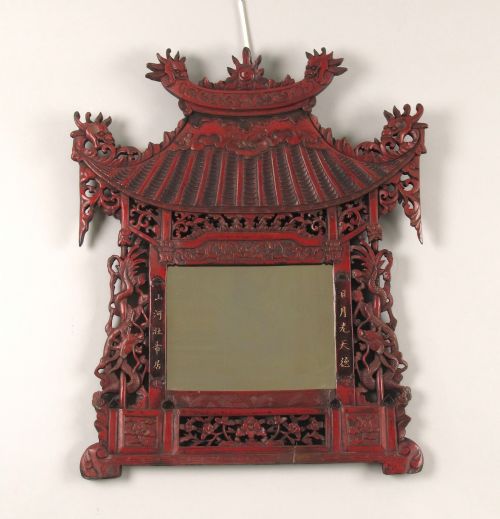
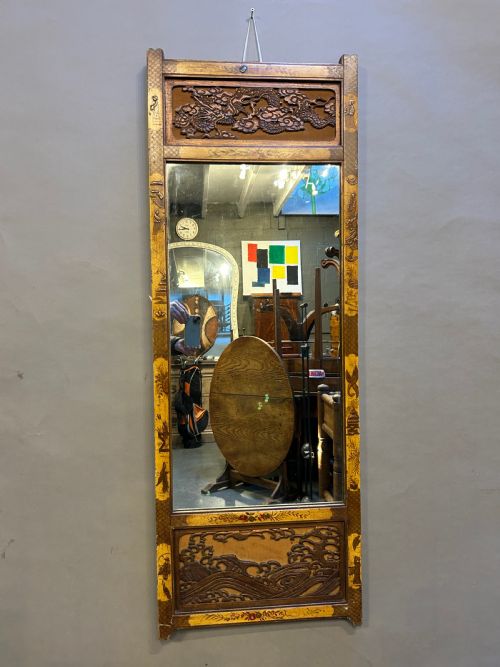
An oriental lacquer wall mirror brings rich Chinoiserie character and gilded detail to a room, offering both decorative presence and deep historical interest.
Oriental Lacquer Wall Mirror
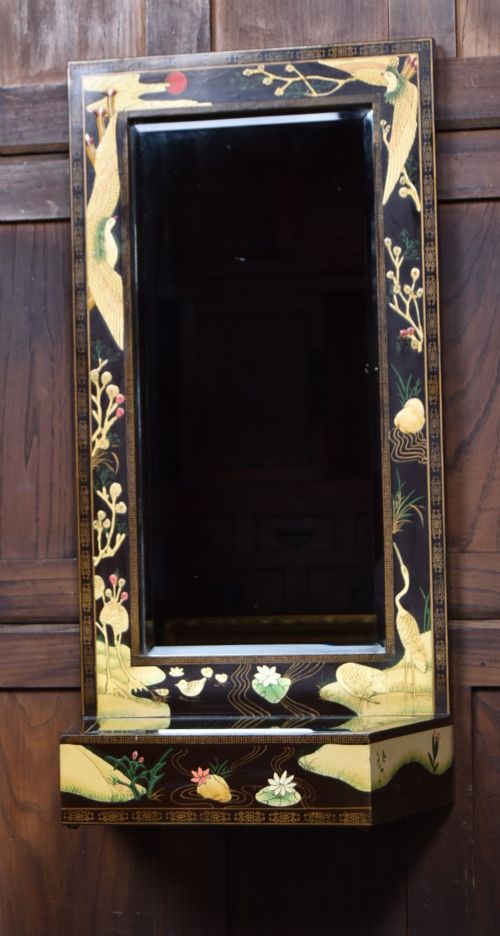
When you search for an oriental lacquer wall mirror, you encounter pieces designed to transform domestic interiors with striking painted scenes, gilt highlights, and rich lacquered surfaces. These objects span several distinct eras, drawing heavily upon traditional decorative motifs adapted by European and British makers over centuries.
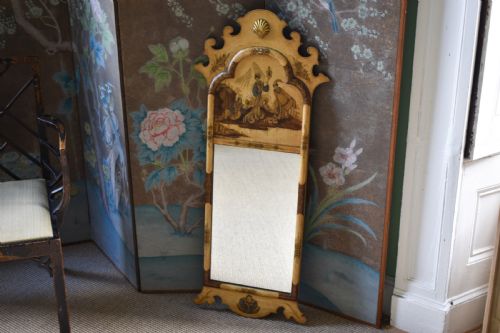
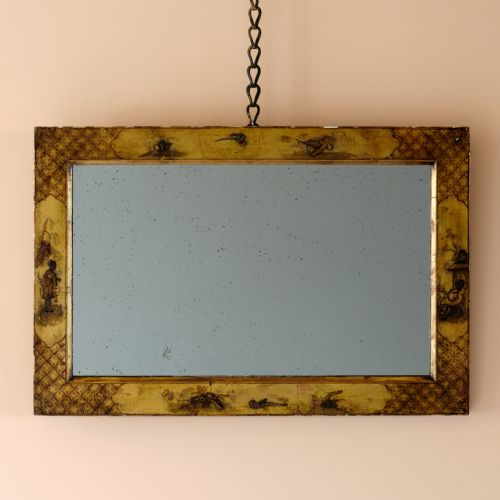
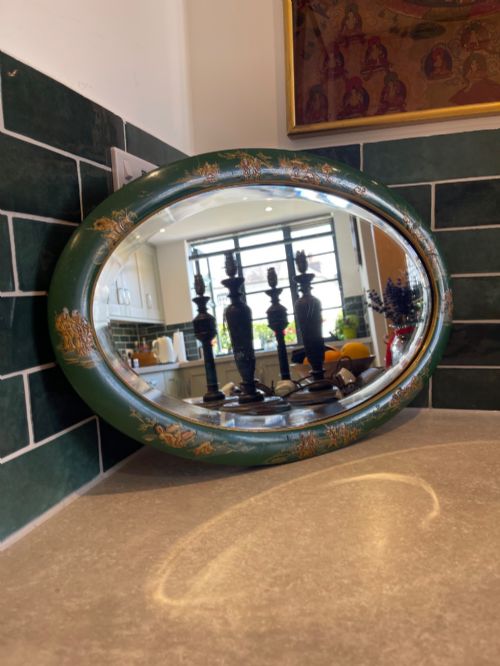
The versions most commonly met on this page include nineteenth century examples and Edwardian pieces. You will find rectangular wall mirrors alongside oval formats, pier mirrors, and occasional console table pairings that utilise similar lacquered finishes.
Makers often drew inspiration from Chinese and Japanese aesthetics, producing Chinoiserie and Japanned surfaces in black, cream, red, and gilt wood. Such mirrors function equally well as focal points above mantelpieces or as reflective accents in narrower hallways.
Materials and construction
These pieces are built primarily from wood frames prepared with layered lacquer and finished with gilt or gold leaf detailing. Master craftsmen applied multiple coats of lacquer to achieve a smooth foundation before painting detailed Asian-style figures, landscapes, and architectural motifs.
Mirror glass is fitted securely within frames constructed from timber such as gilt wood or lacquered wood. The integration of traditional joinery ensures structural stability, while the surface decoration relies on meticulous hand-painting and gilding techniques passed down through generations.
Several mirrors depict miniature pagodas where tiny painted inhabitants appear perpetually poised to enjoy the view.
Evaluating craftsmanship
The distinction between ordinary and exceptional examples rests in the depth of the lacquer work and the fidelity of the painted decoration. Superior pieces display intricate hand-painted Chinoiserie scenes with layered gold leaf that catches the light naturally.
Frame construction also dictates value, with well-proportioned mouldings and substantial mirror glass separating finer examples from simpler production. The crispness of the carving and the preservation of the original japanned surface determine the lasting integrity of the piece.
The Oriental Lacquer Wall Mirror Glossary
- Chinoiserie
- European artistic interpretation of Chinese and East Asian artistic traditions, popular in furniture and mirrors. This style employs whimsical figures, pagodas, and landscapes rendered in lacquer and gold.
- Japanned
- European imitation of Japanese lacquerwork popularised during the seventeenth and eighteenth centuries. The technique involves applying resin varnishes and heat-curing them before adding gilt decorations.
- Pier mirror
- A tall mirror specifically designed to hang on the wall between two windows, often placed above a pier table. They were proportioned to maximise light in formal reception rooms.
- Gilt wood
- Timber frames coated with fine gold leaf or gilt preparation to create a luminous metallic finish. This material reflects candlelight and daylight effectively in period interiors.
- Pagoda
- Architectural motif featuring tiered roofs, frequently depicted in the painted scenes of these mirrors. It serves as a key visual identifier for East Asian inspired design.
Oriental Lacquer Wall Mirror: Frequently Asked Questions
How do I hang a heavy lacquer mirror?
Ensure your wall fixings are anchored securely into studs or use heavy-duty wall plugs rated for the weight of the timber frame. Because many of these pieces feature substantial wooden construction and glass, professional installation is often recommended.
Position the mirror at eye level to maximise its reflective qualities and to showcase the detailed painted border properly within your room's layout.
Where should I place an oriental lacquer mirror?
These mirrors suit entrance halls, living rooms, and dining spaces where their decorative frames can command attention. Placing them opposite a window will help bounce natural light around the interior.
Avoid positioning them in direct, harsh sunlight to protect the integrity of the lacquered surface and the gold leaf detailing over time.
How do I identify a Georgian style piece?
Georgian style mirrors often exhibit precise symmetry, architectural pediments, and hand-applied japanning that mimics eighteenth-century workshop practices. Look for proportions and motifs that align with the aesthetic standards of that era.
Many later Edwardian and twentieth-century pieces successfully recreated these classic Georgian silhouettes while retaining their own period manufacturing characteristics.