




Oriental Jade Sculpture
Oriental jade sculpture items are hand-carved hardstone figures and vessels created across the Qing dynasty and later decades.
Oriental Jade Sculpture
When you search for oriental jade sculpture, you encounter a range of carved mineral objects spanning from the pre-sixteenth century through the twentieth century. These pieces encompass figural carvings, scholar's objects, and vessels associated with Chinese traditions.
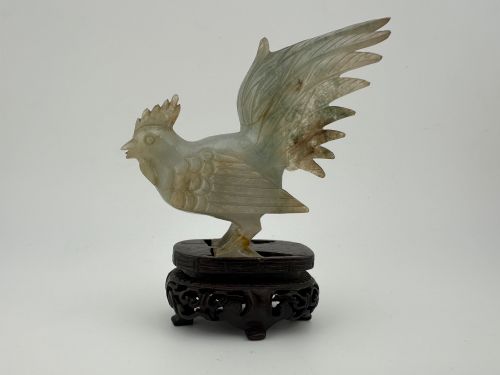
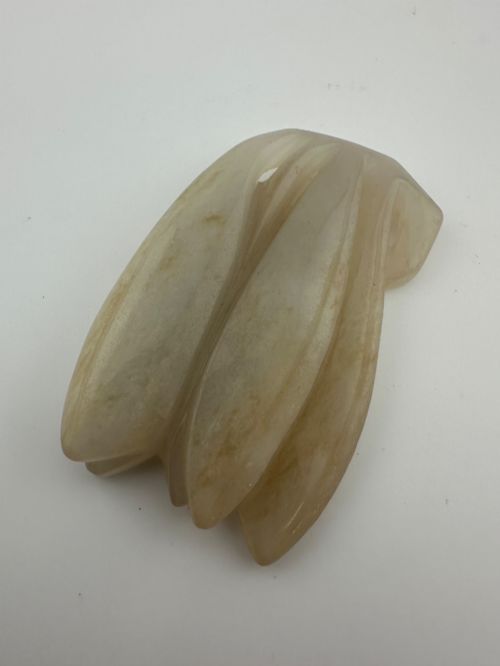
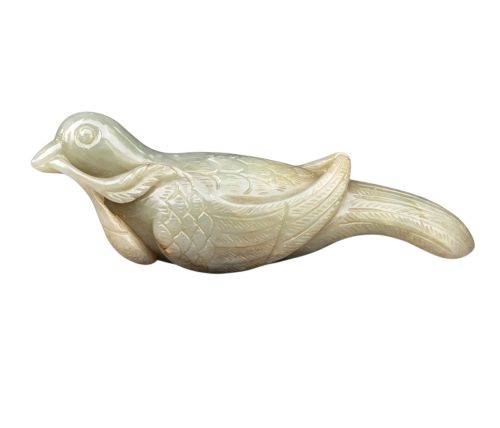
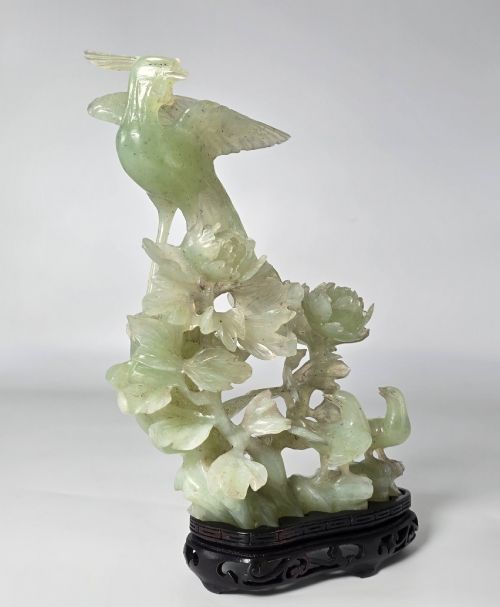
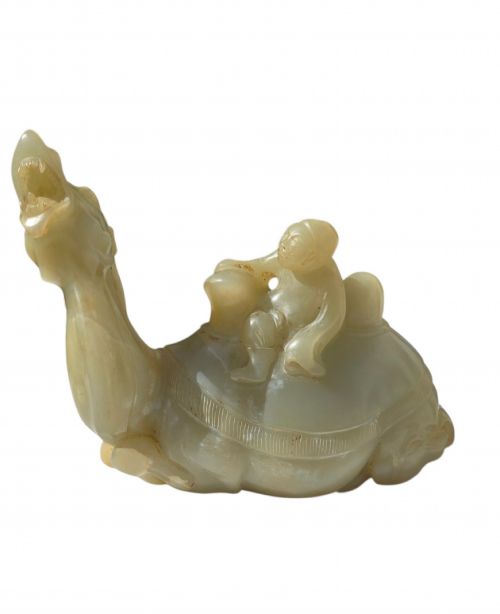
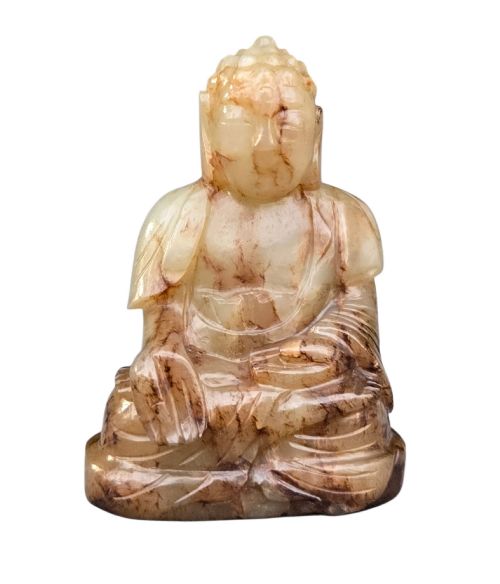
The selections on this page are dominated by nineteenth-century Qing dynasty items alongside pieces from the 1920s and 1930s. Common forms include figures of birds, dragons, horses, and Buddha alongside utilitarian items such as brush washers and lotus-form cups.
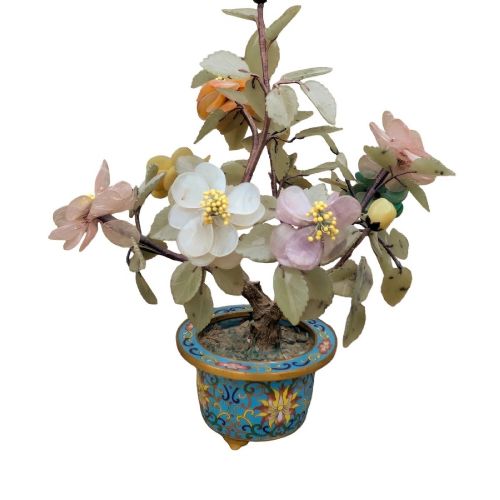
Many sculptures incorporate fitted hardwood stands that complement the carved stone. Others combine jade elements with cloisonne, silver, or mixed hardstones in decorative arrangements.
Materials and Techniques
The objects are worked from various mineral forms including jade, nephrite, jadeite, celadon jade, bowenite serpentine, and quartz. Craftsmen utilised abrasive sands and rotary tools to shape these tough stones into intricate motifs.
Surface details range from smooth polished planes to deep undercut reliefs depicting aquatic themes, figures, and foliage. Natural inclusions and russet tones within the stone are often integrated into the overall composition of the carving.
Listings include items spanning from pre-sixteenth century pieces up to 1930, utilising nephrite, jadeite, celadon jade, and bowenite serpentine.
Judging Quality
Quality rests upon the skill of the carver in handling the natural limitations and colour variations of the raw mineral. Superior examples demonstrate precise undercutting, balanced proportions, and a sensitive use of the stone's native grain.
The Oriental Jade Sculpture Glossary
- Celadon jade
- A pale green translucent mineral variety prized for its resemblance to sea-green ceramics. It was frequently utilised for scholar's objects and animal carvings during the Qing period.
- Nephrite
- One of the two distinct mineral species recognised as jade, known for its dense fibrous structure and toughness. It appears in tones ranging from white and pale green to dark spinach.
- Jadeite
- The second mineral species classed as jade, typically displaying a crystalline texture and bright emerald or lavender hues. It gained widespread use in Chinese carving during the later Qing and Republican eras.
- Hardstone
- A general term for semi-precious stones harder than ordinary window glass, including quartz, serpentine, and jade. These materials were carved into decorative vessels and figural groups.
- Qing Dynasty
- The final imperial dynasty of China, lasting from 1644 until 1912. This era produced the majority of the carved jade sculptures found in this category.
Oriental Jade Sculpture: Frequently Asked Questions
What is the difference between jade and hardstone?
Jade specifically refers to either nephrite or jadeite mineral compositions. Hardstone is a broader category that includes jade alongside other dense minerals such as quartz and serpentine.
Carvers applied similar abrasive techniques to both, but true jade carries specific mineralogical properties that distinguish it from other carved stones.
How can I tell the period of a jade carving?
Dating relies on stylistic conventions, subject matter, and tool marks visible under magnification. Qing dynasty pieces often feature traditional motifs and specific forms like scholar's water washers.
Later twentieth-century examples may display different mounting styles or softer surface finishing techniques compared to earlier imperial work.
What are hardwood stands used for?
Hardwood stands provide a stable base for display and protect the polished underside of the stone sculpture. They are individually carved to match the exact contours of the base of each piece.
These stands are frequently integrated into the presentation of botanical and figural carvings from the nineteenth and twentieth centuries.
How should I clean and care for jade sculptures?
Jade is a durable mineral that requires minimal maintenance beyond dusting with a soft cloth. Avoid using harsh chemical cleaners or abrasive materials that might scratch the polished surface or damage fitted wooden stands.
Keeping the pieces away from direct sunlight and sudden temperature shifts helps preserve the condition of both stone and stand.