





Oriental Hardwood Seating
Oriental hardwood seating brings together carved armchairs, benches, and suites rooted in Chinese traditions and global export workshops.
Oriental Hardwood Seating
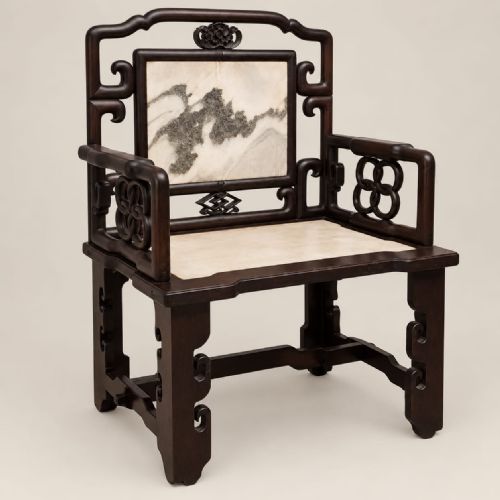
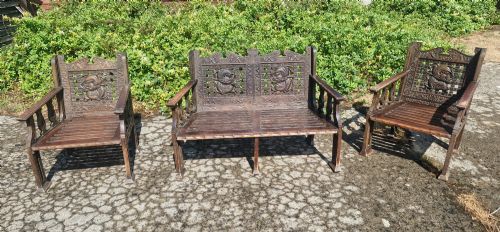
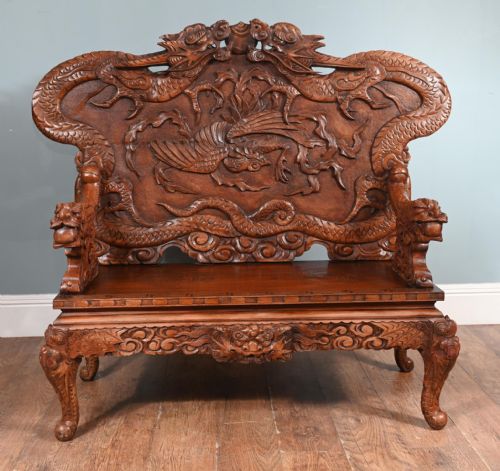
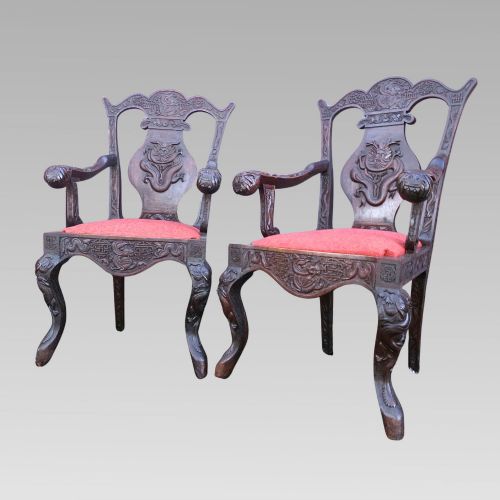
Oriental hardwood seating encompasses armchairs, benches, settles, and matching suites originating from nineteenth and early twentieth century workshops. Buyers searching for oriental hardwood seating frequently encounter substantial Chinese dragon benches, horseshoe armchairs, and throne chairs.
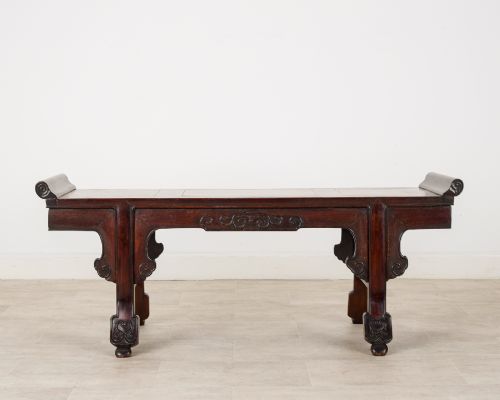
The selection ranges from traditional Qing dynasty carved seating to Chinese export pieces and regional variations incorporating elm, teak, and rosewood. These items serve functional roles as window seats, hall furniture, and drawing room suites.
Materials and Construction
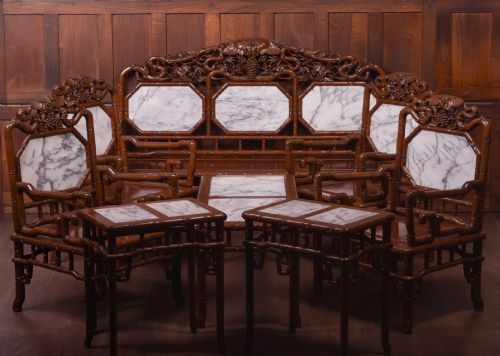
Carpenters utilised dense tropical woods including hongmu, teak, and rosewood alongside native elm and blonde wood to build sturdy frames. Many examples display deep relief carving depicting dragons and floral motifs, while others employ contrasting materials such as marble inserts and brass wire inlay.
Workshop methods also involved applying cinnabar lacquer or securing nacre shell and mother of pearl into prepared recesses. Folding mechanisms and mortise and tenon joinery allowed complex forms like horseshoe armchairs and X-frame seats to maintain structural integrity.
Period pieces on this page extend from the eighteenth century through the Victorian era and into the 1930s.
The Measure of Craft
Quality rests primarily on the depth and crispness of the hand carving, where sharper anatomical details on dragon motifs indicate superior workshop output. The selection of the timber also dictates worth, with dense grain and heavy hongmu or rosewood representing a higher tier than plain elm or softer fruitwoods.
Additionally, the precision of inlaid mother of pearl, brass wire, or marble panels separates standard production pieces from exceptional export commissions. Original surface finishes, whether polished hardwood or undisturbed lacquer, preserve the integrity of the maker's output.
The Oriental Hardwood Seating Glossary
- Hongmu
- A traditional Chinese term denoting dense, red-hued hardwood used for high-status furniture. It encompasses several heavy species prized for durability and rich natural grain.
- Horseshoe armchair
- A seating form featuring a continuous curved crestrail that sweeps downward to form armrests. This shape derives from classical Chinese design and offers ergonomic support.
- Cinnabar lacquer
- A decorative surface coating made from multiple layers of tree sap mixed with mercuric sulphide. Carvers cut intricate patterns into the hardened red substance.
- Mother of pearl
- An iridescent inner layer of mollusc shell used for inlay work. Craftsmen cut thin sections to create floral or geometric patterns set flush into wood.
- Settle
- A wooden bench featuring a high back and solid armrests designed to block draughts. They often incorporate enclosed storage or panelled construction.
Oriental Hardwood Seating: Frequently Asked Questions
How do I care for antique hardwood seats?
Keep wooden seating away from direct heat sources and sudden temperature shifts to prevent timber splitting. Apply a microcrystalline wax occasionally to nourish the surface without attracting dust.
Avoid using modern liquid polishes that can damage older lacquer or exposed grain. Regular dusting with a soft, dry cloth is sufficient for daily upkeep.
Were these chairs meant for daily use?
Many examples were constructed for formal reception rooms or ceremonial use rather than relaxed lounging. The dense timbers and upright postures reflect traditional domestic etiquette in period interiors.
Sturdier benches and elm armchairs tolerate moderate everyday seating if placed on level floors. Lighter export models with delicate inlay require more mindful handling.
How do I distinguish export pieces from domestic ones?
Export items often combine regional carving styles with Western-influenced proportions or specific decorative motifs tailored for foreign buyers. Artisans working in treaty ports frequently incorporated mother of pearl inlay or brass wire to appeal to European tastes.
Domestic pieces adhere more strictly to traditional Chinese forms like the official's hat chair or throne. Both categories utilise high-grade hardwoods such as hongmu and rosewood.