

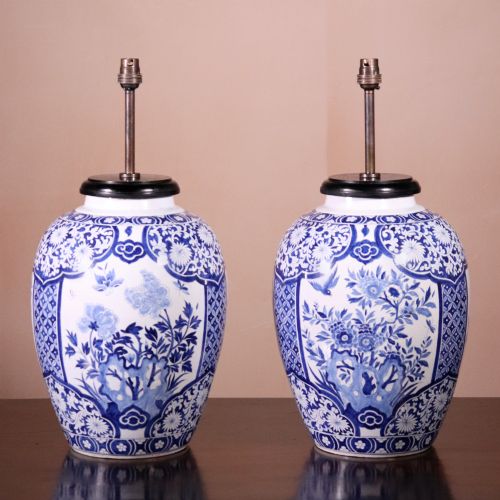


Oriental Ginger Jar Lamp
An oriental ginger jar lamp brings rich ceramic colour and pattern into a room, fashioned from antique vessels mounted for lighting.
Oriental Ginger Jar Lamp
When you search for oriental ginger jar lamps, you are looking at ceramic vessels converted into table lamps, often wired for modern use while retaining their historic character. The pieces available here span the nineteenth century, including specific dates such as eighteen eighty, eighteen ninety, and nineteen hundred.
You will most commonly encounter blue and white porcelain jars alongside famille rose and famille verte examples. Many originate from Chinese export and Qing Dynasty traditions, while Japanese Meiji period Kutani porcelain also appears.
The selection includes both single lamps and matched pairs, frequently fitted with brass, ormolu, wood, silk, fabric, or gold leaf elements. These forms combine traditional vase shapes with functional domestic lighting.
How they were made
The foundation of an oriental ginger jar lamp is fired porcelain, often decorated with hand-painted blue and white pigments or vibrant enamel palettes like famille rose and famille verte. Crackleware finishes and powder blue glazes demonstrate distinct ceramic techniques from the period.
Mounts and fittings utilise metals such as brass and ormolu, which secure the ceramic body and support the electrical components. Wooden bases and gold leaf details complete the construction of the assembled lamp.
Shades and wiring integrate fabric and silk materials to diffuse light, adapting the antique vessels for practical table illumination.
Oriental Ginger Jar Lamp Retail Price Guide 2026
Typical asking prices for oriental ginger jar lamp among the pieces listed under this phrase on Sellingantiques today, from the lower quarter to the upper quarter. They describe what is for sale here now, not the wider market.
What varies in quality
Quality in an oriental ginger jar lamp rests upon the artistic execution of the hand-painted ceramic decoration and the depth of the glaze. Finer pieces display crisp cobalt blue details or precisely applied enamel colours that command attention.
The integration of metal mounts, such as ormolu or brass, marks a distinction in the overall manufacture. Heavier, more finely cast mounts and stable wooden bases elevate the physical presence of the object.
The completeness of a matched pair and the preservation of the porcelain surface, whether crackleware or smooth powder blue, separate standard examples from superior ones.
Samson Porcelain
The Oriental Ginger Jar Lamp Glossary
- Famille Rose
- A ceramic palette dominated by opaque pink or rose enamel colours, developed during the Qing Dynasty. This style appears frequently on nineteenth century porcelain lamps.
- Famille Verte
- A porcelain decoration style featuring a dominant green enamel palette alongside other vibrant colours. It characterises several table lamps from the nineteenth century.
- Ormolu
- Gilded bronze used for decorative mounts and fittings on furniture and porcelain. It provides a bright metallic contrast to the ceramic bodies of these lamps.
- Crackleware
- Pottery or porcelain featuring a network of fine cracks in the glaze, deliberately created as a decorative effect. It adds distinctive texture to nineteenth century Chinese vases.
- Meiji Period
- A period of Japanese history lasting from eighteen sixty-eight to nineteen twelve, known for fine Kutani porcelain production. Pieces from this era often feature in these listings.
Oriental Ginger Jar Lamp: Frequently Asked Questions
What is an oriental ginger jar lamp?
An oriental ginger jar lamp is a decorative table lamp created by converting a traditional ceramic storage jar into a lighting fixture. These pieces combine historic Asian porcelain with electrical fittings and stands.
The vessels used are often antique vases dating from the nineteenth century, featuring hand-painted designs in blue and white or enamel palettes.
How do I identify a nineteenth century lamp?
Identifying a nineteenth century date relies on examining the characteristics of the porcelain body, the style of the hand-painted decoration, and any associated metal mounts. Marks and glaze types provide further clues to the manufacturing period.
Styles such as Qing Dynasty blue and white, Meiji period Kutani, and French Chinoiserie mountings help contextualise the age of the piece.
Are these lamps sold as pairs?
Many oriental ginger jar lamps are available as matched pairs, which makes them suitable for placement on bedside tables or mantlepieces. Single lamps also feature regularly in the selection.
Pairs often share identical porcelain patterns and similar metal or wooden mountings from the nineteenth century.
What materials are used in the mounts?
The mounts on these lamps frequently incorporate brass, ormolu, wood, and gold leaf. These materials secure the ceramic jar and provide a stable base for the electrical components.
Ormolu mounts add a gilded bronze finish that complements the porcelain colours, while wooden elements offer traditional support.