

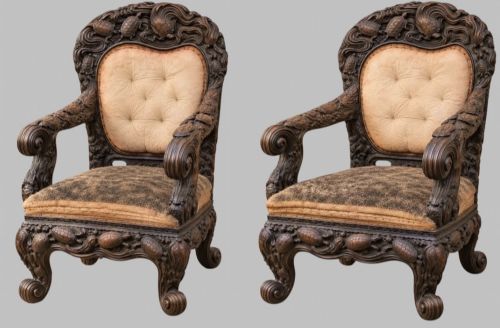
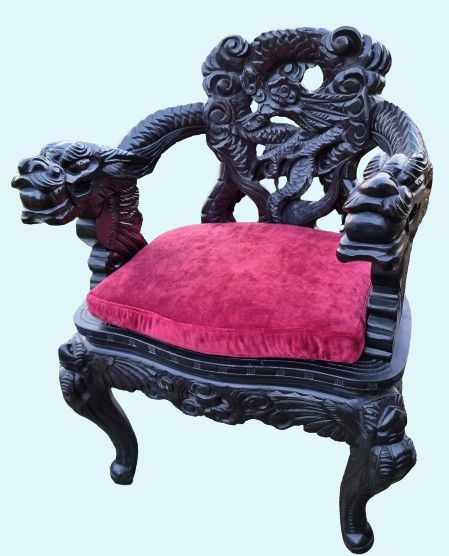
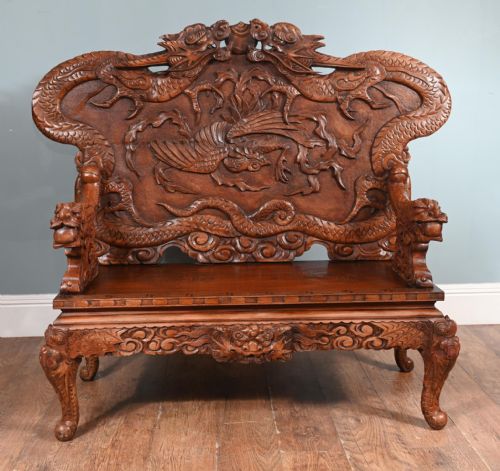

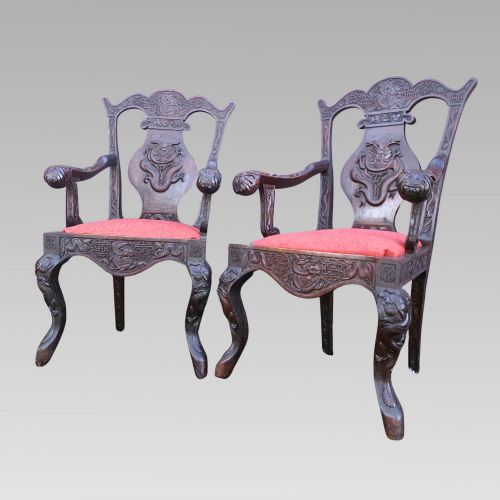

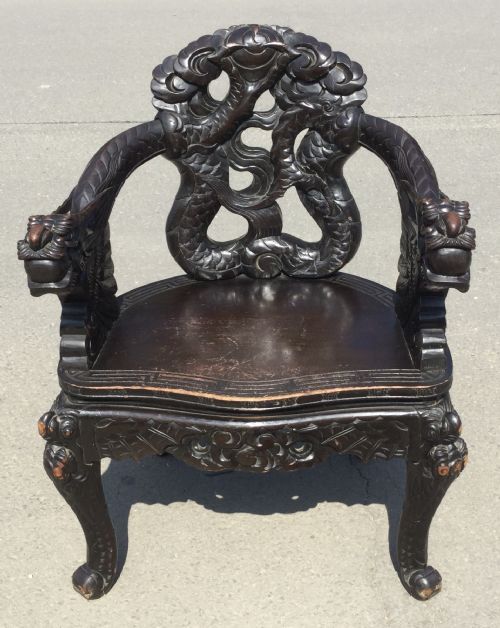


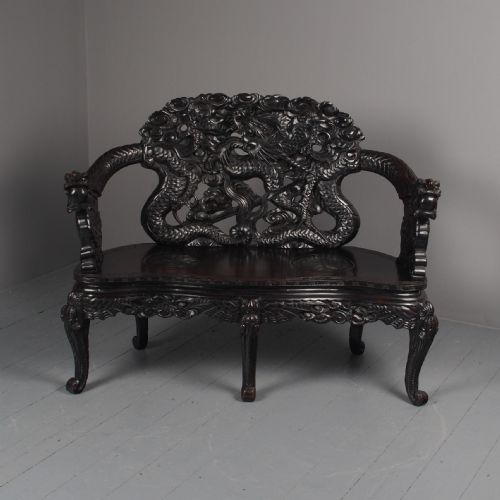
Oriental Dragon Chair
An oriental dragon chair brings fierce carved detail and deep timber presence into a room, making it the anchor for any serious seating arrangement.
Oriental Dragon Chair
When buyers search for an oriental dragon chair, they encounter substantial seating built from dense timbers like hardwood, rosewood, elm, and teak. These pieces emerge predominantly from the nineteenth century, with specific examples carrying dates around eighteen sixty, eighteen eighty, and nineteen hundred.
The dominant forms on this page include armchairs, hall benches, settles, and folding seats spanning Chinese export and Qing dynasty styles. Many incorporate deeply carved motifs of dragons and symbolic scenes across the seats and backs.
Makers utilised traditional regional joinery to construct these items, producing both individual armchairs and paired suites designed for prominent placement in a hall or reception space.
How they were made
The construction relies heavily on native Asian timbers, primarily utilising dense hardwoods, rosewood, teak, and elm to ensure structural strength. Artisans shaped these materials using traditional joinery methods that allowed the wood to expand and contract naturally.
Surface decoration frequently involves deep hand-carving directly into the timber or the application of cinnabar lacquer to highlight motifs such as dragons. Additional material elements occasionally include bone inlay and upholstered sections in fabrics like velvet.
Oriental Dragon Chair Retail Price Guide 2026
Typical asking prices for oriental dragon chair among the pieces listed under this phrase on Sellingantiques today, from the lower quarter to the upper quarter. They describe what is for sale here now, not the wider market.
The furniture forms on this page span individual armchairs, folding seats, and multi-piece seating sets alongside long hall benches.
What varies in quality
The selection and preservation of the timber also define the grade of the piece, with dense rosewood and teak retaining crisper edges than softer woods like elm. Furthermore, the integrity of the original lacquer and the tightness of the frame construction separate functional seating from decorative survivals.
The Oriental Dragon Chair Glossary
- Hardwood
- A dense, slow-growing timber used for durable furniture construction. It provides the heavy framework necessary for deep relief carving.
- Cinnabar lacquer
- A traditional layered coating made from tree sap pigmented with mercuric sulphide. It is built up in thick coats before being carved with intricate motifs.
- Settle
- A wooden bench featuring a high back and solid armrests. It was historically designed to block draughts in large halls.
- Qing Dynasty
- The final imperial dynasty of China, lasting from sixteen forty-four to nineteen twelve. Furniture from this period is characterised by robust proportions and symbolic ornamentation.
- Rosewood
- A heavily figured, durable timber prized for its rich reddish-brown colour and dense grain. It takes a fine polish and holds crisp carved details.
Oriental Dragon Chair: Frequently Asked Questions
How were these chairs used historically?
These seats were placed in prominent rooms such as reception halls, studies, or entranceways to project status and cultural authority. Their robust construction and high backs suited formal settings where visitors were received.
Larger variants like settles and benches also functioned to partition large spaces or shield occupants from draughts in expansive halls.
How do I live with a wooden bench?
Living with a heavy wooden bench involves placing it away from direct heat sources and sudden humidity shifts to protect the timber and carved details. Maintaining a stable indoor environment prevents the wood from splitting or warping over time.
Regular dusting with a dry, soft cloth preserves the finish, while careful placement ensures the piece remains a striking focal point without impeding room traffic.
How do I tell different periods apart?
Differentiating periods relies on observing stylistic markers, timber types, and construction methods associated with specific eras like the nineteenth century or the Qing dynasty. Earlier pieces often display deeper, more assertive hand-carving and heavier timbers like rosewood.
Comparing the joinery techniques and the wear patterns on the lacquer or polish also helps determine the age and origin of individual pieces.