


Oriental Decorative Table Lamp
An oriental decorative table lamp brings colour and craftsmanship into a room, usually taking the form of a converted vase or lantern from the nineteenth or early twentieth century.
Oriental Decorative Table Lamp
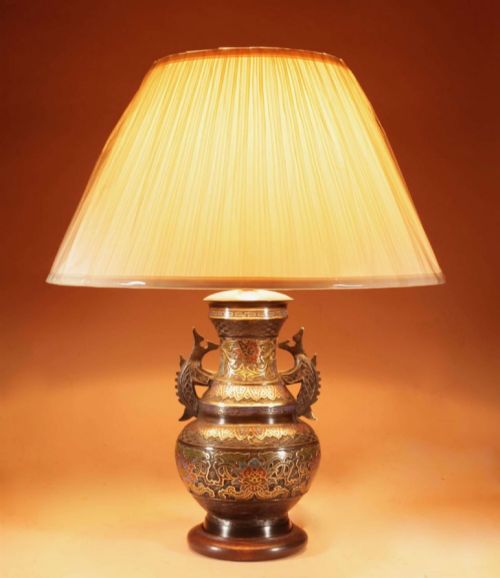
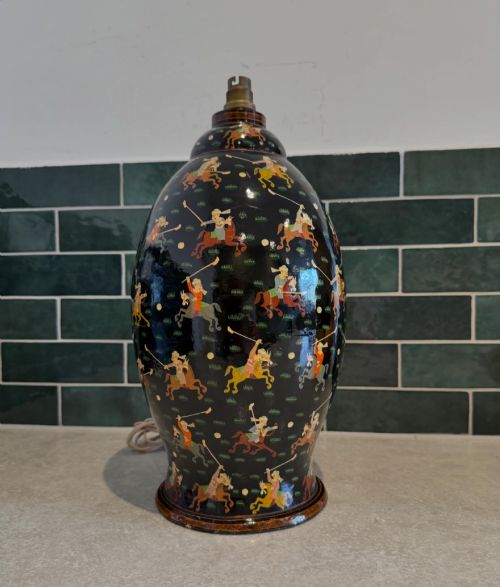
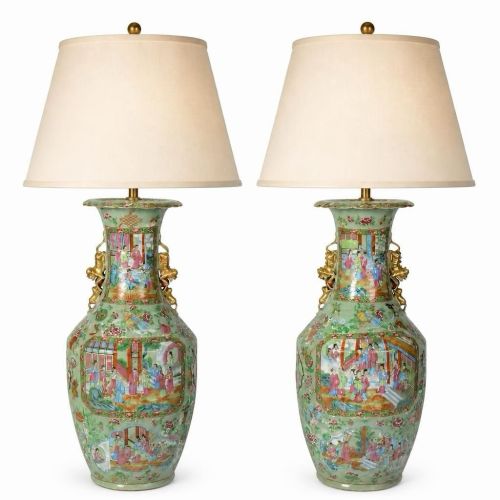
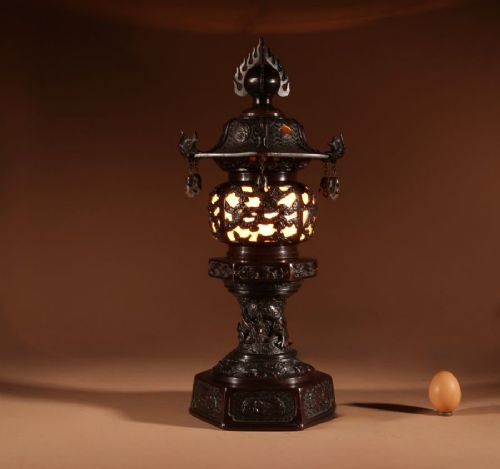
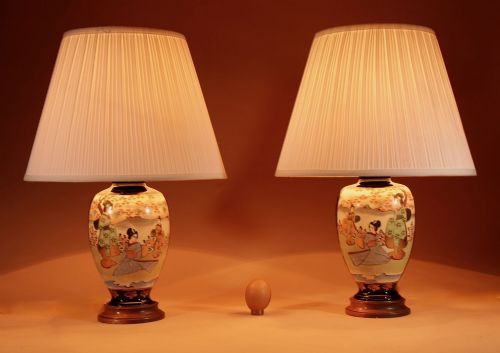
When you search for an oriental decorative table lamp, you encounter pieces that began life as vases, canisters, or lanterns before finding new purpose as lighting. The selection spans nineteenth-century Chinese porcelain, Japanese bronze and Satsuma wares, alongside Kashmiri and Anglo-Indian works.
Most examples you meet on this page are converted vessels, notably Famille Rose, Famille Verte, and Satsuma pieces, paired with fabric shades. Alongside ceramic bodies, you find brass, bronze, and lacquer forms that reflect distinct regional aesthetics.
The styles range from Regency chinoiserie and Meiji period bronzes to folk art traditions. Buyers often select them to anchor a room with a focal point that bridges traditional craftsmanship and functional interior lighting.
How they were made
Makers utilised durable materials such as porcelain, bronze, brass, and wood, often applying hand-painted enamels, cloisonné work, or lacquer finishes. Vases and tea canisters were subsequently drilled and fitted for electrical wiring.
Japanese and Chinese pieces display intricate hand-painted motifs or champlevé and cloisonné bronze techniques. Kashmiri examples utilise papier-mache and painted decoration over wooden or fibrous bases, showing distinct regional craft methods.
Object forms span table lamps, side tables, and occasional wine tables executed in Chinoiserie, Meiji, and Kashmiri folk art styles.
What varies in quality
The standard of the hand-painting and the crispness of the bronze casting largely determine the calibre of each piece. Finely detailed enamel work and well-preserved lacquer or gilding distinguish finer examples.
The integrity of the original vessel before conversion matters significantly, as does the balance and proportion of the completed lamp. Pieces retaining sharp surface detail and harmonious proportions command greater appreciation.
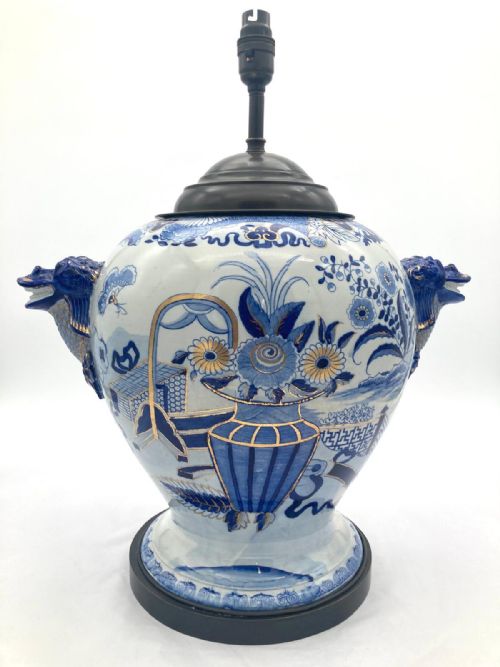
Hicks and Meigh
The Oriental Decorative Table Lamp Glossary
- Chinoiserie
- European interpretation and imitation of Chinese and East Asian artistic traditions, prominent in furniture and decorative objects. This style often incorporates motifs of landscapes, figures, and pavilions.
- Satsuma
- A type of Japanese earthenware featuring a crackled ivory-coloured glaze decorated with polychrome enamels and gilding. These wares were widely produced for export during the Meiji period.
- Cloisonné
- An enamelwork technique where thin metal wires are soldered to a metal base to form compartments, which are then filled with paste and fired. The resulting surface displays colourful designs separated by delicate metal lines.
- Famille Rose
- A palette of Chinese porcelain enamels dominated by opaque pink or rose colours, introduced during the Qing dynasty. The style frequently depicts floral arrangements, birds, and figural scenes.
- Champlevé
- An enamelling technique where troughs or cells are carved into a metal surface, such as bronze, and filled with enamel before firing. It creates a robust, patterned decoration across the object.
Oriental Decorative Table Lamp: Frequently Asked Questions
What is an oriental decorative table lamp?
An oriental decorative table lamp is typically a converted antique vessel, such as a Chinese porcelain vase or a Japanese bronze lantern, fitted with electrical components for modern use.
These pieces retain their original hand-painted or enamelled decoration, bringing historical craftsmanship into contemporary interiors as functional lighting.
How do I identify a Meiji period lamp?
Meiji period pieces originate from Japan between eighteen sixty-eight and nineteen twelve, often showing exceptional technical skill in bronze casting or detailed Satsuma ceramic decoration.
Look for refined metalwork like cloisonné and champlevé, or characteristic crackle-glaze pottery decorated with rich pigments and gold leaf.
Were these lamps originally made for lighting?
Most of these objects were created as vases, tea canisters, or decorative vessels rather than lamps. They were later converted by mounting them with electrical fittings and pairing them with fabric shades.
This conversion process allows historical ceramics and bronzes to serve a practical purpose in a room while preserving their decorative exterior.
How do I care for a lacquered or painted lamp?
Keep painted ceramic, bronze, and lacquered surfaces clean by dusting gently with a soft, dry cloth. Avoid using harsh chemical cleaners or abrasive materials that could damage the delicate hand-painted enamels or surface finishes.
Position the lamp away from direct sunlight and excessive moisture to protect the structural integrity of the materials and the richness of the colours.