
Oriental Carved Plant Stand
An oriental carved plant stand is a sturdy, decorative pedestal designed to elevate pottery and urns, bringing historic craftsmanship and rich timber into a room.
Oriental Carved Plant Stand
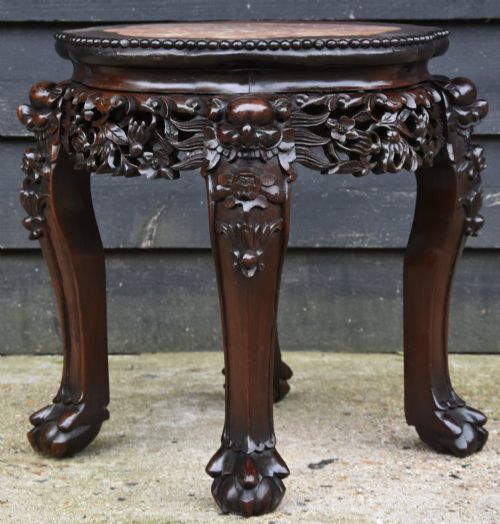
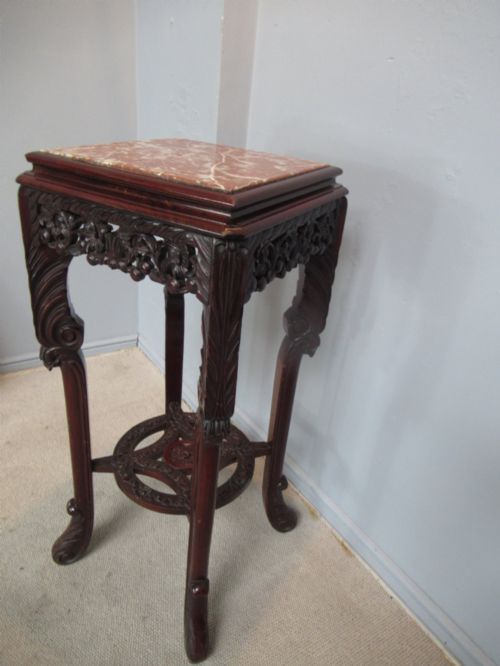
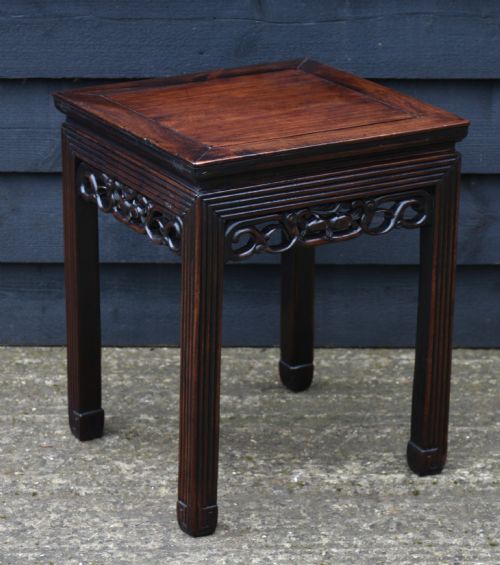
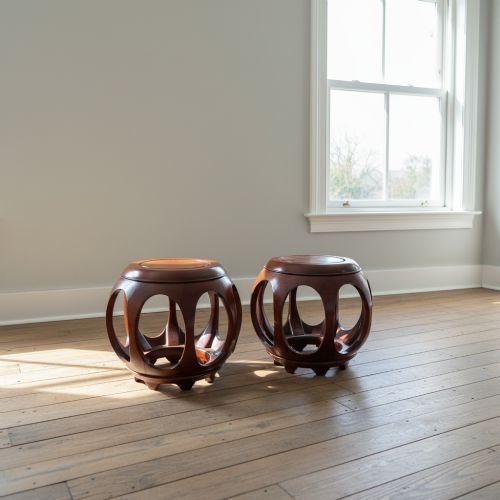
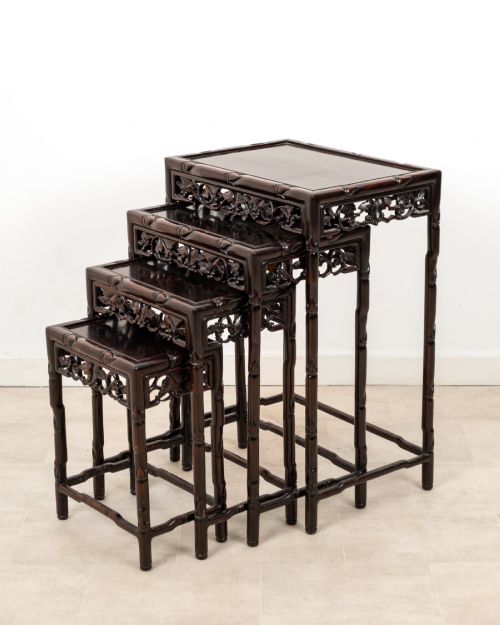
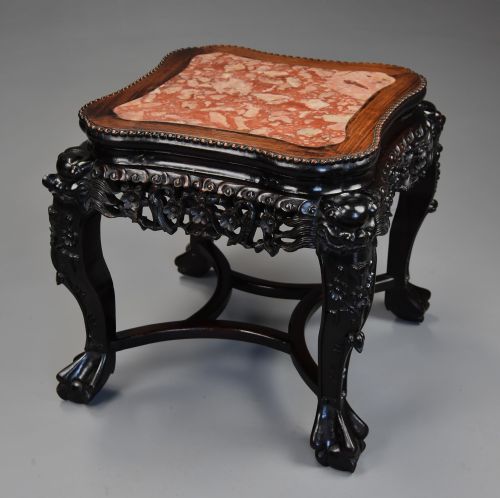
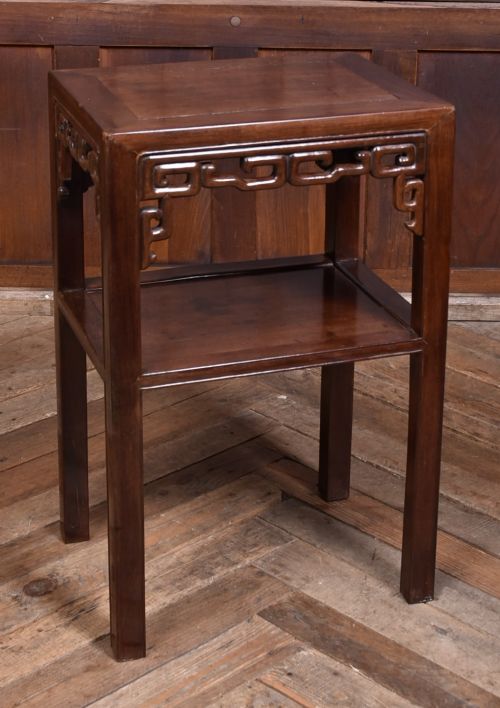
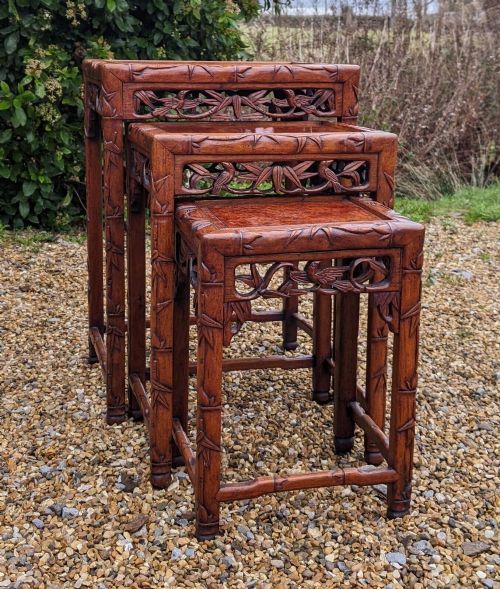
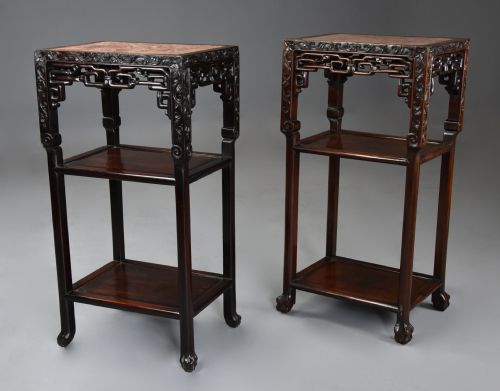
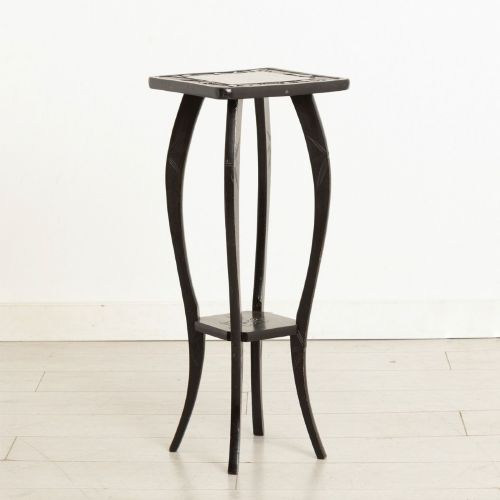
An oriental carved plant stand serves as a sturdy pedestal for heavy ceramic urns, porcelain pots, and decorative vases within historic interiors. These items range from low pot stands and square occasional tables to tall torcheres and barrel stools.
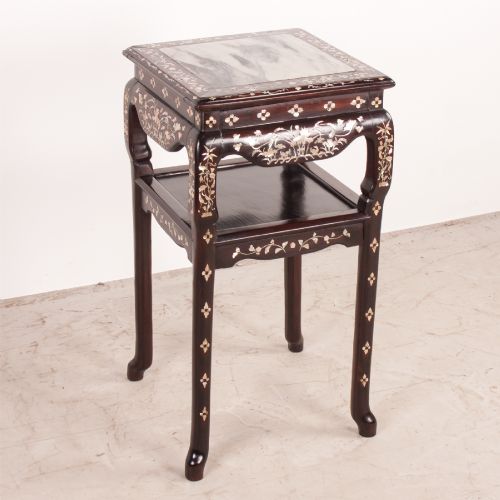
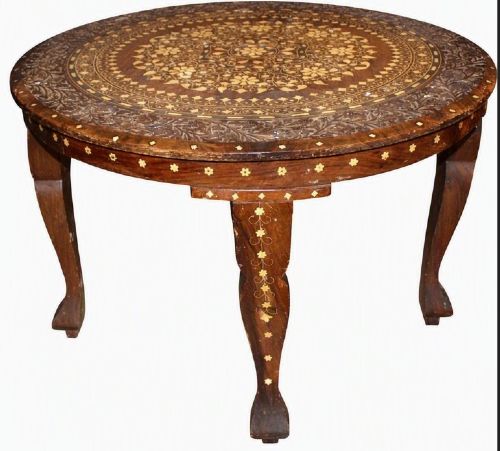
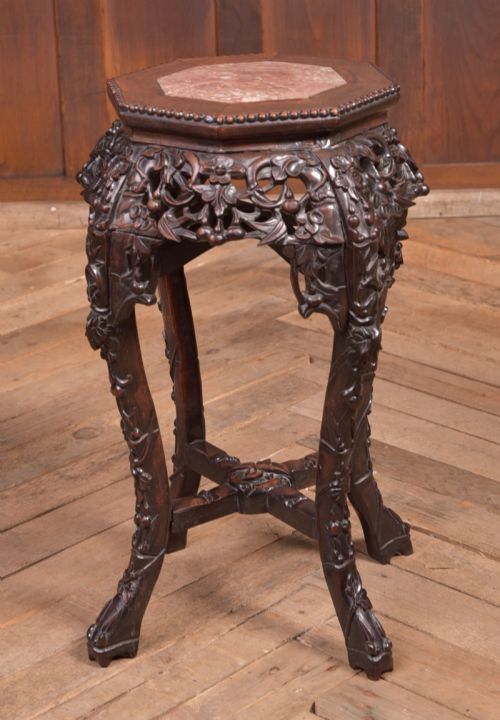
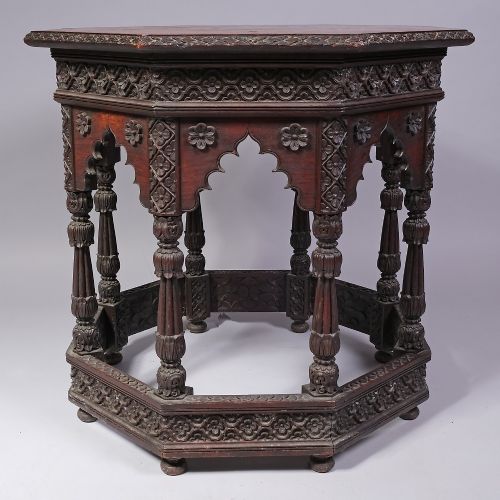
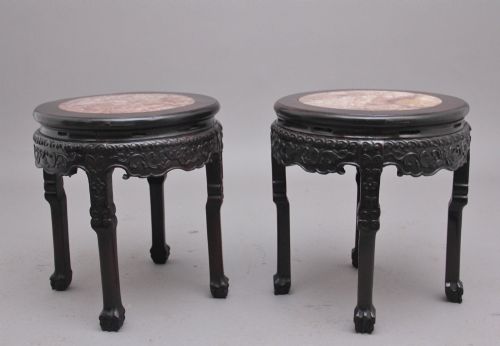
The pieces appearing on this page span the nineteenth century into the early twentieth century, taking forms such as Chinese Qing Dynasty tables, Anglo-Indian occasional tables, and Japanese side tables. Hardwoods dominate the selection, frequently paired with inset marble tops designed to handle damp flowerpots without damaging the timber surface.
Materials and construction
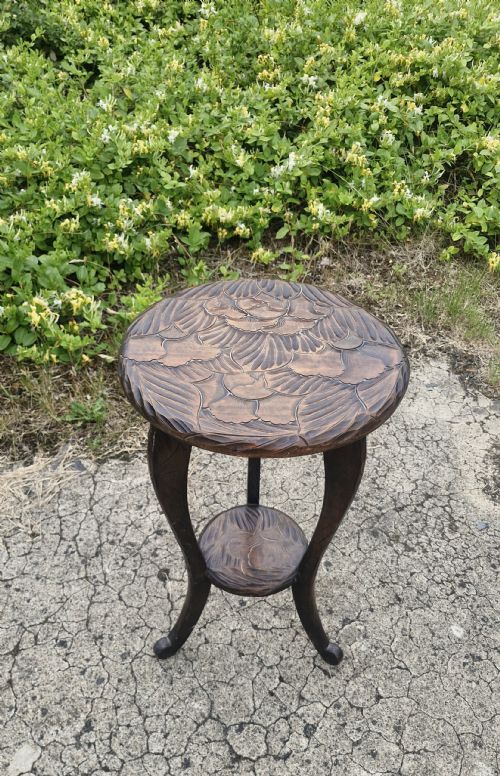
Cabinetmakers utilised dense Asian hardwoods including rosewood, padouk, huanghuali, and ebonised wood to build these stands, relying on traditional joinery that tolerated the weight of heavy stone tops. Carvers worked directly into the timber to create deep relief motifs of flora, fauna, and scrolling foliage.
Many examples incorporate contrasting inlays such as white marble, rouge marble, quartz, mother of pearl, bone, and brass wire. Surface decoration occasionally extends to lacquer and hand-carved rootwood or burr wood sections.
Several stands double as sculptural elephants, letting your ferns ride atop carved wooden trunks and tusks.
Judging quality
Quality rests upon the crispness of the wood carving and the weight and grain of the primary timber used. Pieces featuring deeply undercut foliage and well-fitted inset marble tops command greater attention than simpler turned examples.
The integrity of the structural joints and the retention of original surface polishes dictate the standing of an individual item. Finer items demonstrate careful matching of timber grains and meticulous placement of inlay materials.
Liberty & Co·Gabriel Viardot
The Oriental Carved Plant Stand Glossary
- Jardiniere
- A large ornamental pot or stand for holding flowers and plants. These heavy vessels required robust low tables to support their weight.
- Torchere
- A tall stand or pedestal originally designed to hold a candle or lamp. In Asian and Anglo-Indian export furniture, these often double as tall plant displays.
- Hongmu
- A category of dense, dark Chinese hardwoods often translated as red wood. It includes species like rosewood and padouk used for heavy furniture.
- Cloisonne
- An enamel technique where metal wire forms compartments on a surface before being filled with coloured paste. This decoration appears on select table tops.
Oriental Carved Plant Stand: Frequently Asked Questions
How were plant stands used historically?
These stands elevated heavy ceramic pots, jardinieres, and urns to eye level inside nineteenth-century parlours and drawing rooms. This protected delicate floor coverings from damp soil and water runoff.
They also served as decorative occasional tables for holding lamps, small sculptures, or decorative objects within formal interior schemes.
Are marble top stands waterproof?
The inset marble slabs provide a durable, water-resistant surface designed to catch moisture from plant pots without staining the surrounding timber.
However, moisture can still seep into tiny gaps between the stone and the wooden frame if left standing for extended periods, so wiping up excess water remains sensible.
How do I tell Chinese and Indian stands apart?
Chinese pieces typically feature Qing Dynasty motifs, dense hardwoods like rosewood, and inset marble or mother of pearl panels. The carving focuses heavily on traditional floral and geometric patterns.
Anglo-Indian and Indian pieces frequently incorporate distinctive bone inlay, brass wire work, or intricate pierced carving showing regional flora and fauna distinct from East Asian traditions.
Can these stands support heavy modern plants?
Historic stands were engineered specifically to bear the substantial weight of heavy ceramic pots filled with soil and water. Solid hardwood construction provides immense structural strength.
Checking the stability of the joints ensures the piece handles modern loads safely without wobbling on uneven floors.