
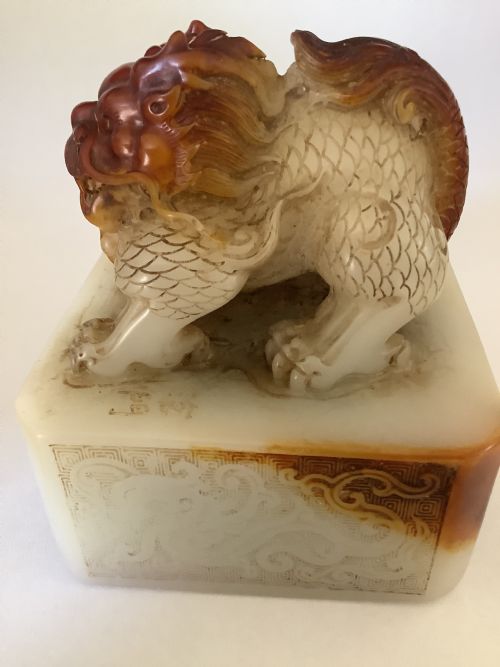
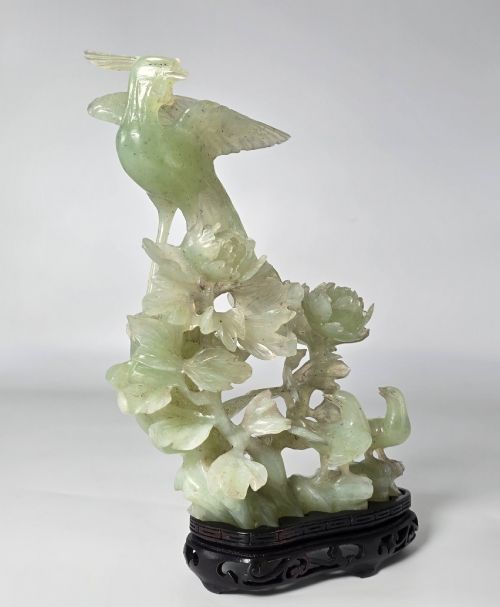


Oriental Carved Jade Ornament
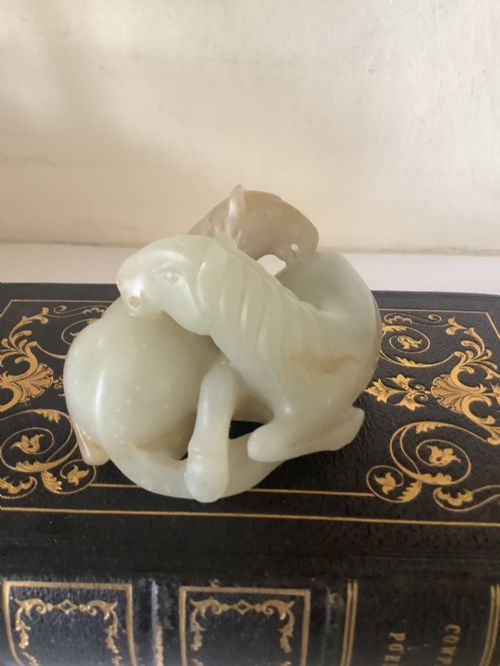
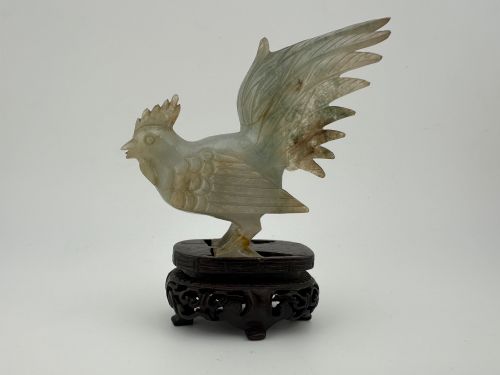
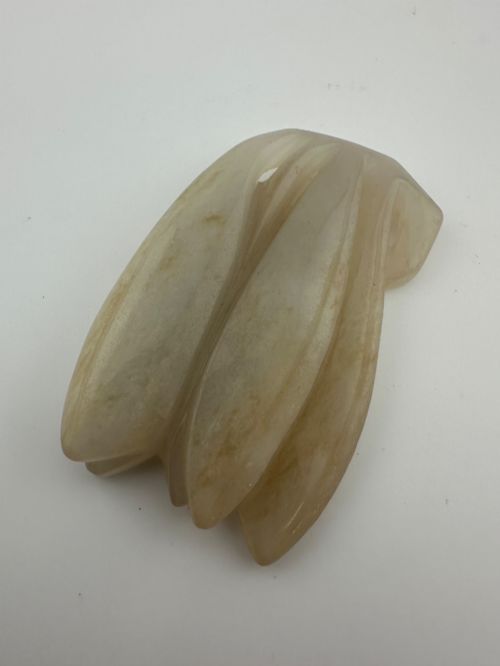
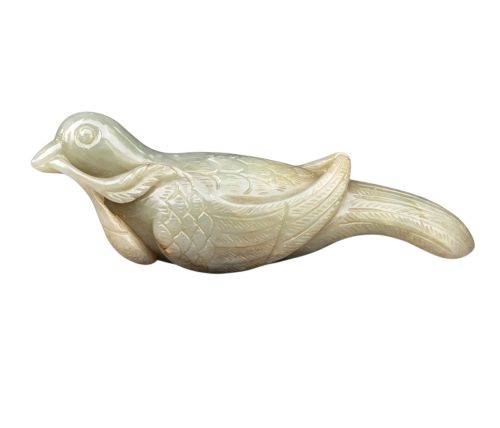
An oriental carved jade ornament brings tactile depth and rich natural colour to a room, captured in polished stone from the eighteenth and nineteenth centuries.
Oriental Carved Jade Ornament
When looking for an oriental carved jade ornament, you encounter pieces spanning the eighteenth century through to the early twentieth century. These works appear in forms such as scholarly desk accessories, small sculptures of animals and figures, and detailed pendants.
The objects most frequently met on this page belong to traditional Chinese designs, including Qing dynasty motifs and Republic period items. Sculptural carvings dominate the selection, often accompanied by fitted hardwood stands.
Makers shaped nephrite and jadeite into water birds, cicadas, dragons, and landscape scenes. Smaller items like pendants and belt buckles sit alongside larger mountain sculptures and brush washers.
Standards of execution
Quality rests upon the sensitivity of the carving and how well the artisan responded to the natural inclusions and colour shifts of the raw stone. Finer examples display crisp undercut details and fluid lines that bring animal and landscape subjects to life.
The integration of the material with secondary elements like fitted wooden stands or silver mounts also separates standard decorative items from superior scholarly pieces. Greater depth of relief and complex composition mark out the upper end of the range.
The listings feature items spanning the eighteenth century through to 1930, using jade, jadeite, nephrite, silver, and hardwood.
The Oriental Carved Jade Ornament Glossary
- Celadon jade
- A pale green or grey-green stone highly prized in traditional carving. Its subtle hue allowed carvers to emphasise naturalistic forms.
- Nephrite
- One of the two primary mineral species classed as jade, known for its dense and tough fibrous structure. It was the predominant material for earlier Chinese carvings.
- Jadeite
- A harder and brighter mineral species than nephrite, frequently showing vivid green or translucent qualities. It appears often in jewellery and pendants from later periods.
- Scholar's object
- An item created for the desk or study of a traditional literatus, such as a brush washer, seal, or water dropper. These pieces combined utility with refined artistic expression.
- Pixiu
- A mythical winged hybrid creature frequently depicted in Chinese art and carvings. It is traditionally associated with wealth and good fortune.
Oriental Carved Jade Ornament: Frequently Asked Questions
What is an oriental carved jade ornament?
These items are sculpted objects fashioned from nephrite or jadeite, ranging from small animal figurines to scholarly brush washers and desk seals.
They reflect traditional Chinese motifs and craftsmanship, with pieces dating from the eighteenth century to the early twentieth century.
How were jade ornaments used historically?
Many of these pieces served practical functions on scholar's desks, such as seal bases, brush washers, and magnifying glass handles.
Others functioned purely as decorative sculptures, pendants, or belt fittings designed for personal adornment and display.
How do I care for a jade ornament?
Jade is a durable mineral that requires minimal maintenance, needing only a soft, dry cloth for dusting.
Keep pieces mounted on hardwood away from excessive moisture and direct heat to protect both the stone and the wooden stand.
How can I tell the period of a jade carving?
Dating relies on stylistic clues, subject matter, and the specific characteristics of the mineral and its working technique.
Items associated with the Qing dynasty or Qianlong period often feature distinct traditional motifs, while Republic period pieces show shifts in form and mounting.