



Oriental Brush Holder
An oriental brush holder brings the quiet focus of the scholar's studio straight to your desk, offering a tactile piece of history.
Oriental Brush Holder
An oriental brush holder, also known as a bitong or brush pot, serves as a traditional vessel for holding calligraphy brushes within the Chinese scholars studio. These desk accessories appear in forms spanning the seventeenth century through to the nineteenth century, reflecting the tastes of the Qing Dynasty.
Makers shaped these utilitarian objects from varied natural media, turning everyday scholar gear into works of art. The form remains distinct, designed specifically for upright storage of writing implements.
How they were made
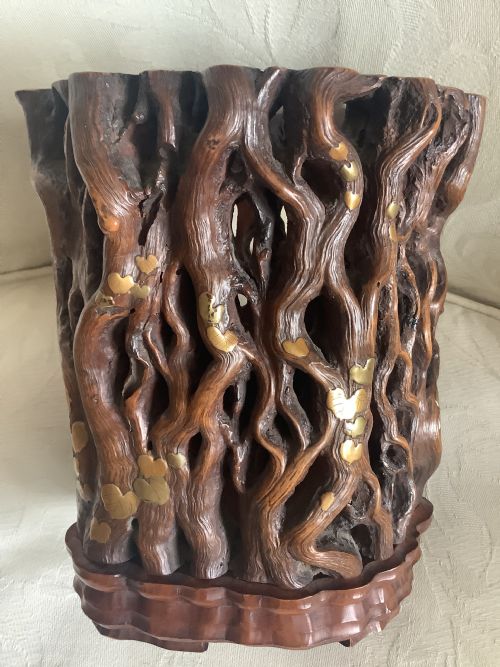
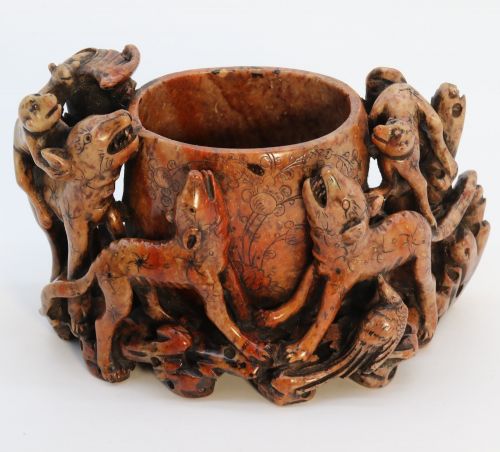
Craftsmen utilised organic materials like bamboo and hardwood, carving intricate scenes directly into the grain of the wood or the nodes of the plant. Other pieces rely on soapstone, shaped by hand to expose natural variations in the mineral.
Ceramic versions involve throwing porcelain on the wheel before applying cobalt glaze, powder-blue glaze, or famille rose and famille verte enamel palettes. These glazed vessels then underwent high-temperature firing to vitrify the surface and fix the colours.
Oriental Brush Holder Retail Price Guide 2026
Typical asking prices for oriental brush holder among the pieces listed under this phrase on Sellingantiques today, from the lower quarter to the upper quarter. They describe what is for sale here now, not the wider market.
Current listings span the seventeenth century through to the nineteenth century, uniting porcelain, bamboo, hardwood, and bronze under the Qing Dynasty style.
What varies in quality
The depth and precision of the carving separate standard examples from exceptional ones. Master carvers coax minute details out of bamboo, hardwood, and soapstone, creating layered narratives of officials and scholars without losing structural integrity.
Ceramic quality rests on the clarity of the cobalt or enamel glaze and the crispness of the underglaze painting. Superior porcelain pieces display controlled kiln effects and balanced proportions that anchor the cylindrical form.
The Oriental Brush Holder Glossary
- Bitong
- A cylindrical Chinese brush pot used in the scholar's studio. This term specifically describes the upright tubular form seen across porcelain and wooden examples.
- Famille rose
- A palette of opaque rose-pink enamel introduced in the eighteenth century. It allowed painters to create shaded floral and figural motifs on porcelain surfaces.
- Famille verte
- A green-dominated ceramic enamel palette characteristic of Qing Dynasty decoration. The style relies on transparent green tones alongside iron red and yellow.
- Kangxi period
- An era of porcelain production dating from sixteen sixty-two to seventeen twenty-two. Pieces from this time are noted for vibrant cobalt glazes and fine potting.
- Hardwood
- Dense timber species such as zitan or huanghuali utilised for luxury scholar objects. These woods take a high natural polish without needing heavy varnish.
Oriental Brush Holder: Frequently Asked Questions
What is a bitong?
A bitong is the traditional Chinese term for a cylindrical brush pot used on a scholar's desk. It held upright writing brushes ready for daily calligraphy.
These vessels form the majority of oriental brush holders found in collections today, made from materials ranging from porcelain to carved bamboo.
How were brush pots used?
Scholars used these pots to keep animal hair brushes organised and protected on the desk. Quick access was essential for traditional ink work and painting.
Beyond simple storage, the pots acted as contemplative art objects that reflected the refined taste and scholarly pursuits of their owner.
How do I date a porcelain brush pot?
Dating relies on examining the characteristics of the glaze, the style of the painted figures, and the body of the porcelain itself. Earlier pieces often display distinct Kangxi period palette traits.
Subtle shifts in cobalt blue tones and enamel thickness help separate seventeenth century items from later nineteenth century productions.
Are bamboo and wood pots durable?
Hardwood and bamboo are naturally tough materials that withstand the dry conditions of indoor desks well. Proper care involves keeping them away from extreme humidity changes.
Over decades, handled wood develops a deep patina that highlights the original carving and grain structure.