


Oriental Bronze Planter Pot
An oriental bronze planter pot brings heavy metal warmth and intricate surface detail to a room, holding greenery with quiet authority.
Oriental Bronze Planter Pot
An oriental bronze planter pot encompasses heavy metal vessels designed to hold plants and flowers, spanning forms from deep circular jardinières to open bowls and ritual vases adapted for green display. These items emerge predominantly from the nineteenth century, including Victorian stylistic interpretations alongside pieces shaped during the Japanese Meiji period, Edo period, and Qing dynasty.
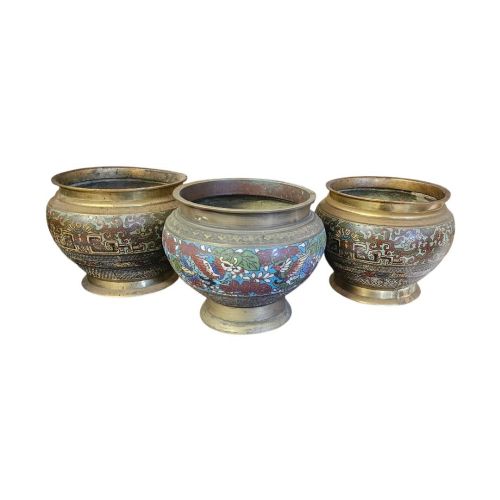
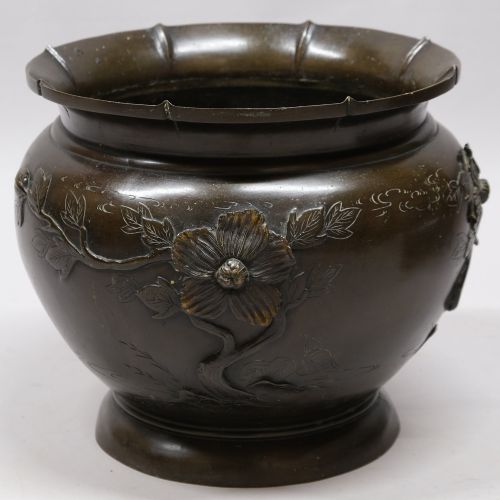
The version most commonly encountered on this page is the Japanese Meiji period or late Qing dynasty bronze jardiniere, frequently cast with broad rims and substantial weight. Collectors also meet Siamese cloisonné examples and Victorian period interpretations that apply oriental motifs to domestic European plant displays.
How they were made
Artisans forged these vessels using durable bronze and brass alloys, often applying a deep patina or working the metal surfaces through careful chasing and casting techniques. Many pieces incorporate intricate cloisonné or champlevé enamel sections, fusing coloured vitreous pastes within wirework cells or recessed metal troughs before firing.
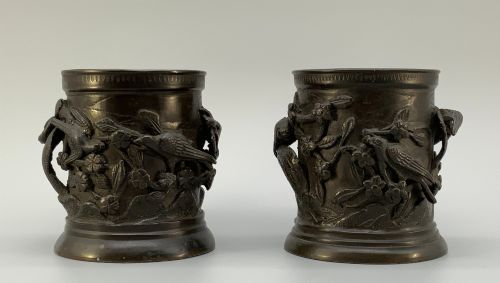
The construction typically relies on traditional foundry methods, producing thick walls capable of holding damp soil and heavy root systems without flexing. Surface details such as birds, blossoms, and geometric borders emerge directly from the primary casting or receive subsequent hand-tooling by skilled metalworkers.
Listings feature items cast in bronze and brass, incorporating cloisonne enamel and patinated finishes across nineteenth-century periods.
What varies in quality
The upper tier of these vessels reveals itself through crispness of cast detail and the deliberate harmony of applied patination or enamel work. Finer examples display deeply defined motifs, such as feathered birds and crisp floral blossoms, which remain sharp across the entire body of the bowl rather than softening near the base.
Lesser items show mechanical smoothing or hurried chasing where the metalwork lacks individual character and the enamel cells appear unevenly filled. Heavy weight alone does not dictate excellence, but substantial bronze gauge combined with confident surface artistry separates workshop masterpieces from routine commercial wares.
The Oriental Bronze Planter Pot Glossary
- Jardiniere
- A large ornamental pot or receptacle designed to hold growing plants or flowers. These vessels often feature wide, rounded bodies and heavy metal construction suitable for table or floor placement.
- Cloisonne
- A decorative metalwork technique where fine metal wires are soldered to a base to form compartments that are subsequently filled with enamel paste. The piece is then fired and polished to create a smooth, patterned surface.
- Champleve
- An enamelling process in which troughs or cells are carved directly into the thick bronze plate and filled with coloured enamel before firing. This method results in bold, recessed designs bound by sturdy metal walls.
- Meiji Period
- The era in Japanese history spanning from 1868 to 1912, noted for a flourishing of metalcraft and decorative arts destined for international export. Pieces from this time often exhibit exceptional naturalistic detailing.
- Patinated Bronze
- Metal surface treated with chemicals, heat, or natural agents to produce a stable, decorative coating ranging from dark brown to deep green. This finish protects the underlying alloy and adds visual depth to the vessel.
- Suiban
- A shallow Japanese basin traditionally used for holding water and supporting arrangements of cut flowers or stones in Ikebana display. These low bowls offer a wider profile than standard vertical vases.
Oriental Bronze Planter Pot: Frequently Asked Questions
How do I use an oriental bronze planter pot safely?
Place a protective plastic liner or a smaller nursery pot inside the bronze vessel to prevent moisture and soil contact from altering the interior patina. Direct planting can trap dampness against the metal walls, leading to corrosion over time.
Ensure the planter rests on a stable surface capable of supporting heavy metal weight, especially when filled with damp earth and mature foliage. Use felt pads underneath the base to protect polished furniture surfaces from scratching.
Can these planters be displayed outdoors?
These historical bronze and brass vessels suit indoor placement best, protecting their delicate patinas and enamel work from harsh weather extremes. Rain and freezing temperatures can degrade antique metal finishes and crack enamel inlays.
Keep them in sheltered interior spaces where fluctuating humidity remains minimal, preserving the structural integrity of the alloy. Occasional dusting with a soft, dry cloth is sufficient to maintain their appearance.
How do I distinguish Meiji period bronzes from later pieces?
Meiji period bronzes typically exhibit rigorous hand-chasing, dense patination, and naturalistic motifs of birds and blossoms executed with high precision. The weight feels substantial and balanced, reflecting the peak of nineteenth-century Japanese foundry output.
Later or mass-produced items often display repetitive, shallow surface stamping rather than deep, individual carving. Examining the interior wall texture and the sharpness of the rim provides clear clues regarding the age of the casting.
How should I clean an antique bronze planter?
Dust the vessel gently with a soft, dry microfibre cloth to remove surface particles without disturbing the historical patina. Avoid commercial metal polishes, abrasive pads, and chemical cleaners that strip away valuable aged surfaces and enamel work.
If the surface requires light cleaning, a slightly damp cloth followed immediately by thorough drying is adequate. Preserving the original dark or mottled finish maintains the historical integrity and visual character of the piece.