





Oriental Bronze Plant Pot
An oriental bronze plant pot brings weight and centuries of foundry skill to a room, offering a robust home for indoor greenery.
Oriental Bronze Plant Pot
An oriental bronze plant pot, most frequently encountered here as a jardiniere or planter bowl, is a vessel designed to hold foliage or sit as an independent decorative object. These pieces bridge traditional eastern metalwork with Victorian interiors, reflecting a long history of cross-continental trade and taste.
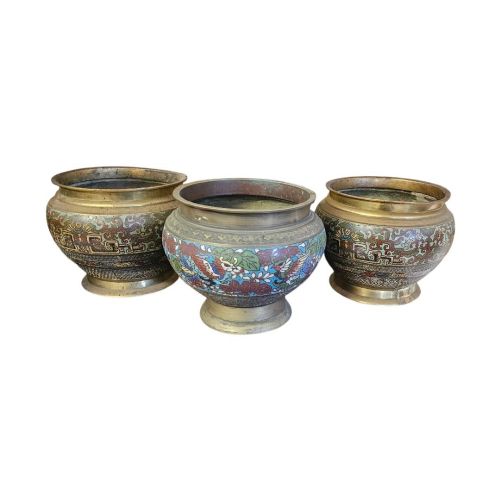
The selections available span the Meiji period in Japan and the late Qing dynasty in China, alongside items dated from the Victorian era through the early twentieth century. Common forms include heavy bowls and distinct jardinieres, occasionally offered in sets or pairs.
Origins stretch across Japan, China, and Thailand, showing distinct regional casting traditions and decorative motifs. Buyers typically find sturdy bronze vessels designed to anchor a conservatory, hall, or drawing room.
How they were made
Foundries utilised bronze and brass, often combining base metals with intricate applications of enamel or gilt bronze to create varied surface textures. Cloisonne and champleve techniques allowed artisans to inlay vibrant coloured enamels within wire or cast compartments across the exterior body.
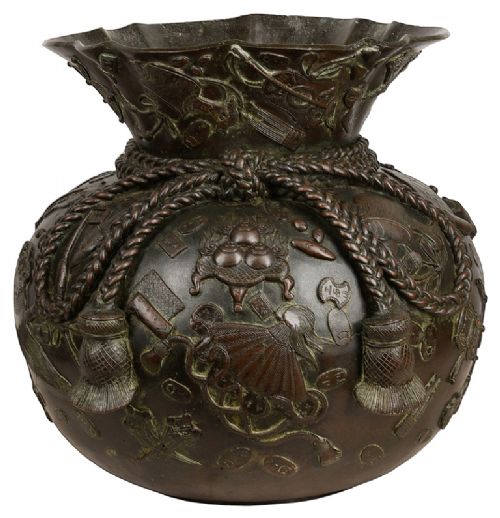
Casting methods produced heavy, durable walls capable of withstanding moisture and daily handling, with individual weights reaching substantial measures. Surface detailing was achieved through a mixture of sculptural casting, hand chasing, and careful polishing.
Oriental Bronze Plant Pot Retail Price Guide 2026
Typical asking prices for oriental bronze plant pot among the pieces listed under this phrase on Sellingantiques today, from the lower quarter to the upper quarter. They describe what is for sale here now, not the wider market.
The listings combine Japanese Meiji and Chinese Qing examples with Victorian-era imports, recording both plain bronze and enamelled finishes.
What varies in quality
The distinction between ordinary and superior pieces rests on the crispness of the casting and the ambition of the surface decoration. Heavier vessels with well-preserved enamel work and deep, deliberate relief carving command greater attention.
Enamel condition and the integrity of the metal surface dictate the enduring appeal of each vessel, distinguishing finely worked studio pieces from simpler utility items.
The Oriental Bronze Plant Pot Glossary
- Jardiniere
- An ornamental pot or stand for holding plants or flowers. This term is often used interchangeably with planter bowl in historical listings.
- Cloisonne
- An ancient technique for decorating metalwork objects with coloured material held in place by thin metal strips. Artisans solder flat wires to the bronze base before filling the resulting cells with enamel paste.
- Champleve
- An enamelling technique where depressions are carved or etched into the metal surface to hold enamel. The surrounding metal remains visible as raised lines framing the design.
- Meiji Period
- A Japanese era lasting from eighteen sixty-eight to nineteen twelve, characterised by the opening of trade with the West. Metalwork from this time frequently combines traditional casting with exuberant decorative detail.
- Qing Dynasty
- The final imperial dynasty of China, ruling from sixteen forty-four to nineteen eleven. Pieces from the late phase of this period often display rich enamelling and formal bronze casting.
Oriental Bronze Plant Pot: Frequently Asked Questions
How do I clean my bronze planter?
Dust the surface gently with a soft dry cloth to preserve the patina and any delicate enamel work. Avoid using harsh chemical polishes that can strip the historic finish.
If moisture is a concern from live plants, place a separate waterproof liner inside the bronze vessel rather than planting directly into the metal.
Can I use these outdoors?
These vessels are generally suited for interior display in conservatories, halls, or living spaces rather than exposed garden environments. Weather fluctuations can affect the stability of applied enamels and alter the historical patina.
Keeping them indoors protects both the metal body and any decorative inlay from frost and persistent dampness.
How do I tell Japanese and Chinese pieces apart?
Japanese items from the Meiji period frequently display naturalistic motifs and dynamic surface textures produced through meticulous casting techniques. Chinese examples from the late Qing dynasty often lean towards formal symmetry and vibrant champleve or cloisonne enamel work.
Examining the weight, handling of the rim, and style of any inlaid patterns usually clarifies the regional origin.