


Oriental Brass Incense Censer
An oriental brass incense censer brings centuries of ritual craft into a room, offering tactile weight and ancient form.
Oriental Brass Incense Censer
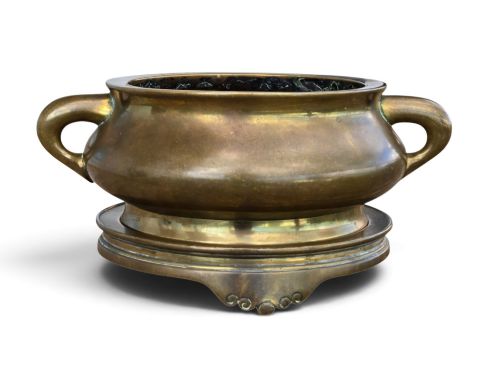
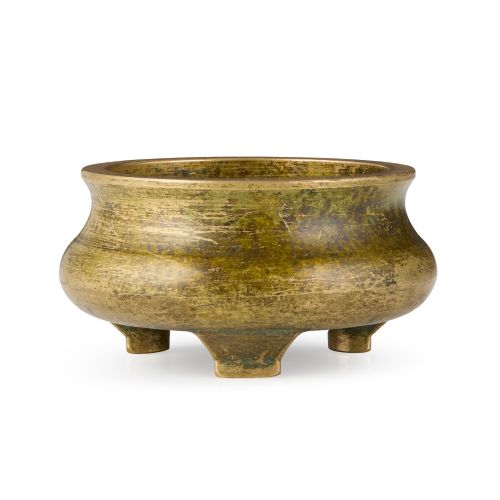
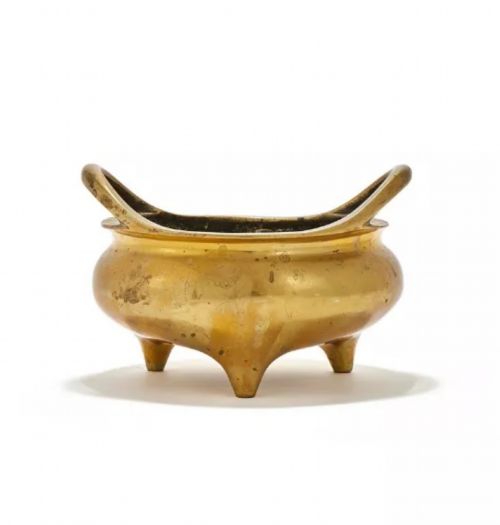
When you search for an oriental brass incense censer, you seek ritual vessels designed for burning aromatics across Asian dynasties. These pieces emerge chiefly in Chinese forms spanning the eighteenth and nineteenth centuries, including the Qing Dynasty.
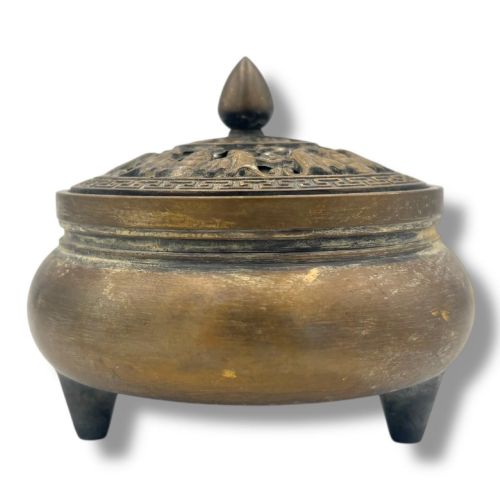
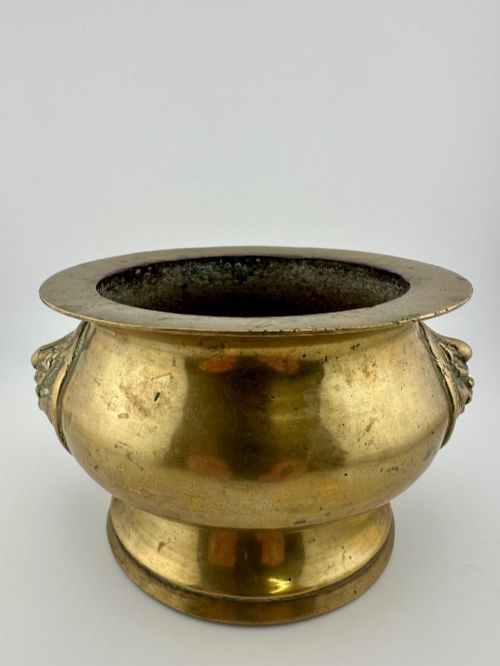
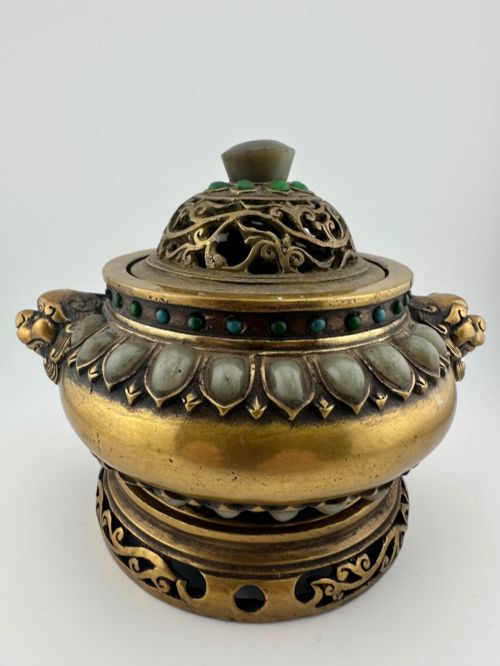
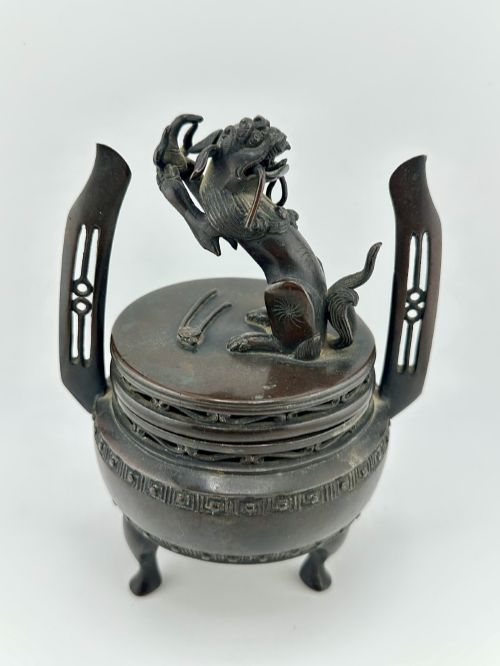
The objects on this page appear as tripod censers, heavy bombé vessels, and lidded burners fitted with intricate handles. You encounter items featuring lion masks, qilin finials, and pierced lotus floral lids designed for scholar's studios and domestic shrines.
Vessels range from modest domestic brass examples to massive ritual bronzes weighing several kilograms. The selection encompasses bronze, brass, and hardstone-inlaid creations originating from periods such as the Victorian era and late Qing times.
Distinctions in quality
Quality rests upon the crispness of the cast relief work and the density of the metal used in the body. Superior examples display sharply defined lion masks, balanced tripod feet, and finely pierced floral lids that fit flush.
The presence of scholarly studio marks or historical reign characters elevates a piece above standard decorative wares. Heavier specimens with integrated stands and intact hardstone elements demonstrate superior workshop standards.
Listings feature items spanning the 18th century, 19th century, and early 1900s, including Victorian and Qing Dynasty origins.
The Oriental Brass Incense Censer Glossary
- Censer
- A vessel specifically constructed for burning incense resins or powders during ceremonial or meditative practices. These objects often include perforated covers to release smoke steadily.
- Tripod
- A configuration featuring three supporting legs raised beneath the main body of the vessel. This classic structural form elevates the burning chamber off surfaces.
- Bombé
- A curved, swelling profile characterised by a convex belly that tapers toward the rim and base. This silhouette remains popular in classical Chinese scholar's vessels.
- Qilin
- A mythical hooved chimerical creature frequently depicted as a finial upon vessel covers. It symbolises good fortune and protection in traditional iconography.
Oriental Brass Incense Censer: Frequently Asked Questions
How were these censers used?
These vessels served primarily in temples, domestic shrines, and scholar's studios for burning aromatic woods and incense powders. The smoke created a meditative atmosphere and marked time during scholarly pursuits.
Craftsmen designed the pierced covers to distribute fragrance evenly throughout a room while containing glowing embers safely within the heavy metal bowl.
How do I tell periods apart?
Distinguishing periods relies on examining casting weight, surface patina, and stylistic markers such as reign marks or dynasty traits. Eighteenth-century pieces often display deeper patination and heavier proportions associated with ritual bronzes.
Later Victorian and turn-of-the-century items tend to exhibit more decorative brass finishes and varied handle styles reflecting export markets.
Are these pieces made of brass or bronze?
Makers utilised both copper alloys, often grouping denser ritual vessels under bronze and lighter domestic examples under brass. The metal composition directly affects the overall weight and natural ageing of the surface.
Over time, both materials develop distinct patinas ranging from dark brown to bright golden tones depending on environmental exposure and alloy ratios.
How do I live with an antique censer?
Placing a censer in a room adds a focal point of historical craftsmanship and sculptural presence to modern interiors. They sit comfortably on mantelpieces, sideboards, or display cabinets without requiring complex mounting.
Dusting them gently with a dry cloth preserves the aged patina without stripping away the historical character built up over generations.