



Antique Islamic Copper Vessel
These antique islamic copper vessel pieces bring tactile warmth and regional character into a room, offering functional artistry shaped by centuries of metalwork tradition.
Antique Islamic Copper Vessel
When you search for an antique islamic copper vessel, you encounter a diverse range of hollowware shaped for ritual, domestic, and decorative use. These items bridge utilitarian purpose and ornamental design, reflecting the rich material culture of the Middle East and Persia.
The pieces on this page span several centuries and styles, taking forms such as ewers, coffee pots, wash bowls, and ritual vessels. You are most likely to meet nineteenth-century examples alongside earlier regional traditions.
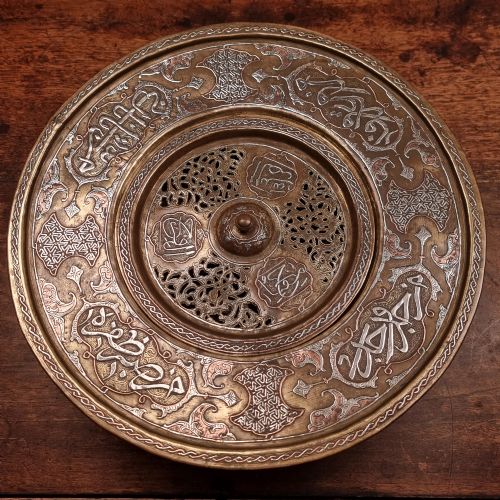
Makers utilised copper alongside brass, bronze, tin, and silver inlay to create striking surface contrasts. Styles range from Ottoman and Mamluk Revival to Indo-Persian and Seljuk Islamic designs.
How they were made
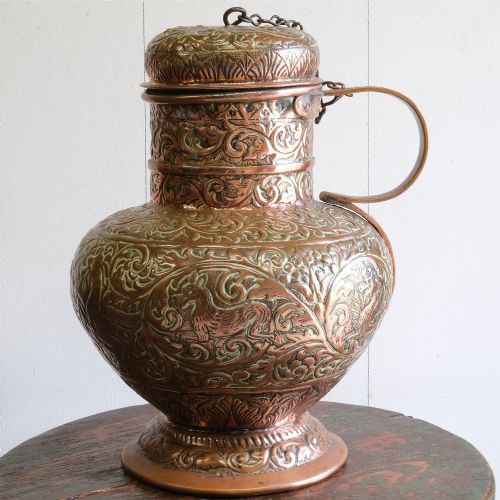
Artisans hammered and shaped copper sheets into vessels, often applying a tinned finish to create a silver-toned interior or ground for further ornamentation. Engraving and chasing techniques cut intricate geometric and floral patterns directly into the metal surface.
More elaborate pieces incorporate silver inlay within bronze or copper substrates, contrasting dark patinas with bright metal highlights. Cast elements such as spouts, handles, and finials attach securely to the main bodies of ewers and coffee pots.
Listings feature items spanning the twelfth century to the twentieth century, utilising copper, brass, bronze, tin, and silver inlay.
What varies in quality
The refinement of the engraving and the crispness of chased details distinguish finer examples from simpler utilitarianware. Precision in the application of silver inlay and the harmony of proportion across handles, spouts, and bodies indicate skilled workshop production.
The integrity of the metal and the preservation of original surface patinas influence the character of each piece. Heavier gauge metal and balanced construction reflect durability and deliberate craftsmanship.
The Antique Islamic Copper Vessel Glossary
- Ewer
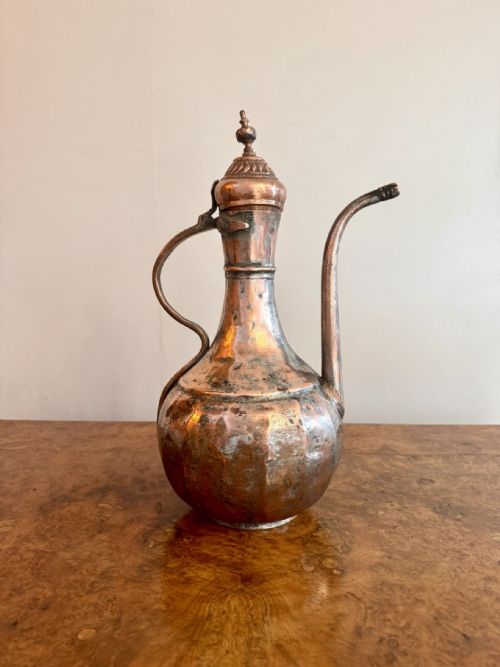
- A pitcher with a slender body and curved spout, traditionally used for pouring water. These vessels often feature detailed handles and hinged lids.
- Aftaba
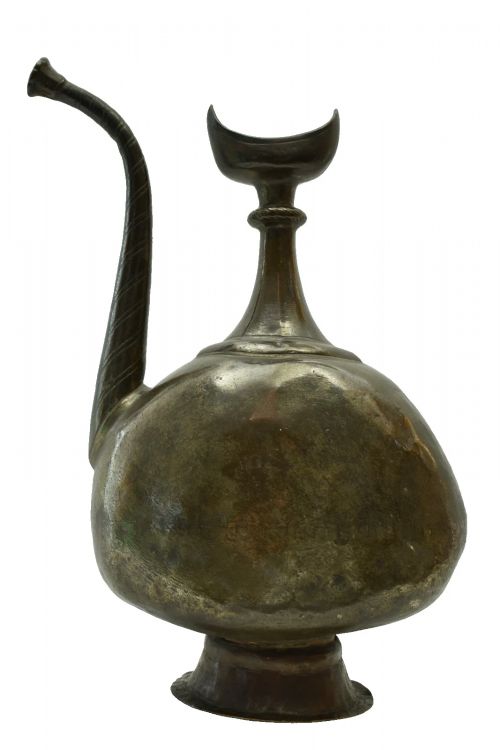
- A specific regional term for a ewer used in ritual ablutions or hand-washing. They typically display a characteristic long spout and crescent moon finial.
- Cairoware
- Metalwork produced in Cairo during the nineteenth century, often combining brass, copper, and mixed metals with dense surface decoration. This style frequently revives earlier Mamluk motifs.
- Inlay
- A technique where contrasting metals, such as silver wire, are hammered into channels cut into a bronze or copper base. This creates decorative patterns across the surface.
Antique Islamic Copper Vessel: Frequently Asked Questions
What were these copper vessels used for?
These pieces served practical roles in daily life, ranging from boiling coffee to washing hands before meals and performing ritual ablutions.
Larger basins and buckets accommodated household water storage, while decorative bowls held fruit or functioned as display items in domestic interiors.
How do I clean an antique copper vessel?
Gentle dusting with a soft cloth preserves the existing patina and protects delicate engraved surfaces from unnecessary wear.
Avoid abrasive metal polishes that strip away age and historical surface character, keeping the metal stable in dry conditions.
How can I tell periods apart?
Earlier pieces often exhibit heavy bronze casting and deep silver inlay from Persian workshops, while nineteenth-century items frequently show lighter gauge copper and brass.
Stylistic revivals in the later nineteenth century adopted Mamluk and Ottoman decorative motifs on mixed metal substrates.
Where were these pieces made?
Originating across the Middle East and Persia, these metalwares were produced in regional centres such as Khorasan, Cairo, and Ottoman territories.
Local workshop traditions determined the specific shapes, engraving styles, and metal combinations used in each piece.