



Oriental Blue White Lamps
Oriental blue white lamps bring historic ceramic vessels into domestic interiors as functional table lighting.
Oriental Blue White Lamps
Oriental blue white lamps represent centuries of ceramic artistry adapted for modern illumination. When searching for oriental blue white lamps, buyers encounter diverse forms ranging from ginger jars and vases to larger monumental vessels. These pieces span multiple centuries, touching the late seventeenth century through the Victorian era and the turn of the twentieth century.
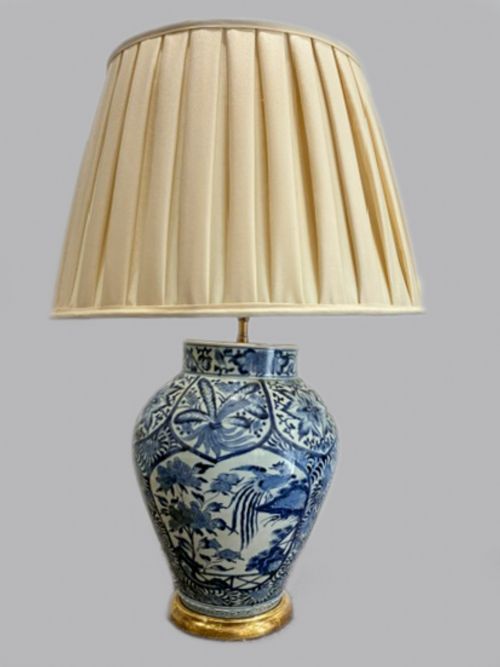
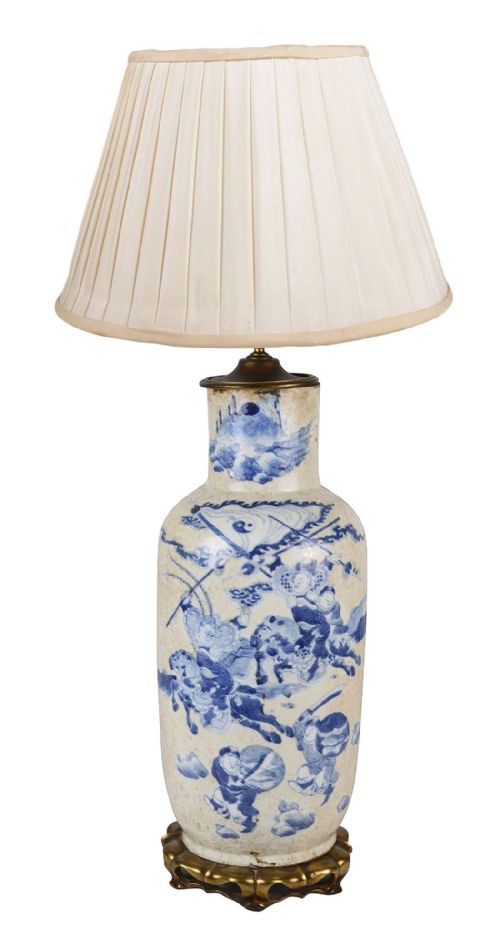
The domestic table lamp configuration is achieved by converting antique jars and vases into wired fixtures. The most frequent examples seen on this page originate from Chinese workshops and Japanese kilns, often featuring traditional cobalt blue decoration on white porcelain grounds. Makers utilised various bodies including crackleware, ironstone, and powder blue porcelain.
Stylistic influences reflect periods such as the Qing Dynasty, Edo Period, and Meiji Period, alongside later nineteenth-century interpretations. Collectors select these items for their historical depth and the striking contrast of cobalt pigments against pristine white ceramic bodies. Each converted vessel retains its distinct manufacturing heritage while serving a contemporary practical purpose in the home.
Materials and Construction
Potters shaped these vessels from high-fired porcelain and ceramic bodies using traditional wheel-throwing and moulding techniques. Artisans then applied cobalt blue pigment by hand before glazing and firing the pieces at high temperatures to achieve a durable, lustrous finish. Many examples incorporate secondary mountings of brass, gilt bronze, or wood to stabilize the base and accommodate electrical fittings.
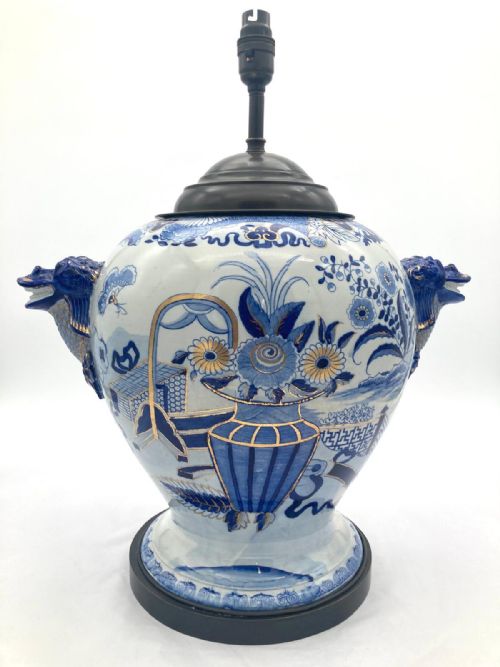
Conversion into lamps involved securing internal wiring and affixing lamp holders to the top of the ceramic body, frequently paired with fabric or silk shades. The physical structure relies on the inherent sturdiness of heavy ceramic vases, ginger jars, and twin-handled vessels. Additional materials such as giltwood further complement the decorative scheme of specific nineteenth-century pairs.
Some nineteenth-century vases enjoy a second career illuminating reading nooks after spending two hundred years purely as ginger containers.
Factors That Distinguish Quality
Quality rests primarily on the crispness of the cobalt blue underglaze painting and the overall balance of the ceramic form. Finer examples display intricate brushwork and subtle variations in tone within the floral, landscape, or prunus blossom motifs. The integrity of the porcelain body itself, whether smooth, crackleware, or powder blue, dictates the visual refinement of the piece.
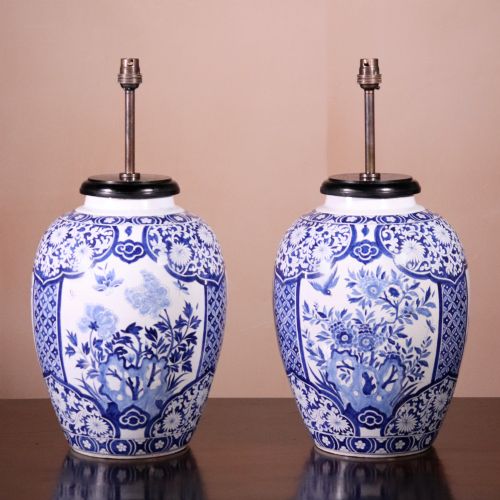
The standard of the metal or wooden mountings also separates superior items from simpler conversions. Pairs require matching proportions, height, and decorative symmetry across both vessels to maintain aesthetic cohesion on a table or sideboard. Well-executed adaptations preserve the integrity of the original antique vase without compromising its structural balance.
Hicks and Meigh
The Oriental Blue White Lamps Glossary
- Ginger jar
- A globular ceramic vessel originally designed for storing spices, frequently converted into a table lamp. These jars typically feature domed lids and bold blue and white underglaze decoration.
- Crackware
- A type of pottery featuring a network of fine intentional cracks in the glaze layer. This technique creates a distinctive textured surface pattern seen on various nineteenth-century Chinese vases.
- Imari
- A style of Japanese porcelain named after the port of export, characterised by a palette of underglaze blue, iron red, and gilt highlights. These wares date from the eighteenth century onwards.
- Arita
- A Japanese town renowned as the birthplace of Japanese porcelain production. Pieces from these kilns often exhibit fine painting and durable high-fired bodies.
- Chinoiserie
- European decorative style reflecting Chinese artistic influences. This aesthetic appears on various Regency period lamps and related furnishings.
Oriental Blue White Lamps: Frequently Asked Questions
How do I date an oriental blue white lamp?
Dating relies on examining the characteristics of the ceramic body, the cobalt pigment tone, and any associated base mounts. Stylistic clues from the Qing, Edo, or Meiji periods help narrow the timeline of the vessel.
Secondary indicators include the conversion method and wiring style used when the antique jar was first transformed into a table lamp. Consulting specific reign marks, where present, provides further chronological clarity.
Were these always lamps originally?
These vessels started life as decorative vases, ginger jars, or storage containers rather than lighting fixtures. Artisans later converted them into lamps by drilling the base or running internal wiring for modern domestic use.
This adaptation process preserves the historical ceramic art while allowing the piece to function as practical interior lighting. Pairs often originate from matching antique vases rather than single lamp bodies.
Where should I place a lamp like this?
Oriental blue white lamps suit placement on sideboards, console tables, or large desks where their height and bold decoration can anchor a room. Their classic colour palette pairs well with both traditional and contemporary interior design schemes.
Matching pairs work effectively on either end of a long cabinet or flanking a fireplace mantel. Single monumental lamps serve as focal points in hallways or living spaces.
What is the difference between Chinese and Japanese lamps?
Chinese examples often feature robust ginger jar forms with deep cobalt blue landscapes, prunus blossoms, or powder blue glazes. Japanese pieces frequently originate from Arita or Yokohama kilns, sometimes displaying fine Imari palettes or delicate crackleware surfaces.
Both traditions utilised high-fired porcelain, but distinct regional motifs and kiln techniques separate their decorative styles. Examining the brushwork and glaze texture reveals these subtle country-of-origin differences.