


Oriental Accent Armchairs
Oriental accent armchairs bring striking form and rich timber grain to a room, offering historic seating shaped by Chinese export and Qing traditions.
Oriental Accent Armchairs
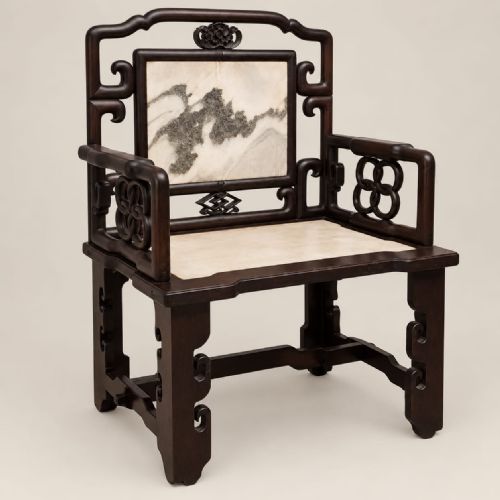
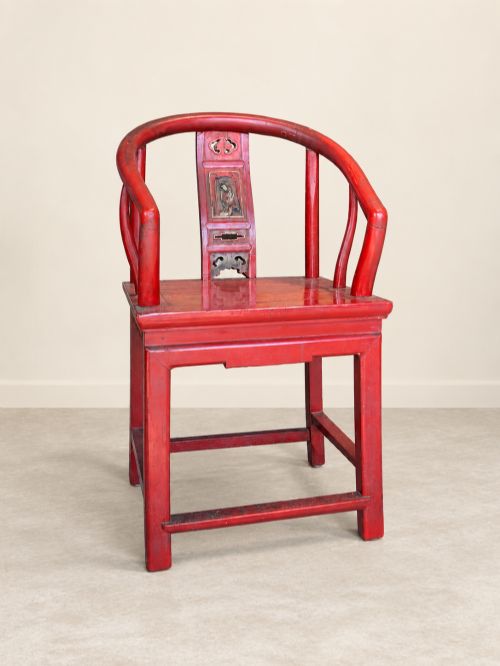
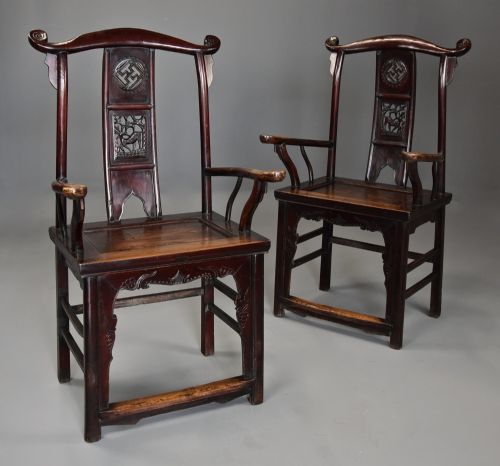
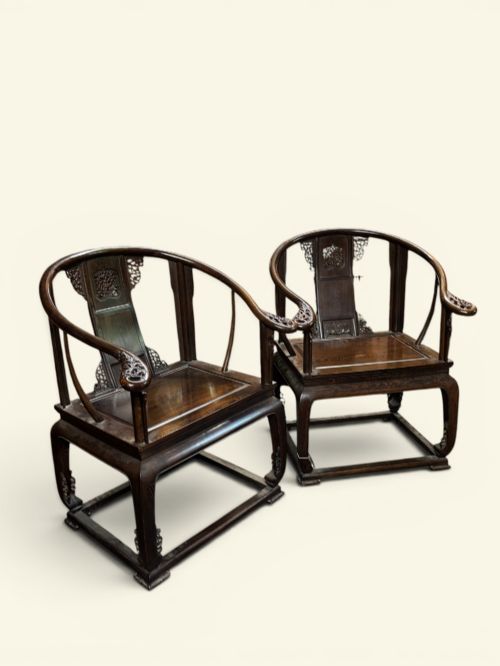
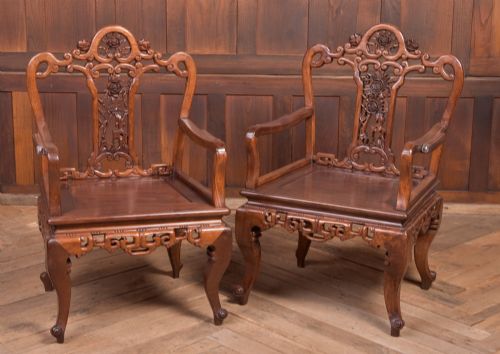
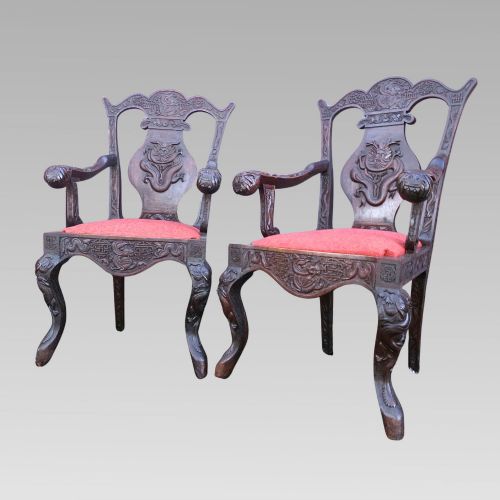
Oriental accent armchairs encompass seating designed within Chinese export, Qing Dynasty, and Chinoiserie traditions, frequently appearing as horseshoe-back armchairs, yokeback scholars' chairs, and folding forms. These pieces serve as sculptural seating that introduces distinct silhouettes and cultural history into contemporary interiors.
Originating largely from Chinese workshops, these armchairs also include Anglo-Indian and Middle Eastern variants featuring intricate inlay work. Each form relies on traditional joinery and distinctive proportions developed for scholarly or ceremonial use.
Materials and construction
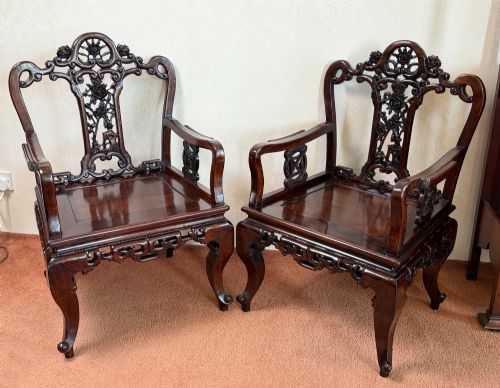
Makers utilised dense timbers such as hardwood, rosewood, hongmu, and elm, relying on their structural strength to support intricate relief carving and slender, curved components like yokeback rails. These woods were often left with a natural waxed patina or treated with red lacquer.
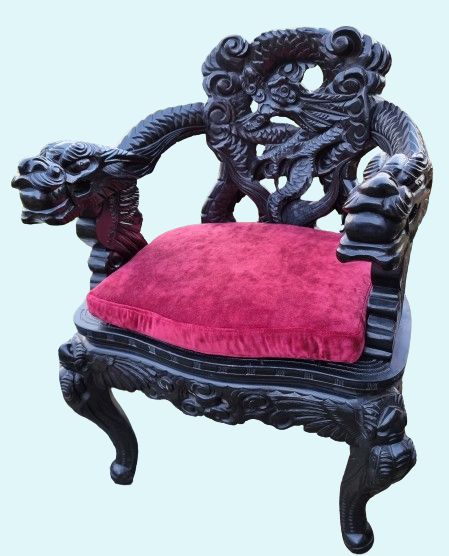
Surface decoration frequently incorporated canework, brass inlay, velvet upholstery, and nacre-shell details set into walnut or fruitwood frames. Skilled artisans joined these elements using precise mortise and tenon techniques without relying on modern metal fasteners.
Listings feature elm, hardwood, teak, and rosewood forms, spanning the Victorian era, the nineteenth century, and the early twentieth century.
Judging quality and craftsmanship
Quality rests upon the crispness of the hand-carved detail and the integrity of the underlying timber frame, where tighter grain and heavier weight indicate superior selection. Pieces retaining their original red lacquer or undisturbed patination command greater interest from collectors.
Construction rigidity defines the better examples, ensuring that horseshoe-back sweeps and arm joints remain solid after centuries of use. The refinement of the proportions and the balance between decorative carving and structural restraint separate workshop masterpieces from simpler utility seating.
The Oriental Accent Armchairs Glossary
- Yokeback
- A chair back featuring a top rail that curves upward at the ends, resembling a traditional ox yoke. This form provided comfortable head and arm support for scholars.
- Horseshoe-back
- A continuous semicircular rail forming both the arms and the backrest in a single flowing curve. It typically requires advanced steam-bending and joinery techniques.
- Hongmu
- A dense, dark tropical hardwood highly prized in Chinese furniture making for its durability and rich natural grain. It translates literally as red wood.
- Canework
- Woven rattan strips used to form supportive, breathable seat panels within a wooden frame. This technique lightened the overall weight of the chair.
Oriental Accent Armchairs: Frequently Asked Questions
How do I identify a Qing Dynasty armchair?
Look for dense hardwoods like hongmu or elm combined with formal motifs such as carved dragons, throne-like proportions, and traditional joinery. These elements reflect the official aesthetic of the period.
Examine the patination and the depth of the carving, as genuine pieces display honest wear and hand-tooled execution rather than uniform machine finishing.
Where should I place an oriental armchair?
These chairs function well as standalone accent pieces in a hallway, study, or living room where their sculptural silhouettes can be appreciated from all angles. Their distinct profiles draw the eye without overwhelming surrounding furniture.
Ensure the chair is positioned away from direct heat sources to protect ancient lacquered surfaces and natural timber from drying out or splitting.
Are these armchairs comfortable for daily use?
Many styles, such as horseshoe-back and yokeback scholar chairs, were designed for upright posture and structured support rather than lounging. Their ergonomics reflect historical seating habits focused on mindfulness and dignity.
If you require softer seating, consider examples featuring upholstered velvet pads or add a bespoke cushion that complements the timber frame.
How do I care for antique lacquer and hardwood?
Maintain the timber and lacquer by dusting regularly with a soft, dry cloth and avoiding silicone-based polishes or excessive moisture. Keeping the room at a stable humidity level prevents the wood from expanding and contracting.
Apply a microcrystalline wax occasionally to protect exposed hardwood surfaces and preserve the natural patina built up over centuries.