

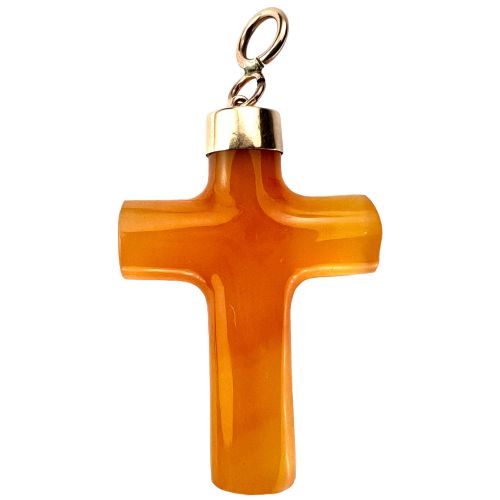


Orange Gemstone Jewellery
These pieces of orange gemstone jewellery bring warmth and colour to any collection, spanning centuries of fine metalwork and carved stones.
Orange Gemstone Jewellery
When you search for orange gemstone jewellery, you encounter everything from Georgian intaglios to mid-century cluster rings and modern pendants. The selection spans the eighteenth century through to the 1960s, capturing shifting tastes in precious metals and vibrant stones.
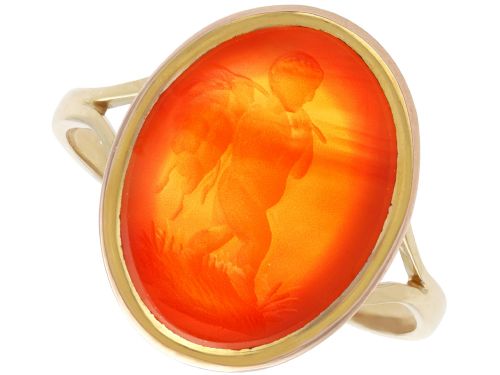
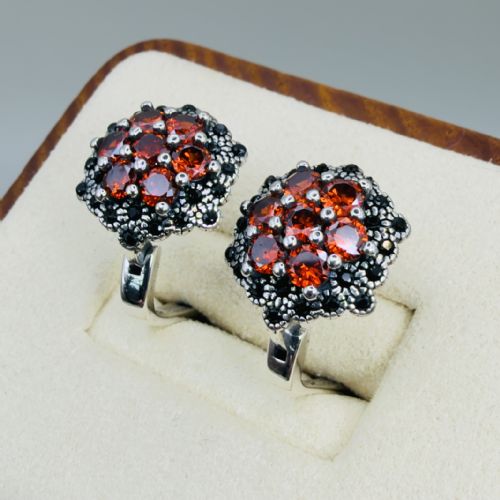
Carnelian and agate feature prominently in earlier pieces, often carved into cameos, intaglios, crosses or fobs. Later decades bring forward fire opals, mandarin garnets and imperial garnets set in yellow and white gold.
Rings, drop earrings, brooches and pendant necklaces form the core of the items seen here. Each period brings its own characteristic setting, from Neoclassical and Victorian revival styles to clean Art Deco geometry.
Materials and construction
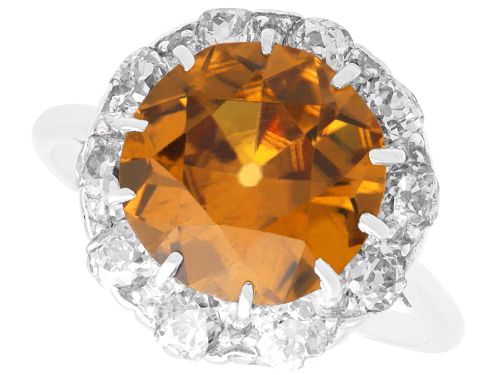
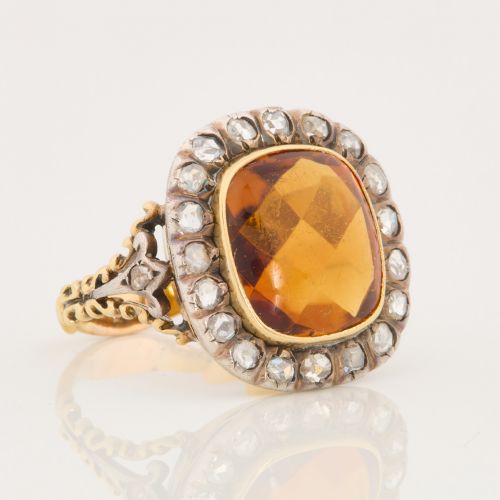
Gold forms the backbone of these mounts, appearing in nine-carat and eighteen-carat yellow variations alongside platinum and eighteen-carat white gold. Stones are secured in claw settings, bezels or hinged mounts designed to showcase the depth of the gem.
Carving stones such as agate and carnelian requires patient handwork, producing intaglios and cameos with crisp detail. Faceted stones like fire opal, zircon and garnet rely on precise cutting to maximise their internal fire and rich hue.
Orange Gemstone Jewellery Retail Price Guide 2026
Typical asking prices for orange gemstone jewellery among the pieces listed under this phrase on Sellingantiques today, from the lower quarter to the upper quarter. They describe what is for sale here now, not the wider market.
Some nineteenth-century gentlemen used carved carnelian fobs to seal their letters, leaving miniature classical deities pressed into red wax.
Qualities of distinction
The precision of stone cutting and the clarity of hand-carved intaglios elevate finer examples above standard production. Intricate work on subjects like Greek figures or classical deities on agate reveals the hand of a skilled lapidary.
Metalwork quality shows in the weight of the gold or platinum and the security of the settings holding diamonds and coloured stones together. Harmonious proportions between the central orange gem and surrounding accent diamonds define the superior pieces.
The Orange Gemstone Jewellery Glossary
- Intaglio
- A gemstone carved with a depressed design so that an impression can be made in sealing wax. They are frequently found on rings and fobs from the Georgian and Victorian eras.
- Cameo
- A method of carving where the design is raised above the background. This technique highlights the natural colour banding in stones like agate.
- Cluster ring
- A ring design featuring a central stone surrounded by smaller gemstones, often diamonds. This arrangement maximises overall brilliance and colour impact.
- Fob
- A short chain or ornamental pendant attached to a pocket watch. Many antique examples utilise carved carnelian or bloodstone seals.
- Fire opal
- A transparent to translucent opal with warm background colours of orange, red or yellow. They are often faceted rather than cut as cabochons in twentieth-century pieces.
Orange Gemstone Jewellery: Frequently Asked Questions
What periods do these pieces cover?
The selection ranges from the eighteenth century through the Georgian, Victorian and Edwardian eras, extending into Art Deco and mid-century designs up to the 1960s.
Different eras favour distinct stones and mountings, allowing collectors to trace the evolution of jewellery design through distinct stylistic shifts.
How do I care for antique gemstone jewellery?
Gentle cleaning with a soft cloth keeps precious metals and hard stones bright without risking delicate settings. Avoid harsh chemical dips, particularly with softer organic or porous stones.
Store pieces separately in lined boxes to prevent diamonds and harder gems from scratching softer materials like fire opal or carnelian.
Are these pieces suitable for daily wear?
Sturdier mountings and harder stones like tourmaline, garnet and diamond handle regular use well when settings remain secure. Softer carved stones and antique brooches benefit from more careful, occasional placement.
Checking the claws and hinges periodically ensures that older pieces retain their structural integrity during normal rotation.
What is the difference between an intaglio and a cameo?
An intaglio is carved inward to create a sunken image, historically used as a personal signature or seal. A cameo projects outward in relief to display a portrait or scene against a contrasting background layer.
Both techniques appear frequently on agate and carnelian pieces across the eighteenth and nineteenth centuries.