

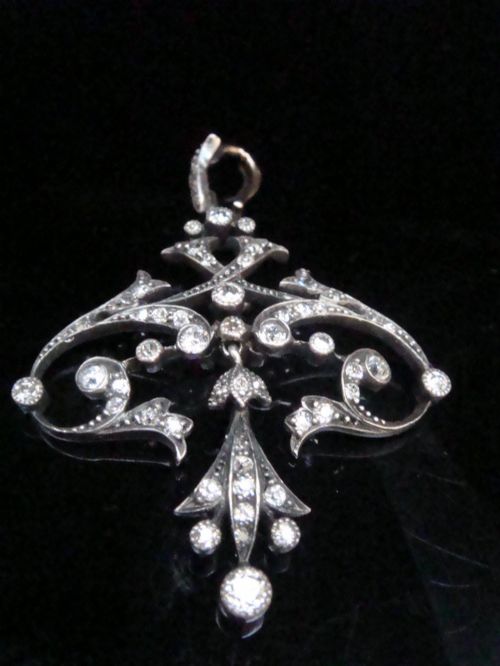


Openwork Silver Pendant Necklace
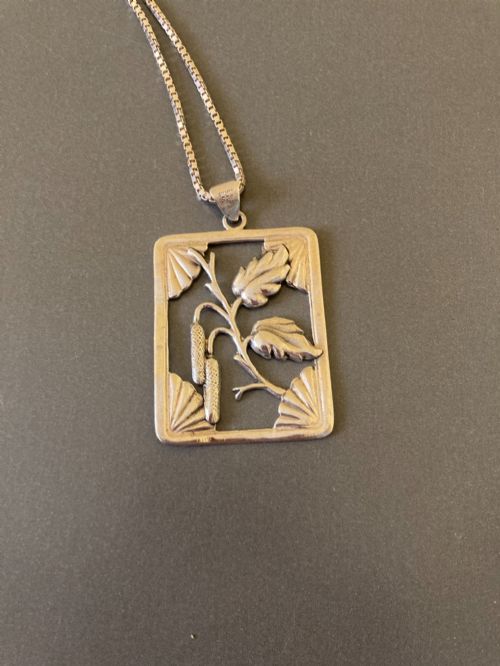
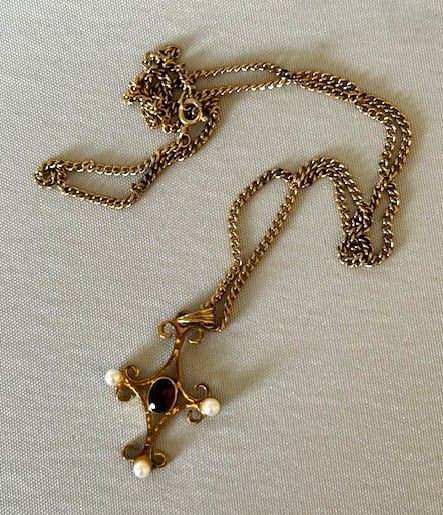
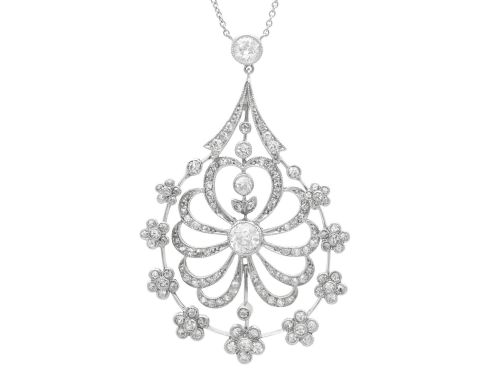
These openwork silver pendant necklace pieces offer intricate metalwork and stone settings from the Georgian, Victorian, Edwardian, and mid-twentieth century periods.
Openwork Silver Pendant Necklace
An openwork silver pendant necklace combines pierced or pierced-out metal frames with suspended decorative elements, spanning Georgian, Victorian, Edwardian, Art Nouveau, Arts and Crafts, and mid-century modern styles. Buyers examining these designs encounter everything from delicate floral lavalier drops to bold Scandinavian motifs and geometric platinum arrangements.
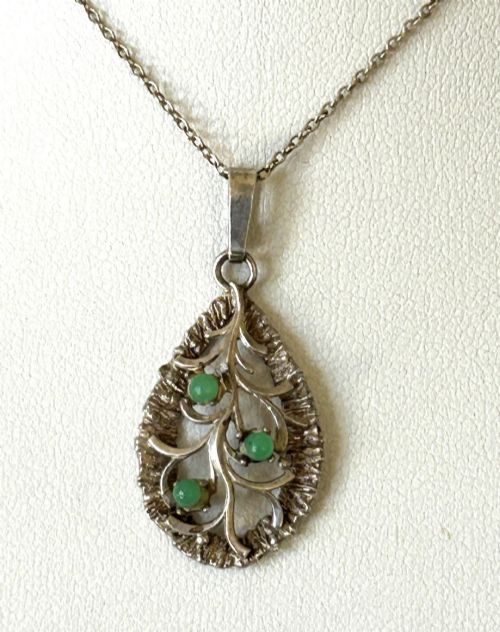
The pieces on this page draw upon diverse origins, including continental European workshops, British retail houses, and Scandinavian studios. Forms range from simple crosses and teardrops to elaborate frames set with stones like diamond, garnet, pearl, opal, and chrysoprase.
Materials and construction
Craftsmen utilised sterling silver, silver gilt, and platinum to form the structural framework of each pendant. Piercing and openwork techniques reduced the weight of the metal while allowing light to pass behind gemstones.
Settings frequently incorporate stones such as diamond, pearl, garnet, chrysoprase, turquoise matrix, moonstone, chalcedony, amazonite, and paste. These materials are secured using traditional collet, bezel, or prong settings integrated directly into the pierced metal design.
Openwork Silver Pendant Necklace Retail Price Guide 2026
Typical asking prices for openwork silver pendant necklace among the pieces listed under this phrase on Sellingantiques today, from the lower quarter to the upper quarter. They describe what is for sale here now, not the wider market.
Listings for this phrase feature pieces spanning from the Georgian period through the Edwardian era and into mid-century modern design.
Distinguishing quality across periods
Quality in an openwork silver pendant necklace rests upon the precision of the piercing and the harmony between the metalwork and the chosen stones. Finer examples display clean, purposeful skeletal frames that support gems without masking the craftsmanship.
The reputation of the maker, whether a documented firm like Theodor Fahrner or Liberty and Co, influences the desirability of the piece. Superior specimens maintain structural integrity within delicate openwork areas while retaining original gilding, stones, and matching suspension components.
Andreas Daub·WH Haseler for Liberty and Co·Amy Sandheim·The Artificers Guild·Theodor Fahrner
The Openwork Silver Pendant Necklace Glossary
- Openwork
- Metalwork featuring cut-out or pierced patterns that create a lattice or skeleton effect. This technique allows light to pass through the design.
- Lavalier
- A pendant featuring a primary drop suspended from a smaller secondary drop or chain section. Popularized during the Edwardian era.
- Silver Gilt
- Silver covered with a thin layer of gold. This finish provides a warm golden tone while utilising a silver base.
- Paste
- Hand-cut glass or lead crystal used as a gemstone substitute in antique jewellery. It is often foiled at the back to enhance reflectivity.
- Chrysoprase
- A gemstone variety of chalcedony containing nickel that imparts an apple-green colour. It appears frequently in Arts and Crafts and mid-century designs.
Openwork Silver Pendant Necklace: Frequently Asked Questions
What is an openwork silver pendant necklace?
An openwork silver pendant necklace is a piece of jewellery featuring a pierced or cut-out silver frame suspended from a chain. These designs let light pass through the metalwork, often highlighting set gemstones.
Such items appear across multiple eras, including the Georgian, Victorian, Edwardian, and mid-twentieth century periods. Each era brings distinct aesthetic choices, ranging from flowing botanical lines to geometric arrangements.
How do I date an antique pendant necklace?
Dating relies on stylistic clues, mounting techniques, and the cut of any set stones. For instance, old cut diamonds and flowing floral motifs typically point toward Edwardian or Art Nouveau origins.
Makers marks, hallmarks, and specific material combinations also help establish a chronological window. Comparing the piece to documented examples from known designers clarifies the timeframe of manufacture.
How should I care for silver and gemstone jewellery?
Silver jewellery requires gentle cleaning with a soft cloth to maintain its finish without harming softer stones or gilt surfaces. Avoid harsh chemical dips, particularly when dealing with pearls, opal, or paste.
Store each pendant separately in a lined box to prevent scratching between the metal frame and suspended gems. Keeping pieces away from moisture preserves both the stones and any original silver gilt.
What defines Arts and Crafts silver jewellery?
Arts and Crafts silver jewellery emphasises hand-hammered textures, visible craftsmanship, and cabochon-cut gemstones. Designers in this movement rejected mass production in favor of individual artistic expression.
Pieces from this tradition frequently incorporate stones like moonstone, turquoise, and chalcedony. The metalwork is often substantial, celebrating the physical properties of silver.