





Open Tier Shelving Unit
An open tier shelving unit brings multi-level display space into a room, spanning forms like whatnots, etageres, and waterfall bookcases.
Open Tier Shelving Unit
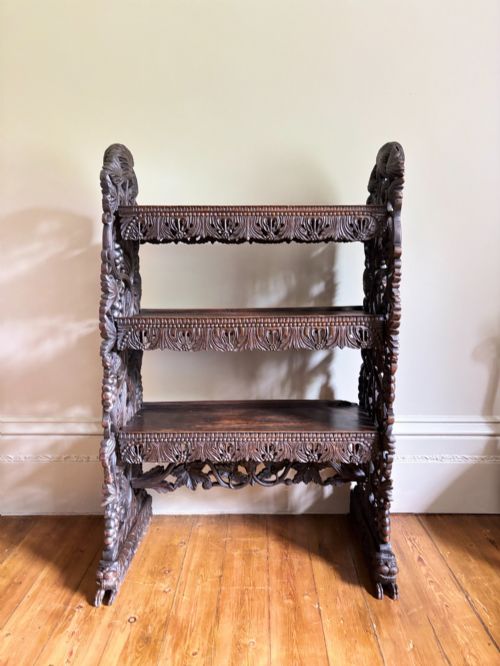
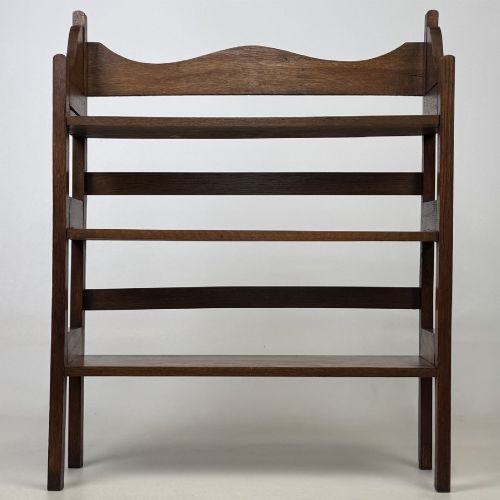
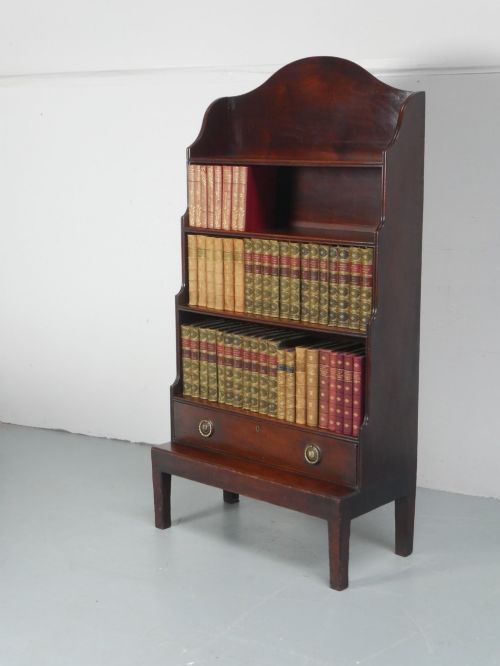
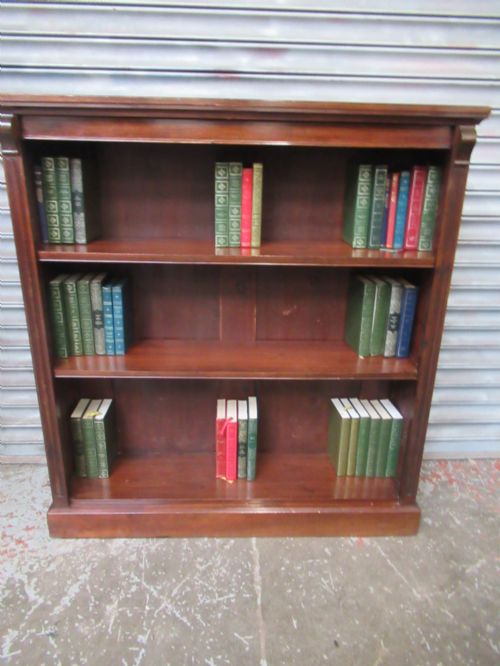
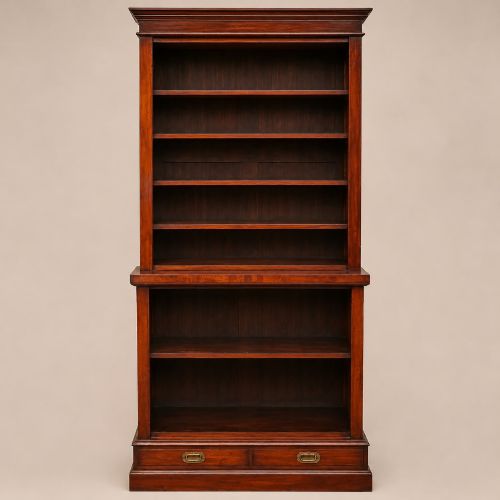
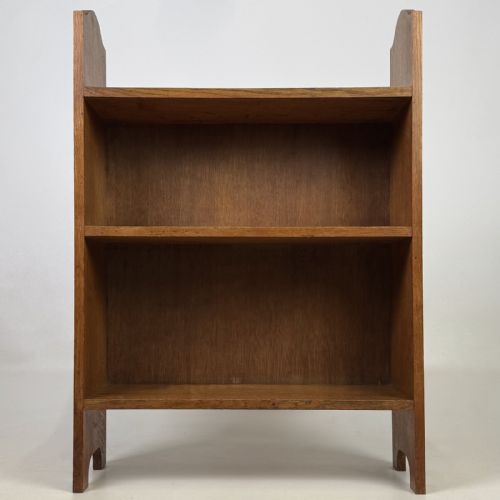
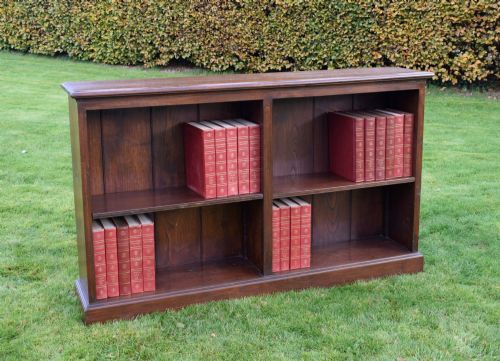
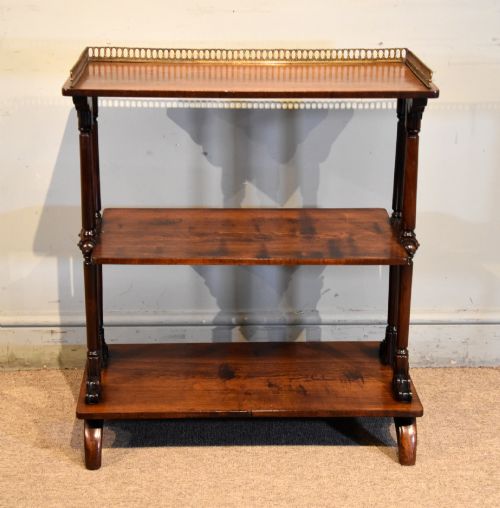
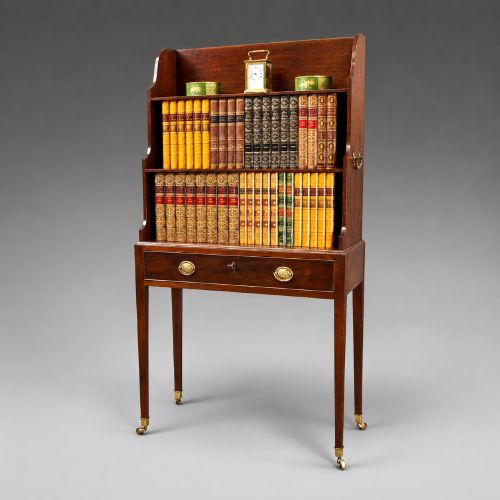
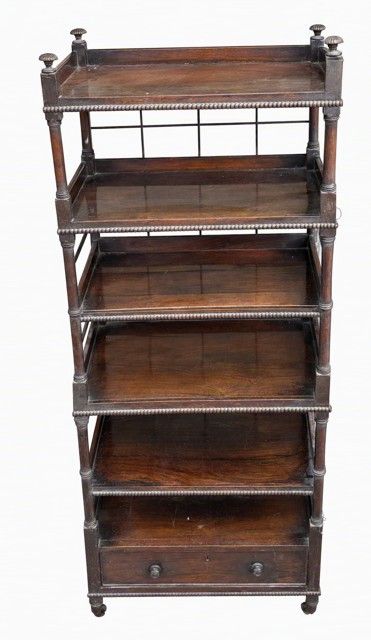
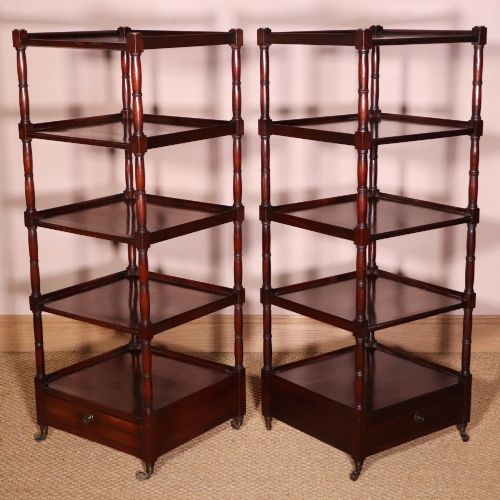
An open tier shelving unit is represented on this page by pieces functioning as bookcases, whatnots, etageres, and wall shelves. These items emerge from periods including the Georgian, Regency, Victorian, and Edwardian eras, as well as the Arts and Crafts movement. Buyers searching for an open tier shelving unit most frequently encounter multi-tiered wooden forms designed to display books and decorative objects.
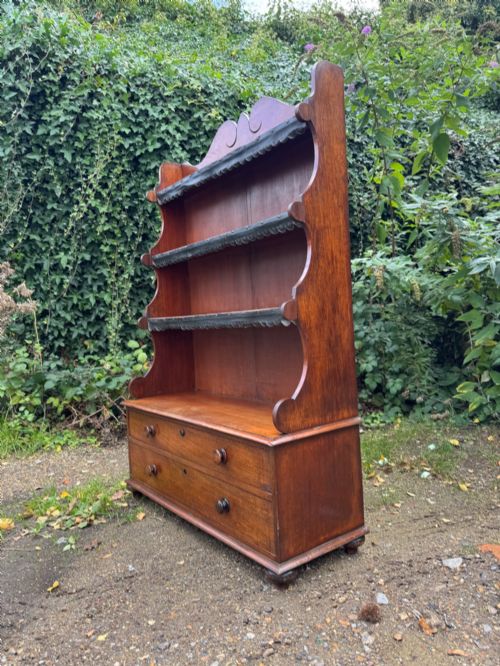
The configurations range from slim three-tier pieces and corner whatnots to extensive six-tier etageres and waterfall bookcases. Makers historically constructed these formats using timber frames divided by open shelves, sometimes incorporating lower cupboards, drawers, or raised galleries. They served primarily for ornamental display or functional book storage within period drawing rooms and parlours.
How they were made
Cabinet makers utilised a range of dense timbers, predominantly mahogany, rosewood, walnut, burr walnut, and oak, alongside Indian hardwood and birdseye maple. These woods were selected for their grain pattern and structural strength, allowing slender upright supports to bear multiple stacked shelves without bowing.
Metalwork details such as brass galleries, castors, and turned supports frequently supplement the timber construction. Details like fret-cutting, inlay work, and turned legs reflect the stylistic preferences of the Georgian, Regency, Victorian, and Arts and Crafts periods.
Open Tier Shelving Unit Retail Price Guide 2026
Typical asking prices for open tier shelving unit among the pieces listed under this phrase on Sellingantiques today, from the lower quarter to the upper quarter. They describe what is for sale here now, not the wider market.
Listings feature timbers including mahogany, rosewood, walnut, burr walnut, oak, and Indian hardwood across the 19th century.
What varies in quality
The distinction between standard examples and top-tier pieces rests on the choice of timber and the sophistication of the joinery. Figured veneers such as burr walnut or carefully matched rosewood mark out superior pieces, whereas standard domestic items rely on plain mahogany or oak.
Design complexity and supplementary hardware also drive variations in standard. Pieces featuring brass galleries, integrated drawers, carved detailing, or unusual multi-tier configurations demonstrate a higher degree of craftsmanship than simpler functional shelving.
The Open Tier Shelving Unit Glossary
- Whatnot
- A piece of furniture consisting of several open shelves tiered one above the other, used for displaying ornaments or books. They originated in the 18th century and gained popularity through the Regency and Victorian periods.
- Etagere
- A set of open shelves for displaying small objects or ornaments, originating in France. These pieces often feature slender vertical supports and multiple tiers.
- Waterfall bookcase
- A set of open shelves where each tier steps back progressively from bottom to top, creating a profile resembling descending water. They appear frequently in mahogany and rosewood from the Georgian and Victorian eras.
- Gallery
- A raised decorative rail or pierced border running along the edge of a shelf or top. They are frequently cast in brass to prevent items from sliding off upper tiers.
- Dumb waiter
- A tiered piece of freestanding furniture used for holding tableware or dishes. The evidence records examples featuring multiple stacked wooden tiers on a central column or support structure.
Open Tier Shelving Unit: Frequently Asked Questions
What is an open tier shelving unit used for?
These units provide open display space for books, ceramics, and ornamental objects across multiple stacked levels. Historically, they occupied drawing rooms and parlours to hold small decorative items within easy reach.
Today, they function similarly in modern interiors, offering vertical storage that keeps floor footprints small while displaying collections clearly.
How do I identify a Regency period piece?
Regency pieces often utilise dark timbers like rosewood and mahogany, featuring clean architectural lines and classical proportions. Look for details such as brass galleries, ring-turned supports, and fine grain matching.
They date from the early 19th century and reflect a refined aesthetic distinct from the heavier carving seen in later Victorian furniture.
What is the difference between a whatnot and a bookcase?
A whatnot is primarily designed for displaying ornaments and bric-a-brac across several open shelves, often featuring slender columns or decorative galleries. A bookcase focuses specifically on storing volumes upright between vertical side panels.
However, forms frequently overlap in pieces like waterfall bookcases that combine tiered book storage with display functions.
How do I care for antique wood shelving?
Keep wooden shelving units away from direct sunlight and steady heat sources to prevent the timber and veneers from drying out or splitting. Dust the tiers regularly with a soft, dry cloth to protect the polished finish.
Avoid using silicone-based polishes or harsh chemical sprays, opting instead for traditional beeswax applied sparingly when the wood requires nourishment.