


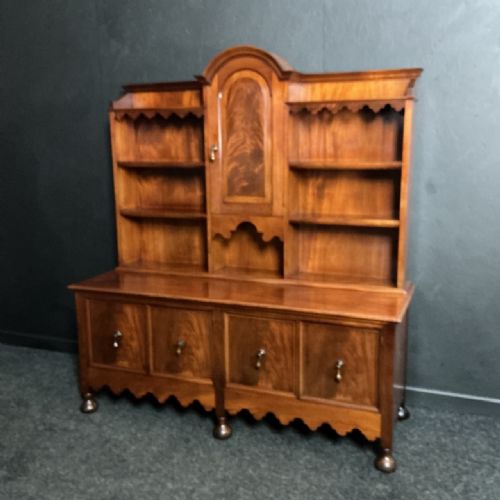
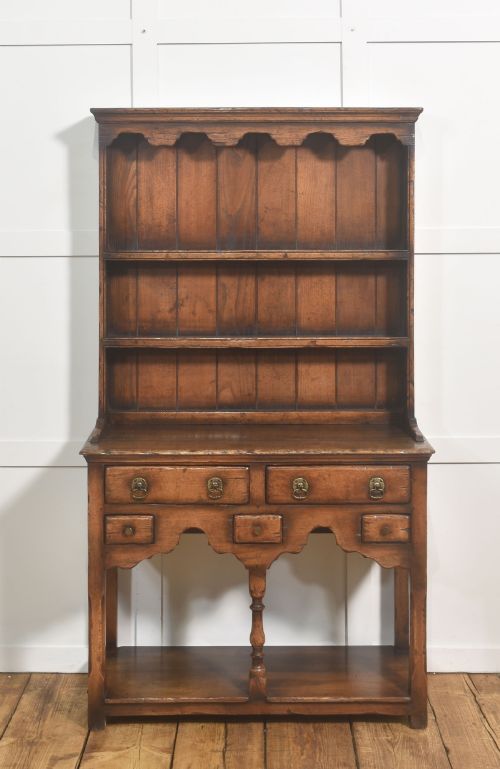
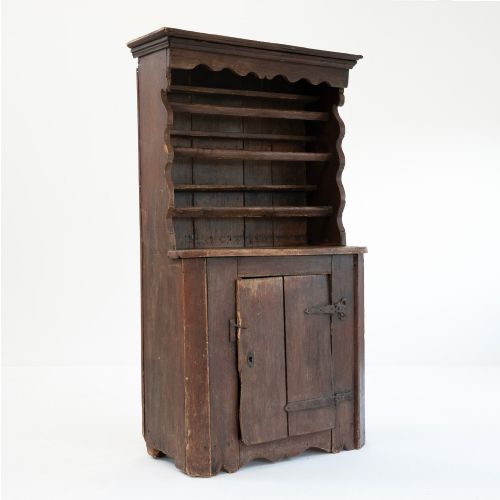
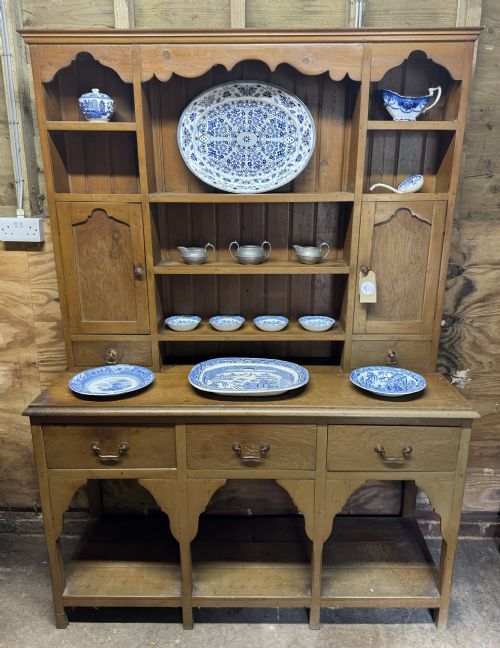
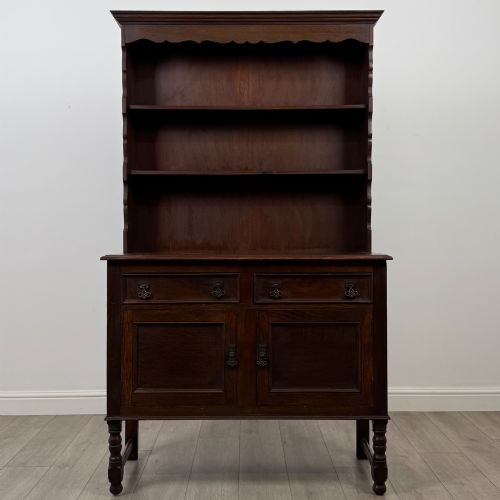


Open Rack Hutch
An open rack hutch offers display and storage, bringing regional character and practical shelving into a room.
Open Rack Hutch
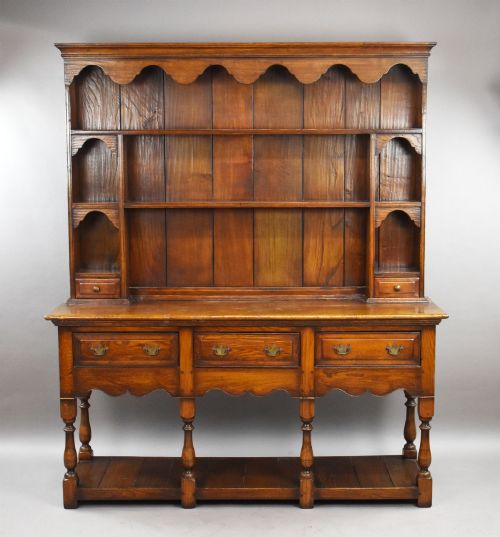
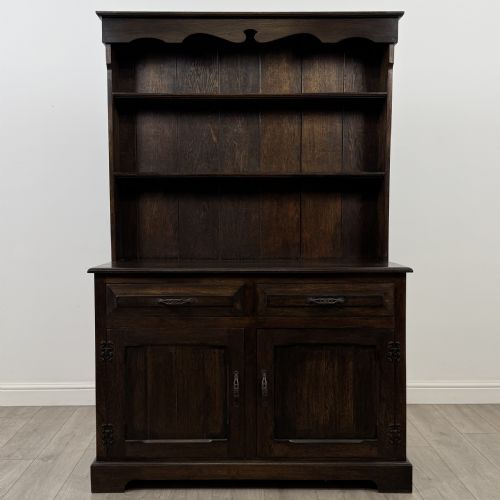
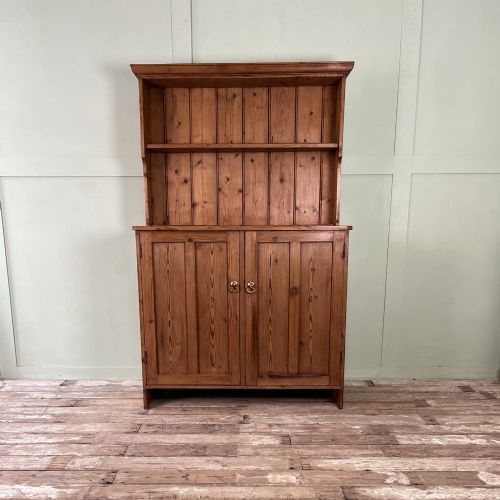
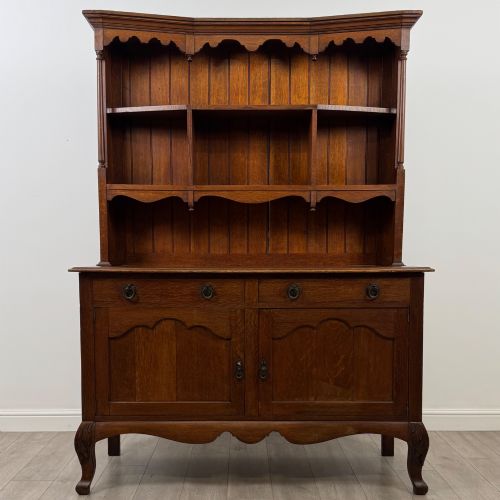
An open rack hutch combines a lower base of drawers and cupboards with upper plate shelves for domestic display. When searching for an open rack hutch, buyers encounter regional pieces shaped by local traditions, including Welsh, English, and French provincial examples.
Makers utilised native timbers to build utilitarian furniture for farmhouse kitchens and dining spaces. These forms evolved from simple board structures into substantial two-part furniture designed to showcase ceramics and pewter.
Materials and Construction
Cabinet makers relied primarily on solid oak, pine, and walnut, often pairing timbers within a single piece such as cherrywood with walnut or burr walnut with elm. Joinery methods relied on traditional pegged joints, hand-cut dovetails for drawers, and board construction for back panels.
Surfaces received various treatments, from clear wax finishes highlighting natural grain to painted schemes in folk art styles. Iron and brass hardware, including period drop handles and hinges, secured doors and drawers across the base units.
Open Rack Hutch Retail Price Guide 2026
Typical asking prices for open rack hutch among the pieces listed under this phrase on Sellingantiques today, from the lower quarter to the upper quarter. They describe what is for sale here now, not the wider market.
Listings feature oak, pine, walnut, and fruitwood across periods spanning from the 18th century to the Edwardian era.
Assessing Quality and Character
Quality rests in the integrity of the timber and the retention of original surfaces, such as untouched patinas and early paint layers. Pieces that retain their original rack configuration command attention from collectors seeking complete examples.
Proportion and regional detailing distinguish standard utility pieces from finer vernacular items. Subtle elements like carved decoration, shaped friezes, and timber selection elevate certain examples above everyday kitchen furniture.
The Open Rack Hutch Glossary
- Pot-board
- An open lower shelf built between the legs of a dresser, historically used for storing pots and pans. This feature is frequently seen in early Welsh examples.
- Plate rack
- The upper shelving section featuring vertical boards and plate rails designed to display crockery safely. Many survive paired with their original base units.
- Belly rack
- A regional variation featuring a pronounced swell or bowed central section to the lower drawers. This design is associated with specific West Country and Welsh workshops.
- Vernacular furniture
- Practical items made by regional cabinet makers for local use, following traditional patterns rather than metropolitan high styles. These pieces often utilise local timbers such as fruitwood and pine.
- Buffet vaisselier
- A French term for a two-part dresser comprising a lower buffet and an upper plate rack. It represents the continental equivalent of the British kitchen dresser.
Open Rack Hutch: Frequently Asked Questions
What is an open rack hutch used for?
These pieces served as the central storage and display unit in historic kitchens and dining rooms. The lower cupboards and drawers held cookware and linens, while the upper shelves displayed everyday ceramics.
Today, owners utilise the shelving to display collections of china, books, or glassware in contemporary living spaces. The closed storage remains practical for concealing modern household items.
How do I date an antique hutch?
Dating relies on examining construction techniques, timber selection, and hardware styles. Hand-sawn boards, pegged joinery, and native woods like oak and fruitwood typically point to 18th century or Georgian origins.
Later Victorian and Edwardian examples often feature softer pine, machine-cut elements, and different fastening methods. Original painted surfaces or patination also offer clues to a piece's age and history.
Are the plate racks original?
Many hutches retain their matching upper racks, built from the same timber and showing consistent wear and colour. Because upper and lower sections were often separated over time, collectors look for matching grain patterns and joint construction.
Reunited combinations do occur in the trade, making the continuity of timber and finish an important detail to inspect. Original fixings and mounting points provide evidence that top and bottom belong together.
How do I care for antique timber?
Maintain antique wood by keeping it away from direct heat sources and dramatic humidity fluctuations, which can cause timber to split. Regular dusting with a soft cloth prevents particle buildup on carved surfaces and mouldings.
Application of traditional beeswax nourishes dry timber and preserves the surface sheen without sealing the wood. Avoid modern silicone-based sprays that can penetrate the grain and alter the finish.