
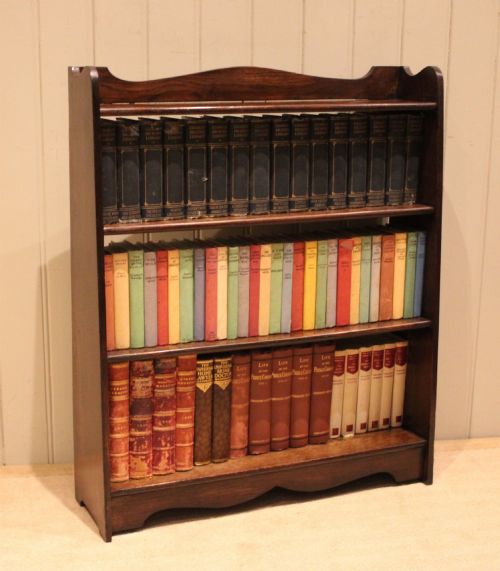
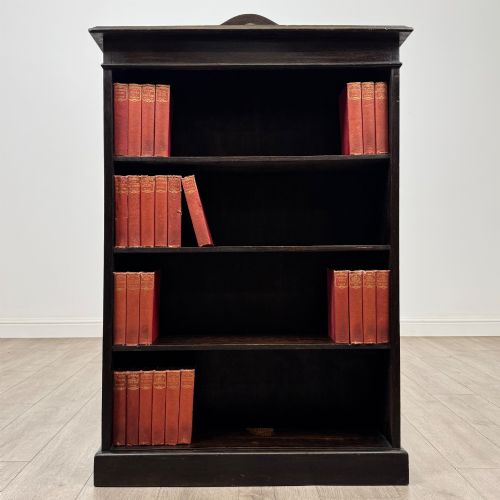
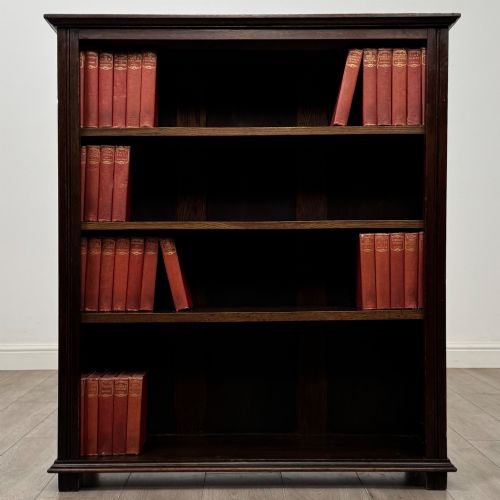
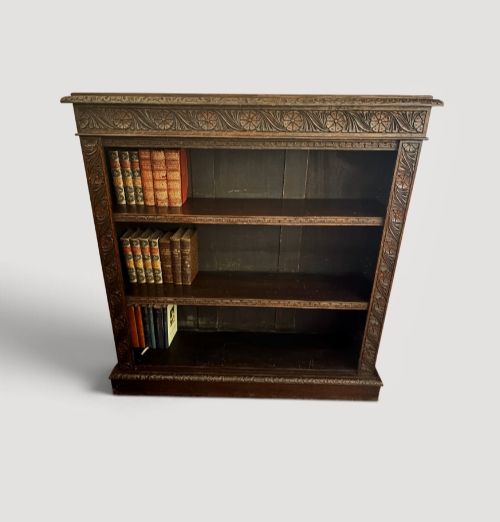
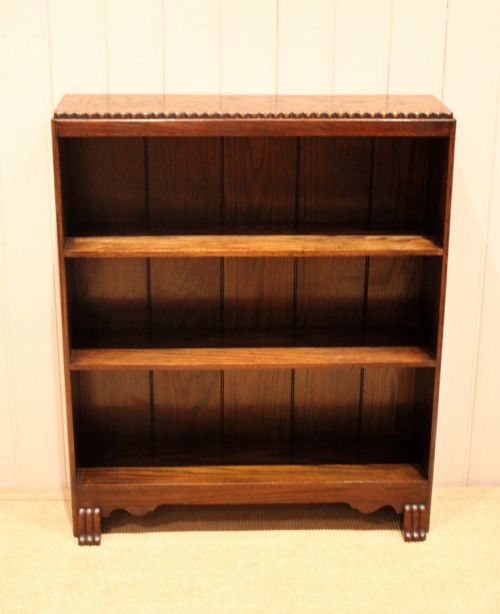


Open Front Oak Bookcase
An open front oak bookcase brings practical shelving to a room while displaying volumes without glass doors in the way.
Open Front Oak Bookcase
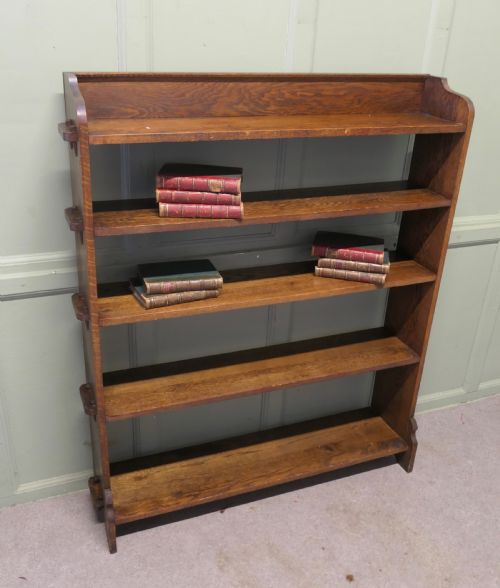
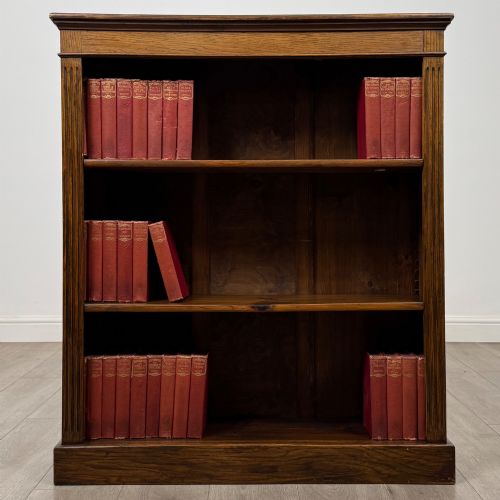
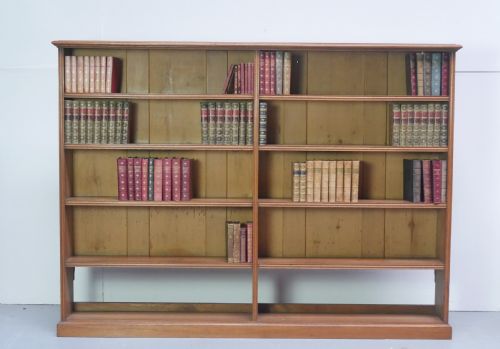
An open front oak bookcase provides accessible storage for volumes and papers through unglazed front elevations. The selection spans compact hallway units, tall library furniture, and low slope-shelf designs.
Most examples date from the nineteenth and twentieth centuries, encompassing Victorian, Edwardian, and Art Deco periods. Workshops constructed these pieces using solid timber, often incorporating adjustable shelving or partitioned sections.
Variations include breakfront configurations, carved panels, and specialised formats such as book troughs or fireside stands. Oak serves as the primary material across the range, sometimes paired with brass hardware or glass accents.
Materials and Construction
Makers utilised native and imported oak, selecting solid timber, quarter-cut boards, and occasionally pollard or burr variants for decorative effect. Metal components such as iron brackets and brass fixings support structural stability.
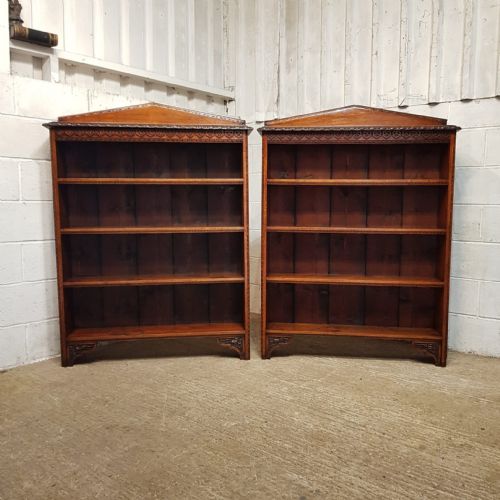
Joinery methods include beaded edge mouldings, carved detailing in Renaissance Revival or Flemish styles, and architectural cornices. Interior configurations incorporate adjustable wooden shelving resting on metal pins or wooden supports.
Listings feature oak combined with brass, iron, and glass across Victorian, Edwardian, and Art Deco periods.
Evaluating Construction and Design
Quality rests on the selection of timber and the complexity of the timber grain, such as quarter-cut or pollard oak figures. Carved ornamentation, from simple geometric mouldings to deep relief figures, distinguishes standard utilitarian shelving from library commissions.
Structural scale and configuration set pieces apart, moving from straightforward narrow shelving to multi-section breakfront bookcases with architectural cornices. The presence of adjustable shelving systems indicates functional ambition beyond basic domestic storage.
The Open Front Oak Bookcase Glossary
- Breakfront
- A piece of furniture where the central section projects forward from the flanking wings. This format often appears in larger library bookcases.
- Quarter-cut
- A method of sawing oak logs that produces parallel growth rings and prominent medullary rays, creating a decorative flake pattern across the timber surface.
- Pollard oak
- Timber taken from trees that have been pollarded, yielding a gnarled grain pattern with dense clusters of small knots. Cabinetmakers utilised this figured wood for decorative panels.
- Slope-shelf
- A slanted display tier designed to hold open volumes, magazines, or newspapers for easy reading. These appear frequently in Arts and Crafts pieces.
- Renaissance Revival
- A nineteenth-century style drawing on sixteenth-century architectural motifs, characterised by heavy carving, strapwork, and bold proportions.
Open Front Oak Bookcase: Frequently Asked Questions
How do I date an oak bookcase?
Dating relies on stylistic markers and construction methods that shift across the Victorian, Edwardian, and later periods. Details like carved panels, beaded edges, and hardware point to specific decades.
Earlier nineteenth-century pieces often display architectural cornices and deeper timbers, while later twentieth-century examples lean towards cleaner lines or art deco mouldings.
Are the shelves adjustable?
Many examples feature adjustable shelving supported by wooden ratchets or metal pins. This adaptability accommodated varying sizes of library volumes and ledgers.
Fixed shelves remain common in smaller hallway units and specific Victorian library formats.
What is pollard oak?
Pollard oak is a decorative timber harvested from trees pruned close to the trunk. This process produces a dense, spotted grain pattern full of small knots.
Cabinetmakers applied veneers or solid sections of this figured wood to focal points on Victorian cabinets.
Where were these bookcases used?
These pieces served in domestic studies, grand country house libraries, and commercial offices. Tall breakfront versions suited institutional rooms, while narrow variations fit domestic hallways.
Low slope-shelf formats functioned specifically beside fireplaces for periodicals and daily reading.