





Open Display Unit
An open display unit brings books and collections into the room without the barrier of glass doors.
Open Display Unit
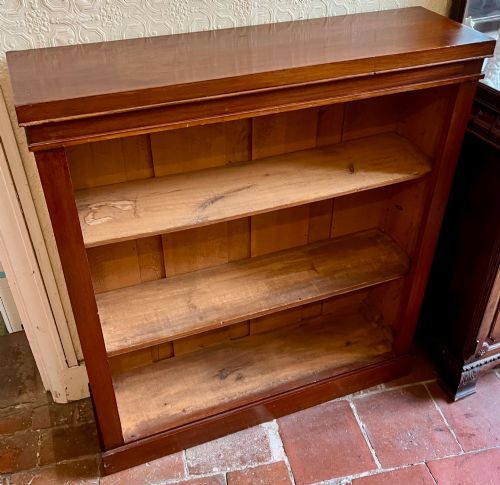
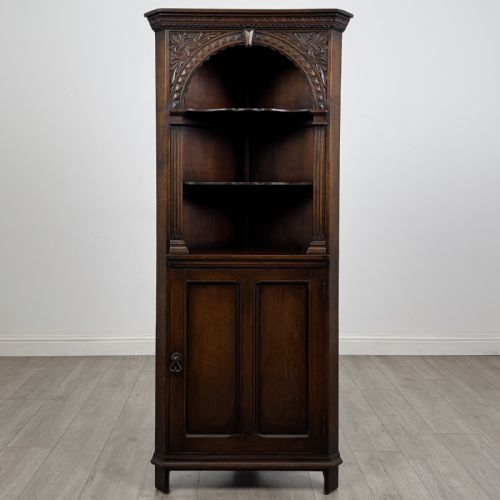
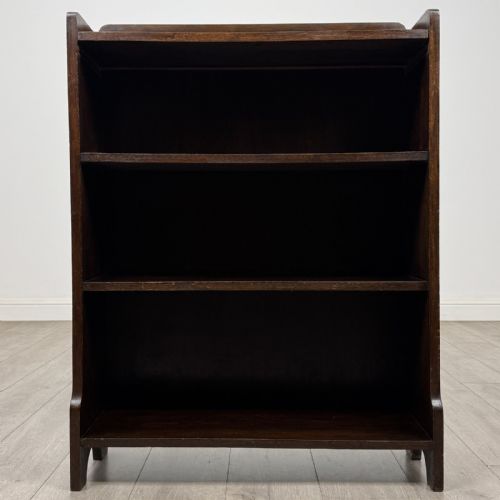
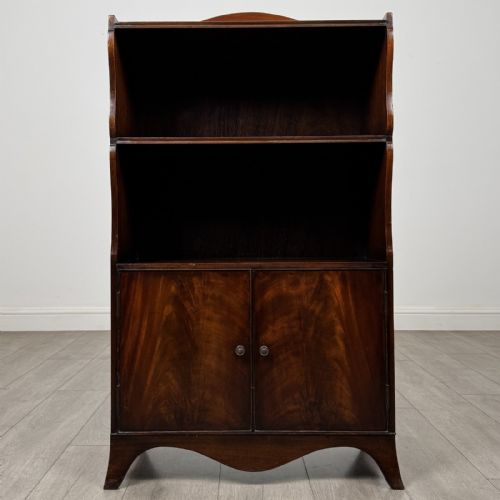
An open display unit provides accessible shelving for books and decorative objects across multiple periods and styles. When you search for an open display unit, you encounter bookcases, whatnots, etageres, dressers, and freestanding shelving units designed to show contents directly to the room.
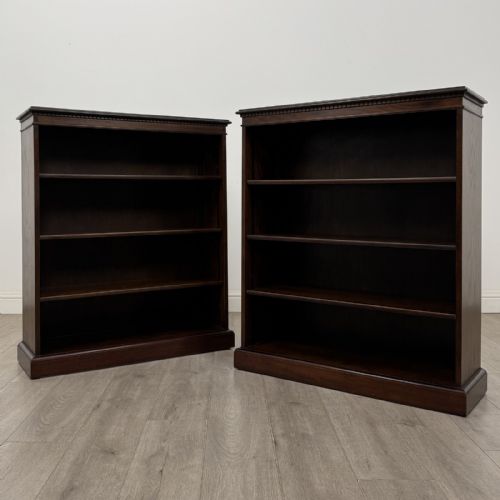
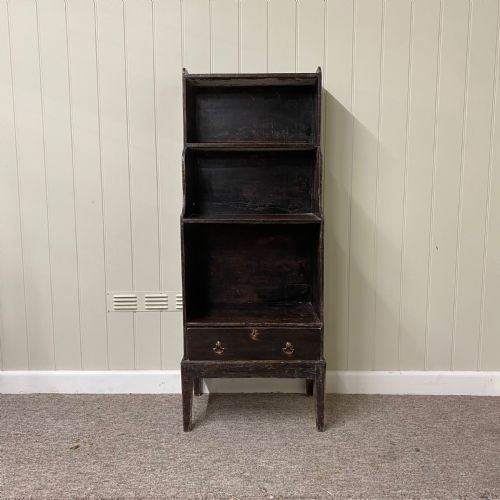
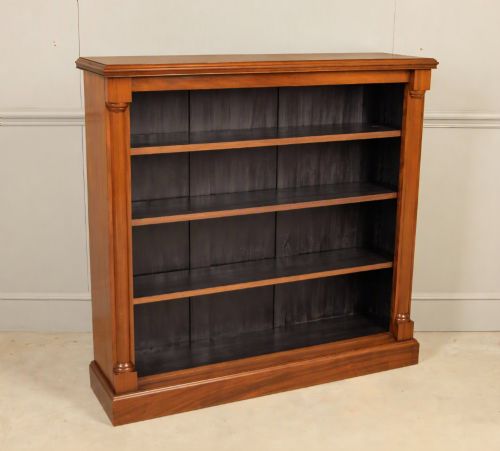
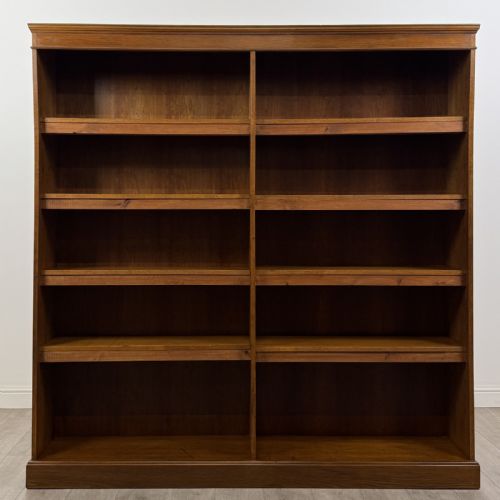
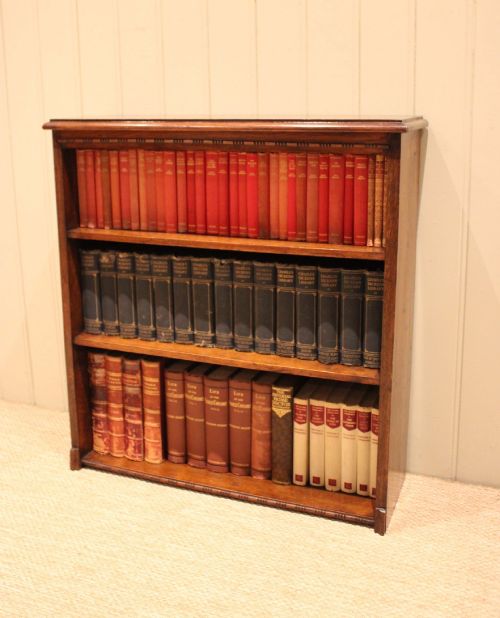
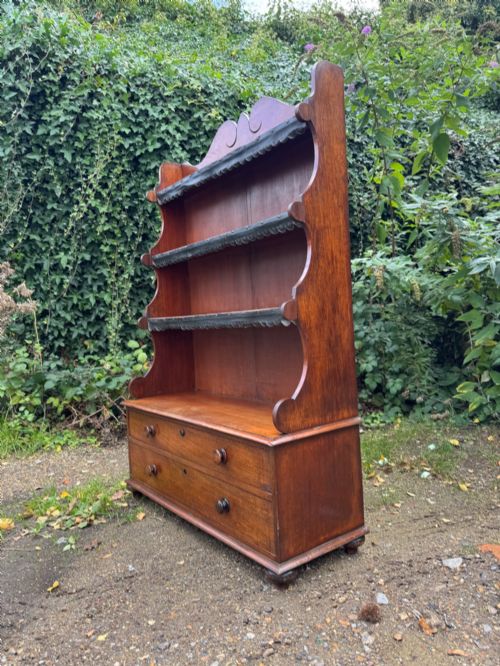
The pieces appearing on this page span the nineteenth century, the Edwardian era, and the early twentieth century. Common formats include low oak bookcases with adjustable shelves, tiered rosewood and mahogany whatnots, and tall breakfront library pieces.
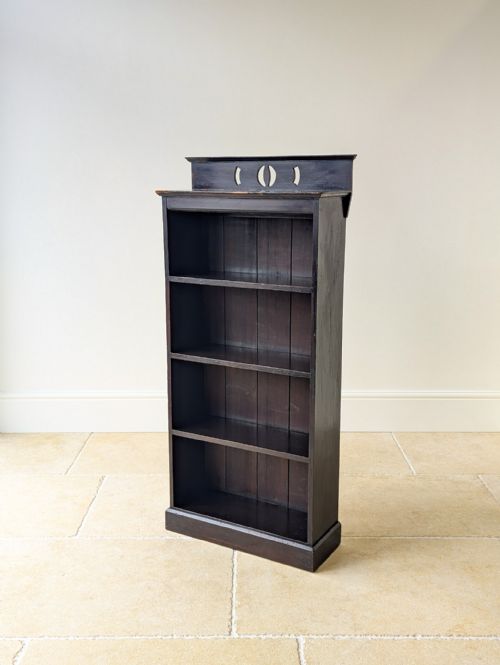
Makers and designers from the Arts and Crafts movement, the Aesthetic movement, and neoclassical traditions adapted these forms for domestic interiors. Their structural design prioritises utility and the exhibition of personal libraries or ornaments.
How they were made
Cabinet makers utilised dense hardwoods such as mahogany, oak, walnut, burr walnut, and rosewood, alongside softer timbers like pine. Joinery techniques range from pegged construction in Arts and Crafts pieces to dentil cornices and raised galleries.
Metal elements appear on specific forms, notably brass galleries fitted to the upper tiers of nineteenth century whatnots. Inlaid details and carved oak decoration distinguish Edwardian and Victorian iterations from plainer country pine furniture.
Open Display Unit Retail Price Guide 2026
Typical asking prices for open display unit among the pieces listed under this phrase on Sellingantiques today, from the lower quarter to the upper quarter. They describe what is for sale here now, not the wider market.
Some nineteenth century whatnots sport tiny brass galleries just tall enough to keep your grandmother's porcelain from sliding off during a lively waltz.
What varies in quality
The selection of timber dictates the visual weight of the piece, with figured burr walnut and dense mahogany sitting at the higher end of the range compared to standard pine. Grain matching across breakfront facades and drawer fronts shows deliberate workshop planning.
Hardware and secondary details reveal the standard of manufacture. Finely turned upright supports on multitiered whatnots, intact brass galleries, and smoothly functioning adjustable shelf mechanisms separate utilitarian items from finer examples.
The Open Display Unit Glossary
- Whatnot
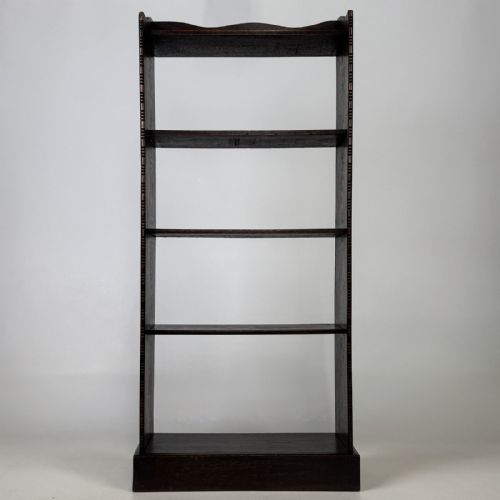
- A multitiered movable stand with shelves supported by columns or pillars, used for displaying ornaments or books. Examples appear in mahogany and rosewood from the nineteenth century.
- Breakfront
- A piece of furniture where the central section projects forward from the flanking wings. This configuration provides depth variation in larger bookcases.
- Dentil cornice
- A decorative moulding featuring a series of small, rectangular blocks resembling teeth beneath the upper edge of a piece. It is frequently seen on Edwardian oak bookcases.
- Etagere
- A French term for an open tiered display stand used for ornaments and small objects. It shares similarities with the English whatnot.
- Adjustable shelves
- Shelving supported by pins, ratchets, or sliding tracks that allow the vertical spacing to be altered. This practical adaptation is common in Victorian and later bookcases.
Open Display Unit: Frequently Asked Questions
What is an open display unit?
An open display unit is a piece of furniture designed with accessible, unglazed shelving to hold books, ceramics, or decorative objects. Common historical forms include bookcases, whatnots, and dressers.
These pieces allow items to be retrieved and viewed without opening doors. They serve as central fixtures in studies, living rooms, and libraries.
How do I style an open display unit?
Styling involves balancing books placed vertically and horizontally with decorative items such as ceramics and framed objects. Leaving empty space around objects prevents the shelves from looking cluttered.
Matching the period of the unit, such as an Arts and Crafts oak bookcase or a Victorian mahogany whatnot, with complementary interior items helps maintain visual harmony.
Are shelves in antique display units adjustable?
Many nineteenth and early twentieth century bookcases feature adjustable shelving systems. These use wooden pegs, metal pins, or sliding tracks to let owners alter shelf heights.
Fixed shelves also appear, particularly in older country dressers or simpler pine units where structural rigidity takes precedence over adaptability.
What is the difference between a whatnot and a bookcase?
A whatnot is typically a multitiered, open stand supported by slender columns or posts, designed primarily for displaying ornaments and small decorative pieces. A bookcase focuses on the storage of volumes, often featuring deeper shelves and a more robust frame.
Both fall under open display furniture, but their proportions and intended uses differ according to the rooms they were built for.