


Opalescent Shade Pendant
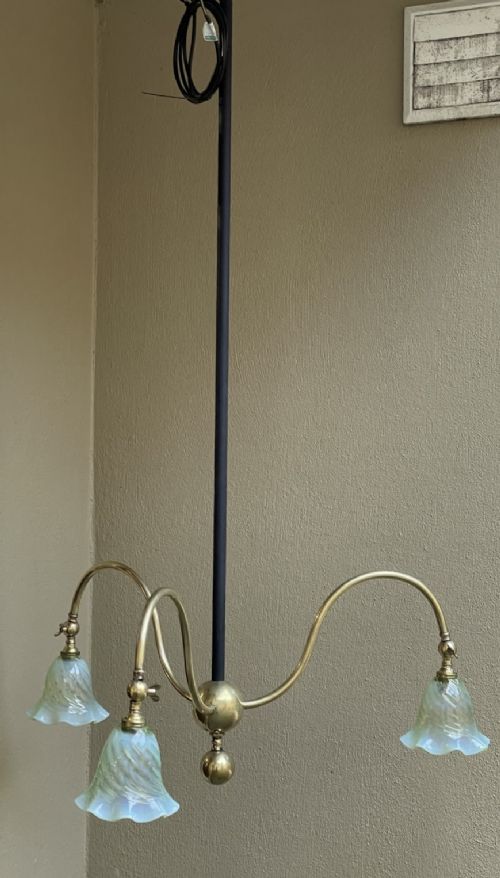
An opalescent shade pendant brings a warm, diffused luminescence into a room, combining period metalwork with milk-white or tinted glass.
Opalescent Shade Pendant
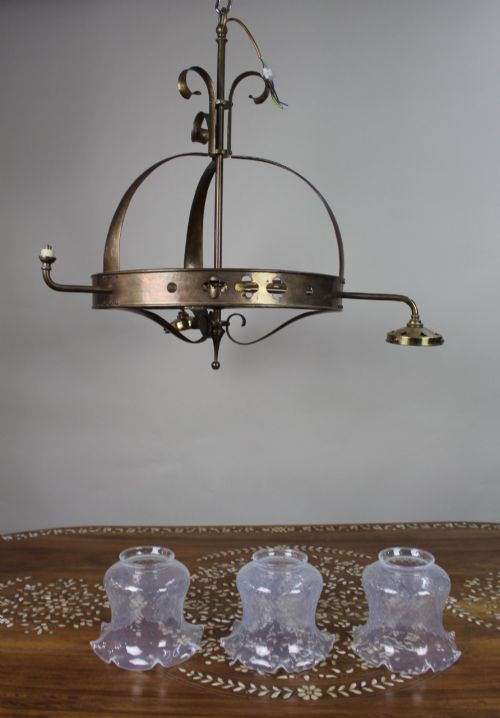
An opalescent shade pendant is a suspended ceiling light featuring a diffuser made from iridescent or milky glass, designed to soften electric or gas illumination. The selection spans the Victorian and Edwardian eras through to the Art Deco period, capturing the distinct aesthetic shifts of the nineteenth and twentieth centuries. Buyers encounter forms ranging from simple bowl lampshades to elaborate multi-light ceiling fixtures.
The dominant styles represented on this page are Arts and Crafts, Art Nouveau, and Gothic Revival. These fixtures often combine substantial metal components with translucent shades designed to catch and scatter light evenly across a space. Most examples originate from the nineteenth century, 1900, 1910, Edwardian, and 1930 periods.
How they were made
Makers utilised brass, copper, and patinated metal to form the structural frames, ceiling roses, and suspension hardware. These metals were frequently left with natural finishes or patinated to complement the interior schemes of the period.
The shades themselves consist of glass, specifically opalescent or frosted varieties, sometimes paired with fabric cords for suspension. Glassmakers manipulated mineral content within the molten mixture to achieve the characteristic milky or shifting colour effects inherent to opalescent glass.
Listings feature brass, copper, and patinated metal frames paired with opalescent and frosted glass shades across Victorian, Edwardian, and Art Deco periods.
What varies in quality
Quality rests upon the purity and depth of the opalescent glass and the substantial weight of the supporting metalwork. Fine examples display deliberate harmony between the metal mountings and the blown or moulded glass shade.
Design execution distinguishes standard utilitarian fixtures from distinguished architectural pieces, such as those originating from notable civic commissions. The integrity of the original patination on the brass or copper further elevates the character of a piece.
The Opalescent Shade Pendant Glossary
- Opalescent glass
- Glass containing chemical agents that create a milky, semi-translucent appearance with shimmering colour shifts. This material diffuses harsh light sources effectively.
- Gasolier
- A multi-arm hanging light fixture originally designed for gas lighting before being converted to electricity. These fixtures possess robust metal gas pipes adapted into structural frames.
- Rise and fall
- A mechanical pulley system allowing the pendant height to be adjusted manually. It uses a counterweight mechanism concealed within the ceiling rose or suspension.
- Patinated brass
- Brass treated with chemicals or natural ageing processes to darken the surface and reveal subtle undertones. This finish avoids the bright glare of polished metal.
Opalescent Shade Pendant: Frequently Asked Questions
How do I hang a heavy pendant?
Suspension requires secure attachment to ceiling joists using appropriate fixings to support the weight of brass and glass components. Professional installation ensures the electrical integrity of antique wiring is safely integrated.
Heavier multi-light fixtures and gasoliers demand reinforced ceiling brackets rather than standard plaster fixings. Consulting a qualified electrician guarantees compliance with modern safety standards.
Are these lights wired for electricity?
Many period fixtures retain older wiring or have undergone various stages of rewiring by previous owners. Buyers should anticipate having fittings adapted or tested by a professional before installation.
Fabric cords and internal lamp holders frequently require replacement to meet contemporary electrical codes. This process allows the preservation of the exterior antique metalwork while ensuring safe operation.
How do I clean opalescent glass?
Gentle washing with warm water and mild soap removes dust without harming the delicate surface of the glass. A soft cloth prevents scratching the material.
Harsh chemical cleaners and abrasive pads must be avoided entirely to preserve the original finish. Metal components require separate, targeted care to protect patinated brass and copper surfaces.
What rooms suit these pendants?
Dining rooms, hallways, and living spaces benefit from the soft, diffused illumination provided by opalescent shades. The lower glare creates an inviting atmosphere suited to period interiors.
Ceiling height dictates the choice between a close-fitting bowl shade and an adjustable rise and fall pendant. Proportion remains key when matching large multi-light fixtures to room dimensions.