


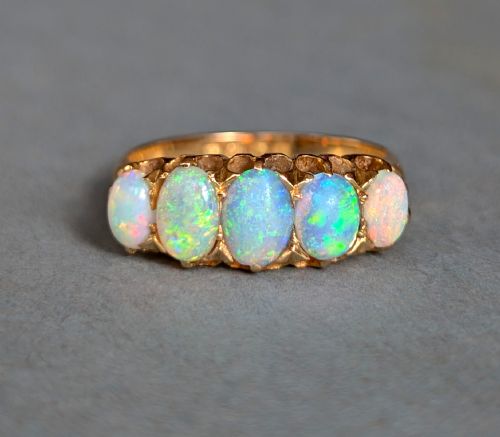
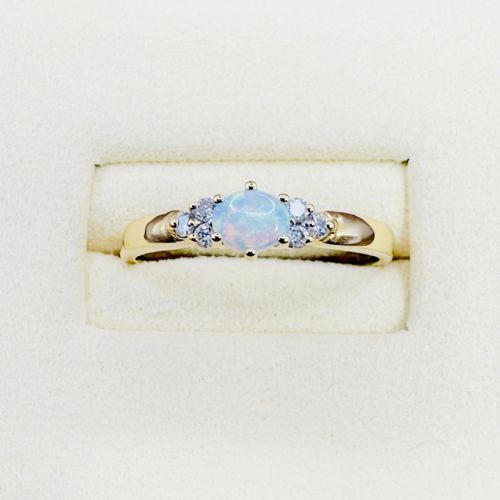

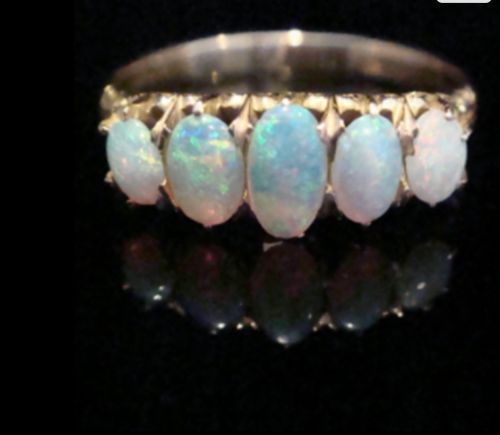
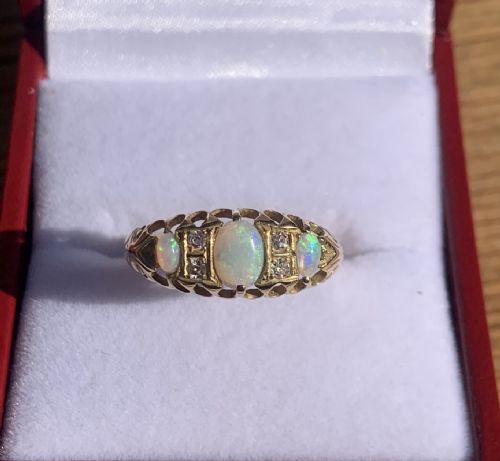


Opal Gold Band
An opal gold band brings together the play of colour in natural stones and the warmth of precious metal.
Opal Gold Band
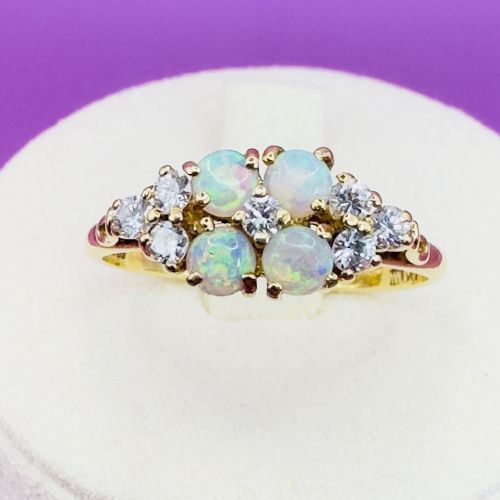
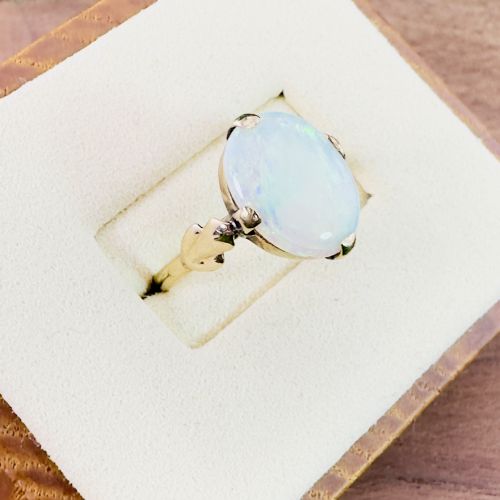
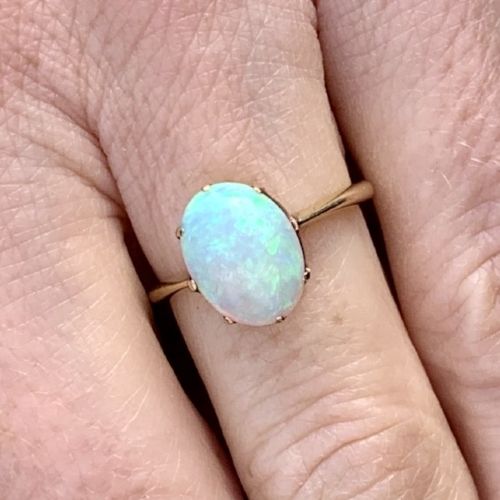
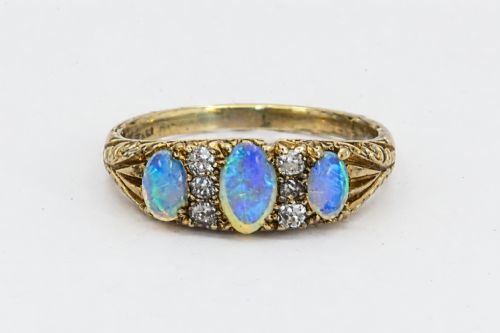
An opal gold band is primarily a ring designed around the interplay of natural opals and 18ct gold. These pieces span Victorian, Edwardian, and mid-century periods, alongside a few contemporary classic designs.
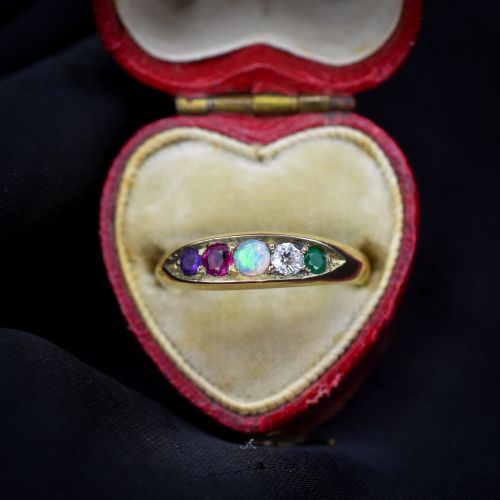
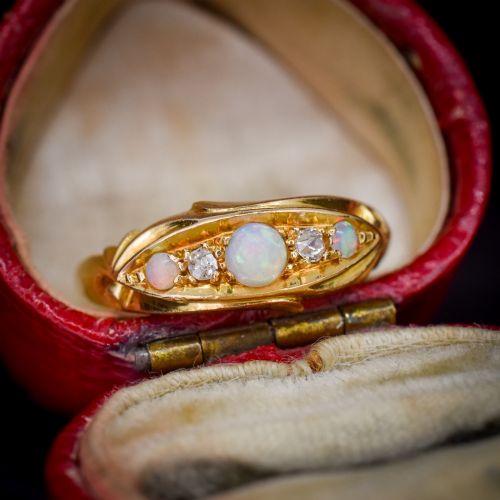
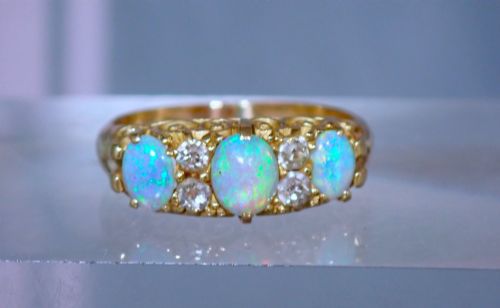
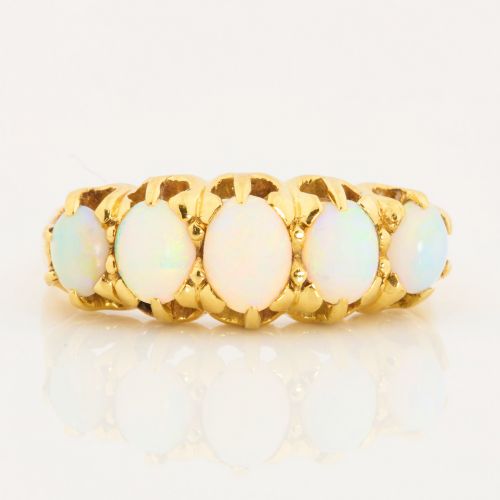
Most examples you encounter on this page take the form of five-stone rings, boat rings, or cluster configurations. Diamonds frequently accompany the main stones, either in trilogy arrangements or as surrounding halos.
The bands themselves utilise 18ct yellow gold, white gold, or standard 18ct gold configurations. These rings serve as enduring examples of historical jewellery craftsmanship, ranging from late nineteenth-century Victorian pieces to mid-century items.
Materials and construction
The construction of these rings relies on 18ct gold for the band and setting, paired with natural solid opals and white diamonds. Goldsmiths utilised yellow gold extensively in Victorian and Edwardian workshops, while white gold appears in later mid-century pieces.
Stones are set using traditional claw or boat settings designed to secure the softer opal material alongside harder diamonds. Hallmarks from assay offices like Chester, Birmingham, and Glasgow frequently mark the inside of the band.
Opal Gold Band Retail Price Guide 2026
Typical asking prices for opal gold band among the pieces listed under this phrase on Sellingantiques today, from the lower quarter to the upper quarter. They describe what is for sale here now, not the wider market.
Some Edwardian rings were made small enough to fit a child's finger.
Quality and variation
Quality in an opal gold band rests upon the optical play of colour within the stone and the integrity of the metalwork. Strong, vibrant flashes of spectral colour distinguish superior opals from more muted stones.
The weight and presence of the 18ct gold band also dictate the standard of the piece. Substantial shanks with crisp, legible hallmarks and secure stone settings represent the higher end of surviving examples.
The Opal Gold Band Glossary
- Boat ring
- A ring setting shaped like the hull of a boat, popular in the Edwardian period. This configuration allows multiple stones to sit snugly in a curved row.
- Trilogy ring
- A ring featuring three stones set in a row, often representing past, present, and future. In these listings, they typically combine an opal centre with diamond side stones.
- Assay office
- An official body that tests the purity of precious metals and stamps items with a hallmark. Birmingham, Chester, and Glasgow offices appear on these rings.
- Rose cut diamond
- An antique diamond cut with a flat base and a faceted dome crown resembling an unopened rosebud. This cut is found in older pieces on the page.
Opal Gold Band: Frequently Asked Questions
How do I care for an opal ring?
Opals contain water within their structure and score lower on the hardness scale than diamonds. Avoid exposing them to harsh chemicals, ultrasonic cleaners, and sudden temperature changes.
Remove your ring before heavy manual work or gardening to protect both the softer stone and the 18ct gold band from scratching.
Are these opals natural?
The listings on this page consistently describe natural solid opals rather than synthetic alternatives. These stones display genuine geological formations and natural play of colour.
Natural stones often exhibit unique matrix patterns and colour shifts that distinguish them from modern laboratory-grown counterparts.
What periods do these rings come from?
The selection spans several distinct eras, including Victorian, Edwardian, and mid-century periods. Each era brings specific design traits, from ornate Victorian five-stone arrangements to streamlined mid-century cluster settings.
Hallmarks and stylistic clues help establish the approximate decade of manufacture for unmarked or partially rubbed pieces.
Can an opal gold band be resized?
Resizing depends on the construction of the specific band and the placement of stones around the hoop. Plain sections of the 18ct gold shank generally allow a jeweller to adjust the fit.
Stones set all the way around the band make alteration difficult, but most traditional boat or multi-stone rings can be altered by a skilled professional.