




Opal Diamond Ring
An opal diamond ring pairs the iridescent play of colour in the stone with bright diamond points, spanning Victorian, Edwardian, and mid-century designs.
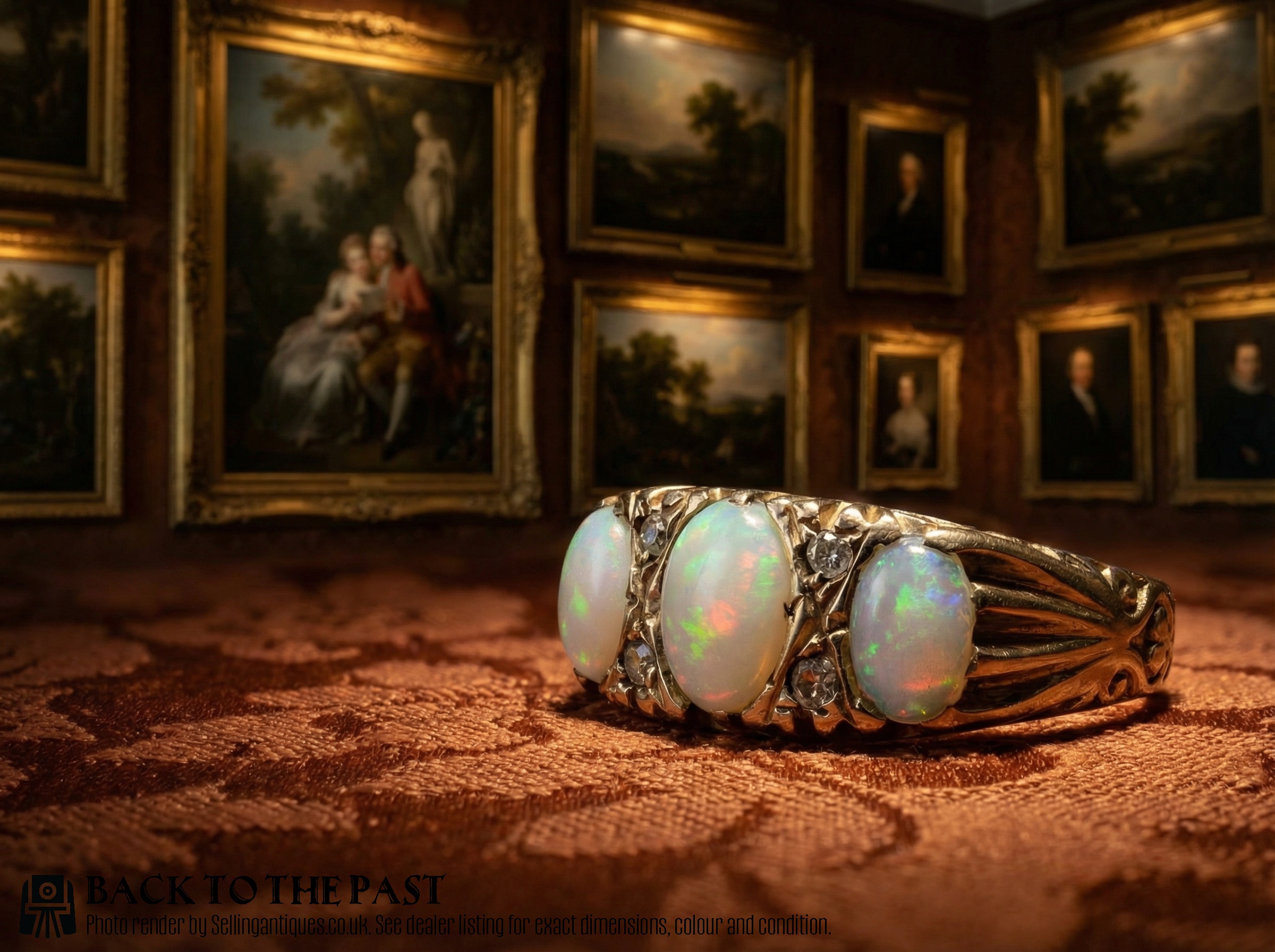
Opal Diamond Ring
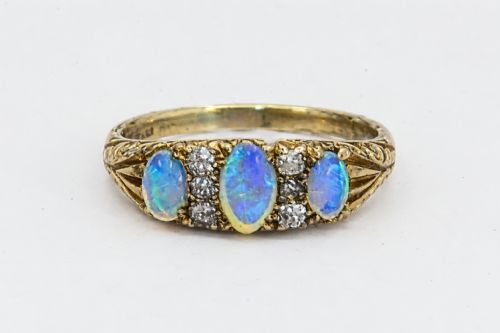
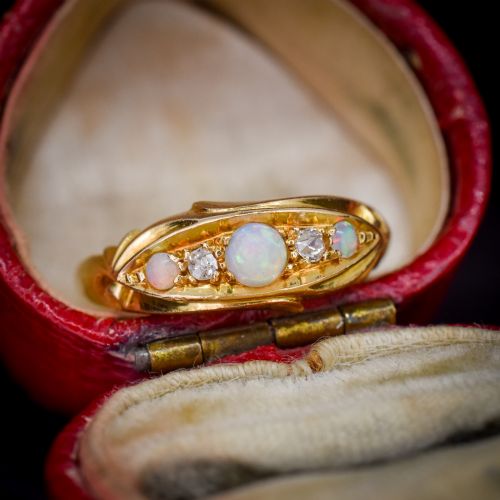
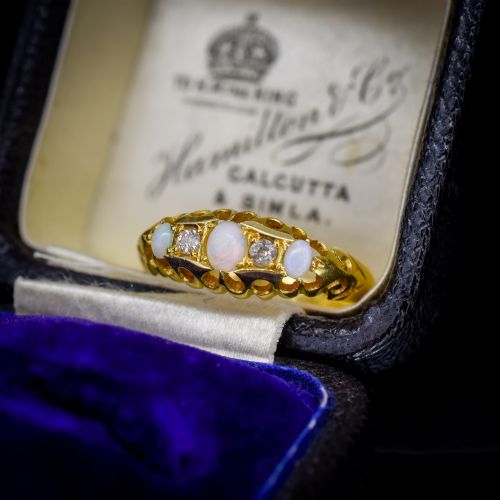
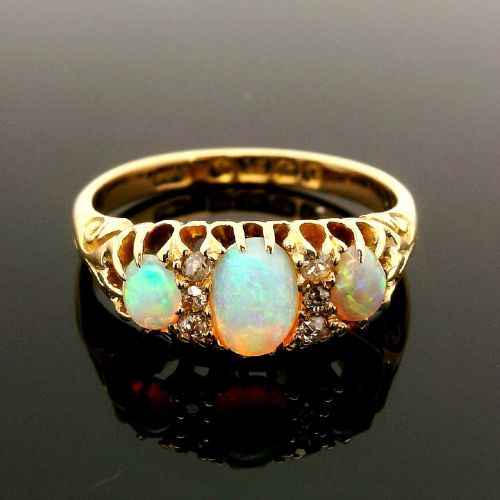
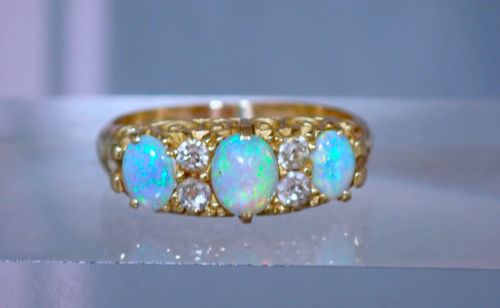
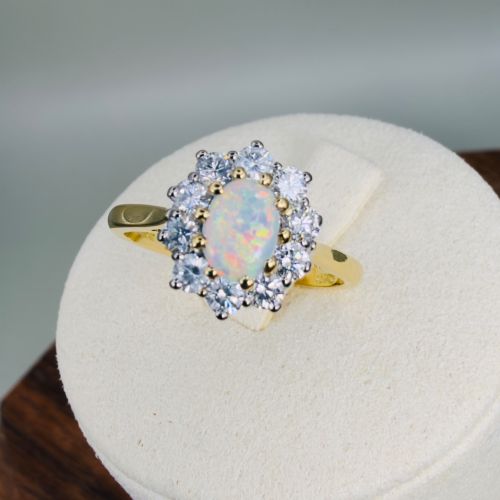
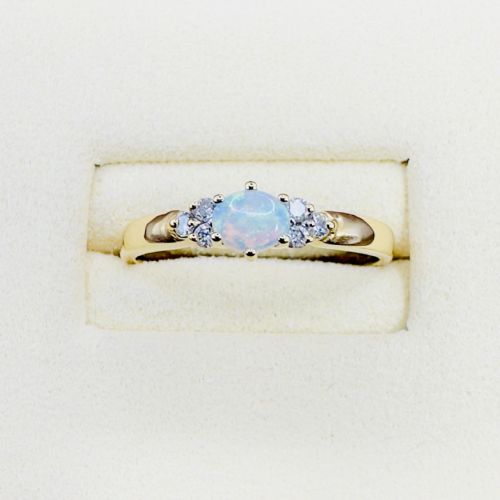
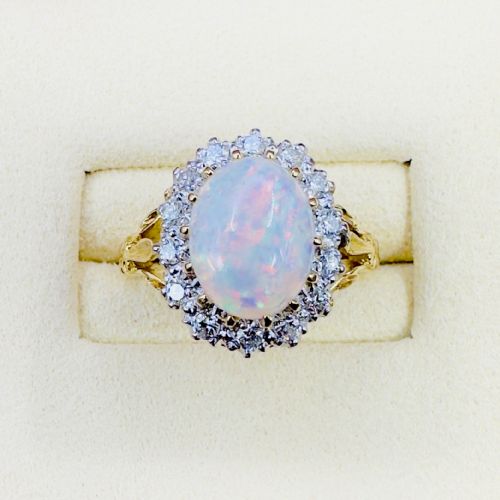
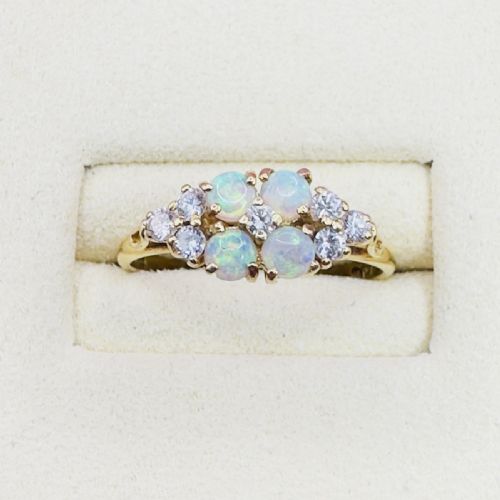
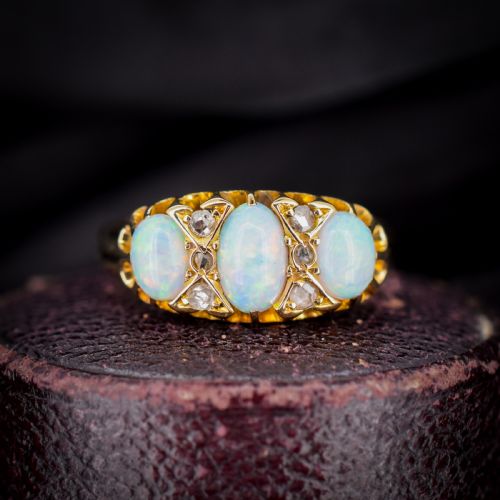
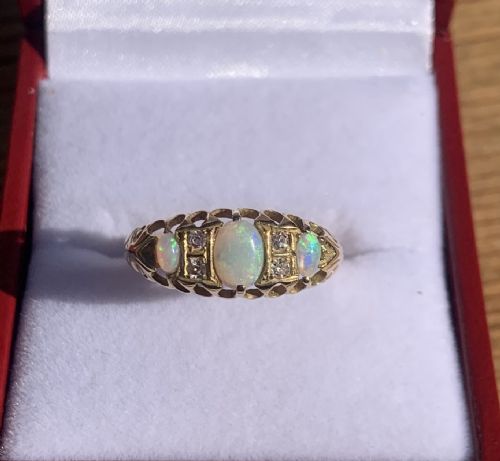
An opal diamond ring brings together the distinctive optical phenomenon of opals alongside contrasting diamonds, forming a traditional design often associated with earlier periods of jewellery manufacture. Buyers seeking an opal diamond ring frequently encounter cluster settings or multi-stone arrangements where a central cabochon opal is flanked or surrounded by small diamonds.
The pieces documented in our records range from nineteenth-century examples and Edwardian items through to mid-century and later twentieth-century creations. Common configurations include three-stone trilogy layouts and tighter floral clusters mounted on yellow gold bands.
Victorian and Edwardian iterations dominate the earlier stylistic offerings, while later twentieth-century versions introduce alternative gold purities and bolder stone sizes. Across all periods, the ring functions primarily as a dress piece designed to highlight the shifting hues of the primary gem.
Materials and Construction
Construction relies upon precious metals such as 18ct yellow gold, 9ct gold, and occasionally platinum, shaped into settings that secure both the softer silica-based opal and harder diamond accents. Master jewellers historically used claw settings or flush bezels to hold the central stones while allowing light to enter the opal from above.
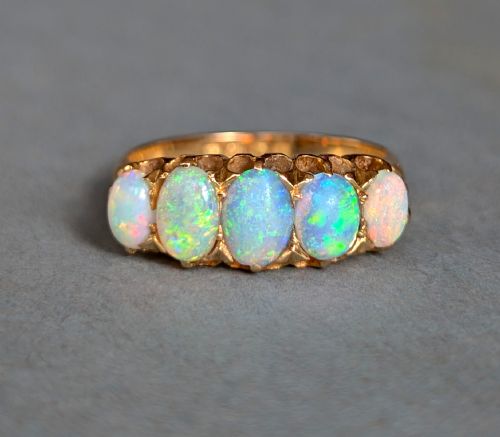
The opals selected are predominantly natural cabochons, cut with smooth, rounded domes rather than faceted faces to maximise the display of spectral colours. Diamonds accompanying these stones are typically old-cut or round-cut varieties, integrated into the shoulders or perimeter of the primary mounting.
Opal Diamond Ring Retail Price Guide 2026
Typical asking prices for opal diamond ring among the pieces listed under this phrase on Sellingantiques today, from the lower quarter to the upper quarter. They describe what is for sale here now, not the wider market.
Cluster configurations appear with greater frequency than trilogy layouts among the historical archive of sold items.
Defining Quality Variations
The visual appeal and desirability of these pieces rest heavily on the quality of the optical play of colour within the opal itself, alongside the clarity and cut of the surrounding diamonds. Top-tier specimens display vibrant, rolling flashes of multiple spectral hues across the entire stone surface without dead zones.
Metalwork execution further separates standard production from finer output, visible in the delicacy of the claw work, the symmetry of the cluster arrangements, and the preservation of original hallmarks on the gold shank. Pieces exhibiting minimal wear to the soft opal surface retain greater optical integrity over time.
The Opal Diamond Ring Glossary
- Cabochon
- A gemstone cut with a smooth, convex dome rather than flat facets. This style preserves the internal play of colour in softer stones like opals.
- Trilogy ring
- A ring featuring three main stones set in a row along the band. In this selection, they typically combine an opal centre with diamond side stones.
- Cluster ring
- A design arrangement where a central stone is surrounded by a ring of smaller accent stones. This layout is common for highlighting colourful opals with bright diamonds.
- Old cut diamond
- A hand-faceted diamond cut before modern machine standards were established. These stones feature smaller tables and deeper pavilions suited to antique settings.
- Play of colour
- The optical phenomenon where internal microscopic silica spheres diffract light into shifting spectral colours. It forms the primary visual trait of quality opals.
Opal Diamond Ring: Frequently Asked Questions
How do I care for an opal ring?
Opals contain water within their structure and possess a lower hardness than diamonds, making them sensitive to sudden temperature shifts and harsh chemicals. Remove the ring during manual tasks and avoid ultrasonic cleaning methods.
Store the piece separately from harder gemstones to prevent surface scratching. Gentle cleaning with a soft, damp cloth preserves the integrity of the gold mounting and the stone.
Are these opals completely natural?
The archive records natural solid opals alongside doublet variations, reflecting the diverse materials utilised by jewellers across different eras. Natural stones display genuine matrix formations or solid bodies shaped directly from rough material.
Examining the side profile of the stone helps identify whether a specimen is a solid cabochon or a composite layer. Product descriptions specify the exact material makeup for each individual item.
What gold purities are used?
Listings feature items fashioned predominantly from 18ct yellow gold and 9ct gold, with occasional platinum or white gold elements. Higher purity gold offers a richer yellow tone that complements the warmth of antique settings.
Maker marks and gold standard stamps on the inner shank provide clear evidence of the metal purity. These hallmarks assist in verifying the period of manufacture alongside stylistic cues.
How can I tell an Edwardian piece?
Edwardian jewellery frequently employs intricate openwork mounts, platinum toppings on gold, and delicate floral cluster arrangements. The overall aesthetic leans towards lightness and lace-like proportions.
Stone cuts from this era typically exhibit early transitional facets leading towards modern brilliant cuts. Comparing the mounting style against dated hallmarks confirms the manufacturing era.