



Opal Cluster Dress Ring
An opal cluster dress ring brings together iridescent fire and surrounding sparkle, offering a distinct piece of period jewellery suited to everyday wear.
Opal Cluster Dress Ring
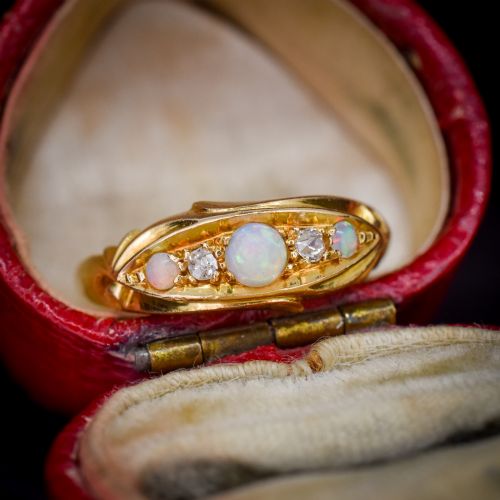
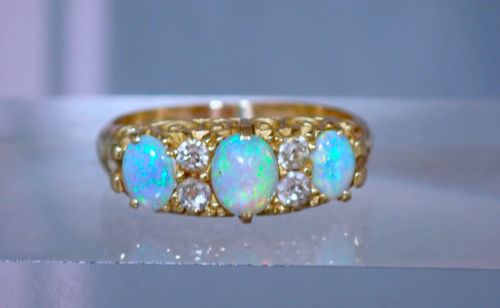
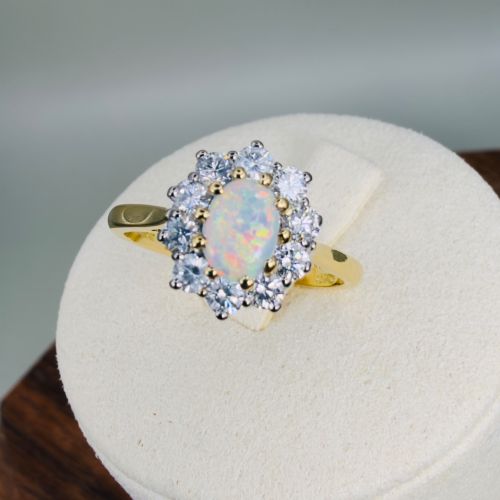
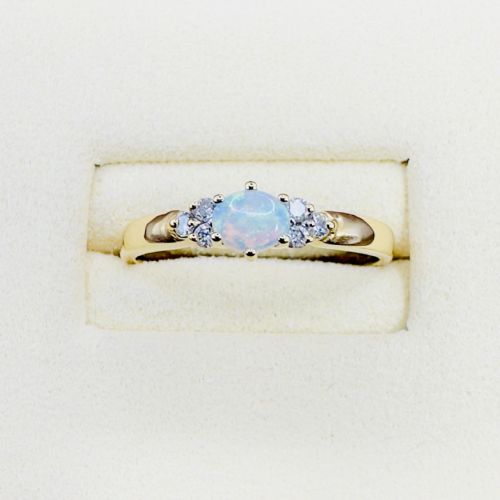
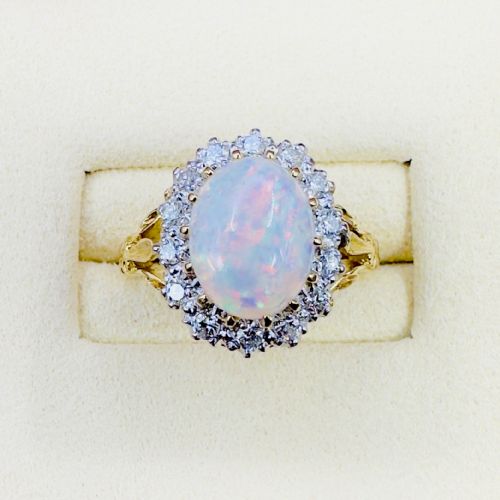
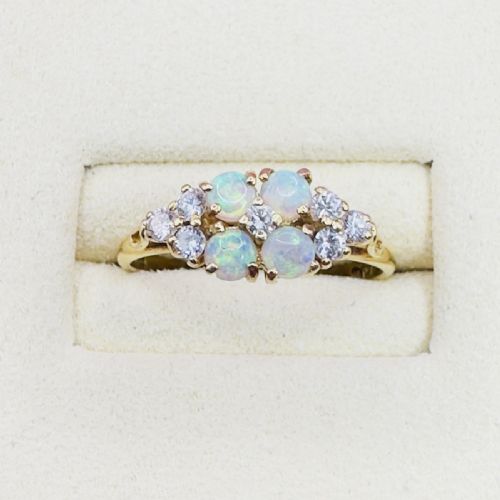
An opal cluster dress ring consists of a central opal surrounded by smaller stones, most frequently diamonds, set on a precious metal band. Buyers searching for an opal cluster dress ring encounter diverse configurations ranging from Victorian and Edwardian examples to mid-century designs from the 1950s and 1960s.
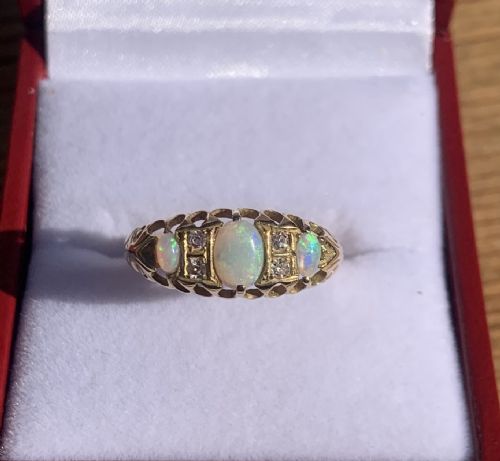
The selections span distinct historical periods including the Victorian era, Edwardian period, and the 1930s, alongside vintage pieces from the mid-twentieth century. Forms vary from traditional boat shapes and multi-gem settings to cocktail rings and simple round or oval clusters.
Materials and construction
Goldsmiths constructed these rings using yellow gold, white gold, and platinum, working predominantly in 18ct and 9ct standards alongside occasional 14ct pieces. Central opals, often cut as cabochons, are paired with accent stones such as diamonds, sapphires, rubies, and emeralds.
Settings incorporate traditional claw and cluster arrangements that secure the central stone while displaying its play of colour. Hallmarks stamped into the bands often record assay office marks and dates, pointing to regional British craftsmanship from towns such as Chester and Glasgow.
Current listings span periods from the sixteenth century through the Victorian era to the 1960s, utilising gold, platinum, and silver alongside opals and diamonds.
What separates examples
Quality rests in the optical play of the opal itself, where vibrant flashes of spectral colour across the stone distinguish superior examples from flatter, muted stones. The choice of surrounding metal and gem quality further defines the calibre of the piece, with heavier platinum or 18ct gold settings holding higher distinction than lighter 9ct alternatives.
Proportion and stone matching also dictate refinement, as balanced clusters where diamond accents complement the central opal create a more harmonious silhouette. The integrity of the original claw work and the crispness of any remaining hallmarks demonstrate the level of care taken during initial creation.
The Opal Cluster Dress Ring Glossary
- Cabochon
- A gemstone shaped and polished with a smooth, convex domed surface rather than faceted. This cutting style highlights the internal play of colour within natural opals.
- Cluster ring
- A ring featuring a prominent central stone encircled by a border of smaller gems. In these pieces, diamond surrounds typically frame the central opal.
- Boat ring
- A ring featuring an elongated, curved setting reminiscent of a hull that sits horizontally across the finger. This specific silhouette appears frequently in Victorian designs.
- Play of colour
- The optical phenomenon where spectral hues shift and flash across the surface of an opal as the viewing angle changes. Stones exhibiting vibrant multi-coloured flashes are particularly prized.
- Rose cut
- An antique diamond cut featuring a flat base and a domed crown composed of triangular facets that rise to a point. This cut dates back centuries and appears frequently in period cluster rings.
Opal Cluster Dress Ring: Frequently Asked Questions
How do I care for my opal ring?
Opals contain natural water content and possess a softer structure than diamonds, meaning they require gentle handling. Avoid exposing them to harsh chemicals, ultrasonic cleaners, and sudden temperature changes.
Remove the ring before undertaking manual tasks or swimming to protect the stone from scratches and moisture absorption. Store the piece separately in a fabric-lined box to prevent contact with harder gems.
Can I wear an antique opal ring daily?
Many people wear these rings daily, provided the setting remains secure and the stone is protected from hard impacts. Inspecting the claws regularly helps ensure the central opal and surrounding diamonds stay firmly in place.
Because opals rate lower on the Mohs hardness scale than diamonds, wearing them with care prevents accidental abrasion. Selecting a robust 18ct gold or platinum setting offers added durability for frequent wear.
How do I identify a Victorian opal ring?
Victorian examples often feature characteristic mounting styles such as boat shapes, closed-back settings, or ornate golden bands. Hallmarks stamped inside the shank can provide specific clues to the year and assay office of manufacture.
The use of rose-cut diamonds as accent stones frequently points towards nineteenth-century production. Examining the hand-finished details inside the gallery helps separate genuine period work from later reproductions.
What is a cocktail ring?
A cocktail ring is a large, statement piece designed to draw attention during evening gatherings. These rings often incorporate substantial opals combined with emeralds, sapphires, and multiple diamonds.
Emerging strongly by the mid-twentieth century, they prioritise bold visual impact over understated refinement. Their elevated settings allow the central gems to catch the light from multiple angles.