
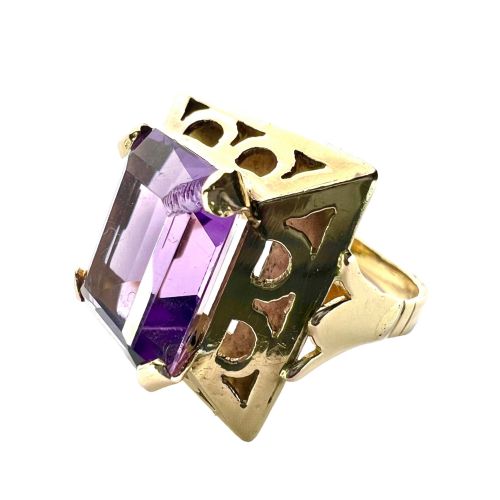


14ct Gold Dress Ring
A 14ct gold dress ring brings together durable gold alloys and striking gemstones to create a piece designed to stand out on the hand.
14ct Gold Dress Ring
A 14ct gold dress ring is a statement piece built for daily wear or evening occasions, combining a robust gold content with prominent gemstones. Buyers searching for a 14ct gold dress ring encounter various forms, from cluster designs to large solitaires.
The selection ranges from early twentieth-century Edwardian and Art Deco designs to mid-century modern interpretations. Most items on this page lean towards mid-century and vintage aesthetics alongside select antique examples from the nineteenth century onwards.
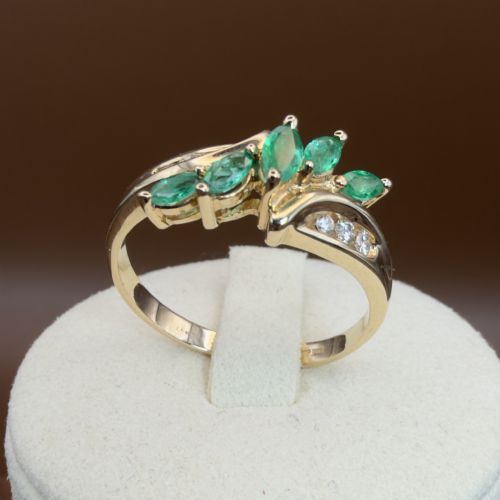
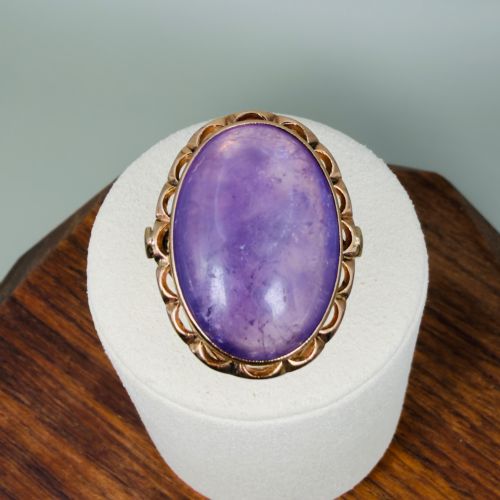
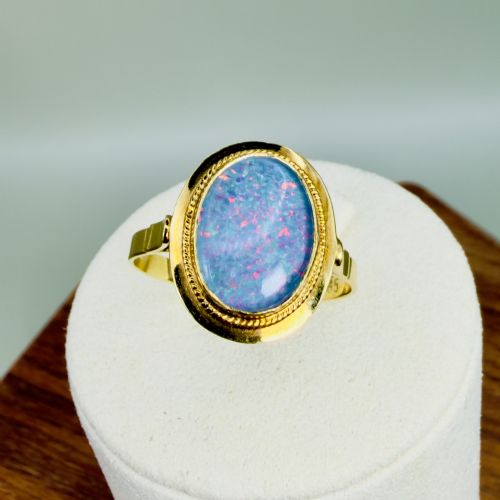
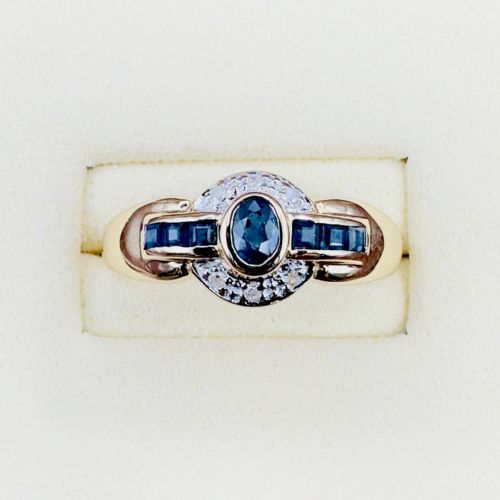
Makers utilised both yellow and white 14ct gold, often pairing the metal with diamonds, sapphires, emeralds, and unusual stones like lavender jade, black boulder opal, and massive amethysts. These rings function primarily as fashion statements or cocktail pieces rather than traditional bands.
What varies in quality
Quality differences stem from the scale and clarity of the central gemstones, such as high-carat aquamarines, boulder opals, and clean diamonds, matched against the fineness of the metalwork. Substantial stone weights and meticulous cluster arrangements distinguish superior examples from simpler solitaire versions.
The integrity of the setting work and the originality of period details, such as Edwardian filigree or Art Deco geometric lines, dictate the distinction between standard production and exceptional craftsmanship.
Materials span standard yellow, white, and rose 14ct gold alongside platinum, set with diamonds, amethysts, opals, and coral.
The 14ct Gold Dress Ring Glossary
- Cluster ring
- A ring design featuring a central gemstone surrounded by a group of smaller stones, typically diamonds, to create a floral or geometric focal point. This setting style amplifies overall visual presence.
- Solitaire
- A ring featuring a single prominent gemstone, most commonly a diamond or a large coloured stone such as an opal or aquamarine. The mount directs all focus to the singular centre material.
- Cabochon
- A gemstone shaped and polished with a smooth, convex surface rather than faceted. This cut is frequently utilised for opaque or translucent materials like jade, coral, and opal.
- Art Deco
- A design style spanning the 1920s and 1930s characterised by geometric symmetry, clean lines, and stark contrasts. Pieces from this period often incorporate platinum alongside 14ct gold.
- Half hoop
- A ring band where gemstones are set across the upper half of the circumference in a continuous row. This layout offers a smooth profile while maintaining continuous sparkle.
14ct Gold Dress Ring: Frequently Asked Questions
What is a 14ct gold dress ring?
A 14ct gold dress ring is a decorative piece of jewellery fashioned from an alloy containing 58.3 percent pure gold, balanced with other metals for durability. These rings are designed for expressive styling rather than everyday utilitarian wear.
They frequently showcase large coloured gemstones, diamonds, or complex cluster arrangements. The category spans antique, vintage, and mid-century eras.
How do I style a cocktail ring?
A cocktail ring is traditionally worn as a standalone statement piece on the hand to draw attention to the central stone or cluster design. Pairing it with minimal supporting jewellery ensures the ring remains the focal point.
Consider the scale of the setting when matching it with other rings on adjacent fingers. Vintage pieces pair effectively with both contemporary and period attire.
What does 14ct gold mean?
The term 14ct indicates that the metal consists of 14 parts pure gold out of 24 total parts, equating to roughly 58.3 percent gold content. The remaining balance comprises metals like silver, copper, and zinc to increase strength.
This composition makes 14ct gold harder and more resistant to scratching than higher purity gold variants. It is well-suited for securing gemstones in intricate dress ring settings.
How do I identify Art Deco rings?
Art Deco rings are recognised by their geometric patterns, straight lines, and symmetrical arrangements of diamonds and coloured stones. They often combine 14ct gold with platinum settings to create sharp colour contrasts.
Common motifs include stepped shoulders, square clusters, and stylized floral or architectural shapes. These designs reflect the modernist aesthetic of the 1920s and 1930s.